II Samuel 7.1-7
Now when the king was settled in his palace, and the LORD had given him rest from all his enemies around him, the king said to the prophet Nathan, ‘See now, I am living in a house of cedar, but the ark of God stays in a tent within curtains.’ Nathan said to the king, ‘Go, do all that you have in mind; for the LORD is with you.’ 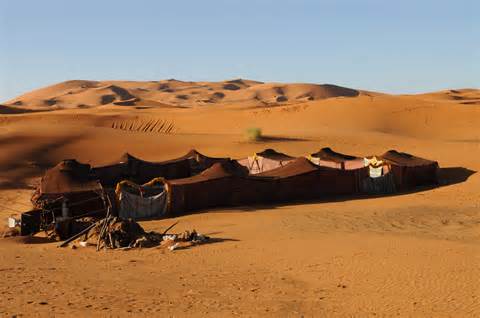
But that same night the word of the LORD came to Nathan: Go and tell my servant David: ‘Thus says the LORD: Are you the one to build me a house to live in? I have not lived in a house since the day I brought up the people of Israel from Egypt to this day, but I have been moving about in a tent and a tabernacle. ‘Wherever I have moved about among all the people of Israel, did I ever speak a word with any of the tribal leaders of Israel, whom I commanded to shepherd my people Israel, saying, “Why have you not built me a house of cedar?”
Freedom
I have been thinking a great deal over the past week or so about the nature of freedom and autonomy, specifically as it relates to our understanding of God. In part because of this wonderful story from the life of King David; but also because for the last week or so, we’ve been reading C.S. Lewis’ ‘The Lion, the Witch and the Wardrobe’ at what we optimistically call ‘bedtime’ in our household.
As freedom and choice and responsibility is very much at the heart of Lewis’ story, it makes a great deal of sense for Sarah and I to be reading it with our children at that time of the day when freedom (in their minds) seems most under threat.
The whole process begins around 700pm, when we make what seems to our adult minds the rational request to start cleaning up, putting on pajamas, brushing teeth; all of which present a dire threat to their much cherished freedom, especially during summer vacation. But the process proceeds and finally we settle down to read for a few minutes. After which the negotiations begin in earnest. Can I stay up longer? I’m afraid of the clown under my bed. I’m not tired (my personal favorite, generally spoken through a deep yawn). We can’t help but be impressed by the inventiveness.
The struggle notwithstanding, our children display that commendable restlessness of creatures that still have so much of the world to explore, so much to learn, so much to wrap their lives around. They rage against the close of day, I suspect, because it seems to them that night robs them of some invaluable opportunity, some freedom of movement that cannot be claimed the following day.
It’s the glory of youth, of course, to exult in freedom; and perhaps it is what we have yet to learn from our children: that the world still has more to offer us, that there is always another chapter left to write, if only we would give our minds room to receive it.
Which is why stories like ‘The Lion, the Witch and the Wardrobe’ are so wonderful. 4 children sent away to live with an eccentric uncle in a rambling country estate find an old wardrobe, through which they find an entrance into the land of Narnia, over which good and evil, freedom and oppression contend for supremacy.
Good theologian that he was, C.S. Lewis places children at the heart of his story. They are, it seems, in necessary in possession of that essential quality of imagination that allows them to walk into another world and negotiate its wonders and its dangers with any hope of success.
Jesus seems to suggest the same thing when the disciples ask him who will be the greatest in the kingdom of heaven: ‘unless you change and become like children, you will never enter the kingdom of heaven (Matthew 18.3).’[1] C.S. Lewis knew very well the quality of a child’s faith in the world, that it does require imagination, as well an expansive sense of wonder to be fully open to all the surprising ways God works in the world.
David & Nathan: Confining God
The gospel’s admonition to nurture a childlike faith speaks to our adult impulse to control and manage the world around us, rather than simply explore and find wonder in it. It also speaks a warning about our need to confine and limit the actions of God to those places where we feel God ought to go.
It is a condition as ancient as our species, I suspect.
Consider the story of King David and his prophet Nathan from this morning’s reading from II Samuel.
In the biblical narrative of David’s rise from youngest son and herder of sheep to King of Israel, God has constantly opened up possibilities for him; in a sense, paved the road to Jerusalem. Enemies have been defeated, rivals vanquished, moral excess and ethical shortcomings have been overlooked or forgiven. Now he is in Jerusalem as king, residing in a splendid new palace. And he looks out from his balcony and sees the arc of the covenant, the resting place of God’s very presence residing in a tent.
And he thinks to himself, here I am in a nice house; shouldn’t the presence of God also reside in a nice house, too? You know what? I should build a temple.
Of course, you are free to read this in a positive sense; that David is honestly and genuinely concerned that God is living in tent. And like all good human stories, there is truth in this. But as Walter Brueggemann observes most ‘shepherd kings’ are more ‘king’ than ‘shepherd,’ ultimately more drawn to consolidating power than in serving the common good. Confining God to a temple next door to the palace allows the king to control access to God, and provides the king with a great deal of validation for this future actions.
History seems to confirm that whether they are ancient monarchies or modern democracies, it is the habit of most governments to keep their gods close and confined, let out on occasions when policies or actions need a particular word of blessing and packed up before they can offer a word of censure.
So David calls in his prophet, Nathan, and points out the obvious: I have a great palace and God is living in a tent. What do you think? Time for a temple? Sure, says Nathan, failing utterly to perform the most fundamental part of his job. Go ahead, do what you want. God is with you.
Do whatever you want. God is with you.
In the Hebrew tradition, prophets work for God. They do not tell kings that they can do whatever they like. Prophets tell kings to attend to and respect above all else, the word and resolve of God. They caution kings; chastise and reprimand them, and remind them, sometimes at great personal risk, that the God of Israel operates in complete freedom, not at the behest of human governments.
Fortunately, the God of Israel will have none of this. What makes you think, the voice of God demands of the his prophet, that you and the king can confine me to a house of your choosing? I have never lived in a house, never been confined to one place, never been under the control of one person. I move at my choosing.
The God of Israel steadfastly refuses to be domesticated. The God of Israel, the God of Jesus Christ, our God remains radically free from our attempts to control or confine God; or to bend God to our own expectations and demands.
Range of Motion
The implications of this understanding of God as radically free from our attempts to confine him has consequences for the way we live in the world. A faithfulness to a holy God, at work in the world in ways we cannot control should allow us to experience changing social and cultural dynamics in much healthier ways. It should invite a faith that is not imprisoned to older cultural understandings and prejudices. Such a faith should in fact invite a wider mercy, a more expansive understanding, a deeper compassion.
And it should help us to come to terms with the reality of political and religious extremism, so much on display in our country over the past few weeks.
In both Charleston and this weekend in Chattanooga, young men with horribly distorted visions of nation and of God have robbed us of the lives of our 14 of our fellow citizens. The tragic loss of life, the grief of families and communities cannot be laid at the feet of extremist ideology alone; there is more at work in all this, of course. Still, it is the terrible danger of extreme ideologies and extreme theologies that they confine God to the narrowest possible spectrum of interpretation; one largely defined by their incapacity to see beyond their own embittered sense of grievance.
But once God and nation are so confined, there is no room for maneuver, no range of motion, no accommodation to varying perspectives, only a continually narrowing tunnel of understanding and with it, the tragic accompaniment of a growing sense of resentment and alienation.
So the restless, irascible, unpredictable God of scripture is essential to our faith; and to the ways in which our faith is lived out in the world. The God who acts outside of our control impels us to respond with imagination and courage to the realities of life in our world, to risk new and creative responses and so join ourselves to the work of God.
To domesticate such a God as this is to limit our capacity to hope in God’s power to heal and to transform.
Freedom and Response
NPR reported that on Friday night, 1000 people attended an interfaith service at Olivet Baptist Church in Chattanooga, for the Marines whose lives were taken last week. Towards the end of the service, Dr. Mohsin Ali, a Chattanooga psychiatrist originally from Pakistan, spoke on behalf of the Muslim community.
“It is not easy for me to speak at an event of such magnitude after a loss so tragic and so close to home,” he said. He spoke of inspiration derived from the Marines themselves and for their courage. And then he asked his fellow Muslims in attendance to stand. They made up nearly half the congregation; still, it couldn’t have been an easy thing to do.
In a spontaneous show of fellowship and ecumenical unity, the rest of the congregation stood and applauded.
Olivet’s bishop, the Reverend Kevin James, closed with these thoughts: ‘We thank God that what the enemy has meant for evil, God shall make it work for our good. Even though it seems like we’re going through our worst time, we believe that God shall transform this into our finest hour.’
It is too common for us to meet extremism with extremism; to call upon our narrow vision of God to combat an equally narrow version of someone else’s God.
Both Dr. Ali and Bishop James remind us that simply allowing God to be free to do what God will do, provides space sufficient for God to find ways of bringing wholeness, healing and peace to the deeply broken places in our world.
*********************************
At the end of ‘The Lion, the Witch and the Wardrobe,’ after the Queen has been vanquished and her army scattered, the Lion slips quietly away, leaving the children in charge of building a new future for Narnia. There is still evil in their world to be contested and matters of justice to be worked out. And while the presence and memory of the Lion is still very real, it is left to the inhabitants of Narnia to chart much of their own way.
God needs range of motion; but more importantly, we need range of motion and freedom to maneuver, to broaden our perspective on the world, to open ourselves to the blessings of being gracious, to practice mercy as a way of growing a deeper sense of community, to seek understanding instead of judgment.
We need that faith of children that still sees the world with awe and wonder; that is still surprised and overjoyed by the unexpected; that can still imagine a God so free that nothing remains outside the realm of promise and possibility.
If we can see God in a tent, not confined to a temple, and if we can align ourselves and our lives that the sense of freedom and get out of our own way long to let God be God, then we can fully embrace the new life that God is constantly breathing into our world and find for one another the rest, peace, well-being for which we so deeply yearn. Amen.
[1] Matthew 18.2-4: At that time the disciples came to Jesus and asked, ‘Who is the greatest in the kingdom of heaven?’ 2He called a child, whom he put among them, 3and said, ‘Truly I tell you, unless you change and become like children, you will never enter the kingdom of heaven. 4Whoever becomes humble like this child is the greatest in the kingdom of heaven.
 Out of the Wilderness