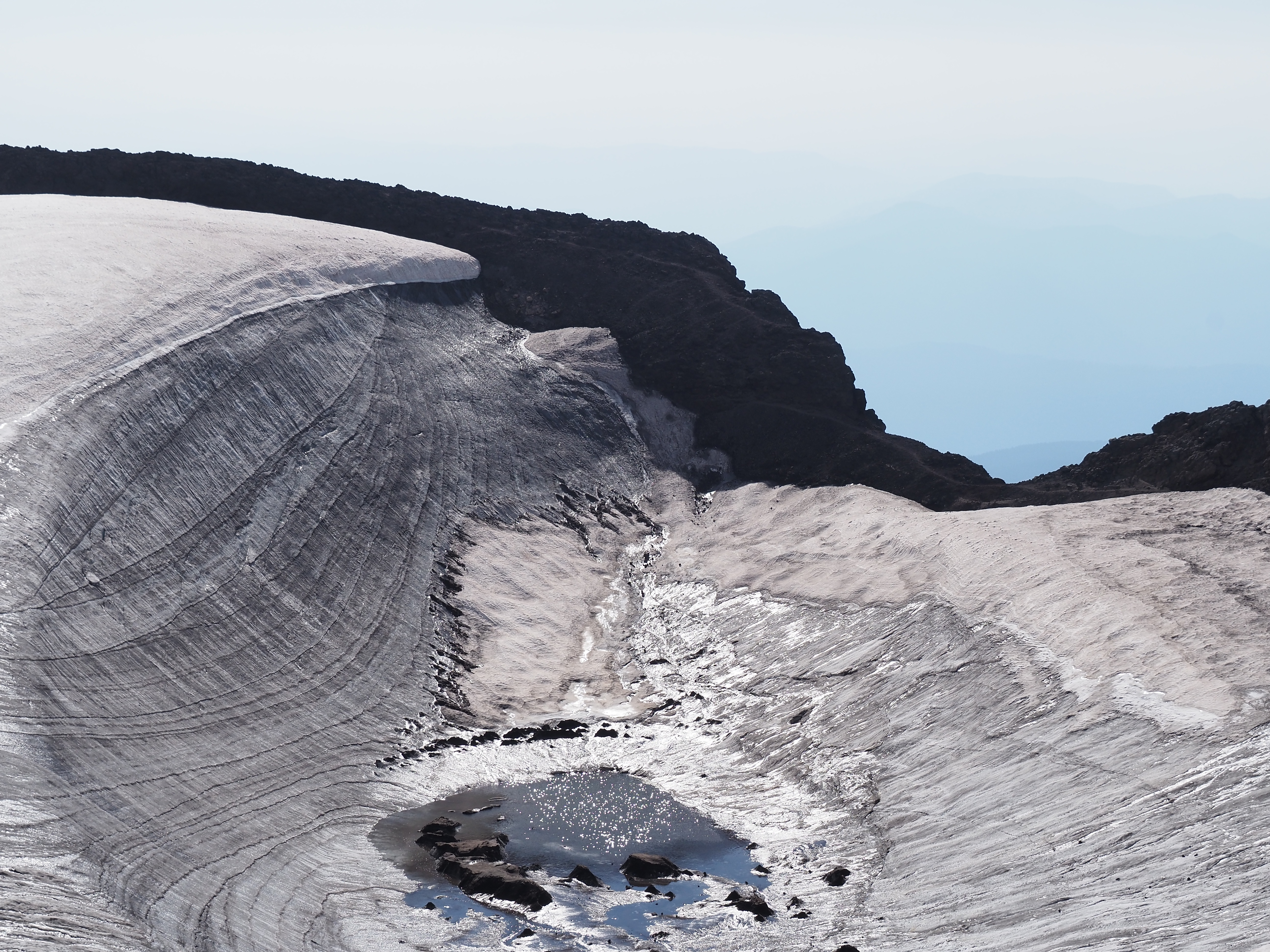
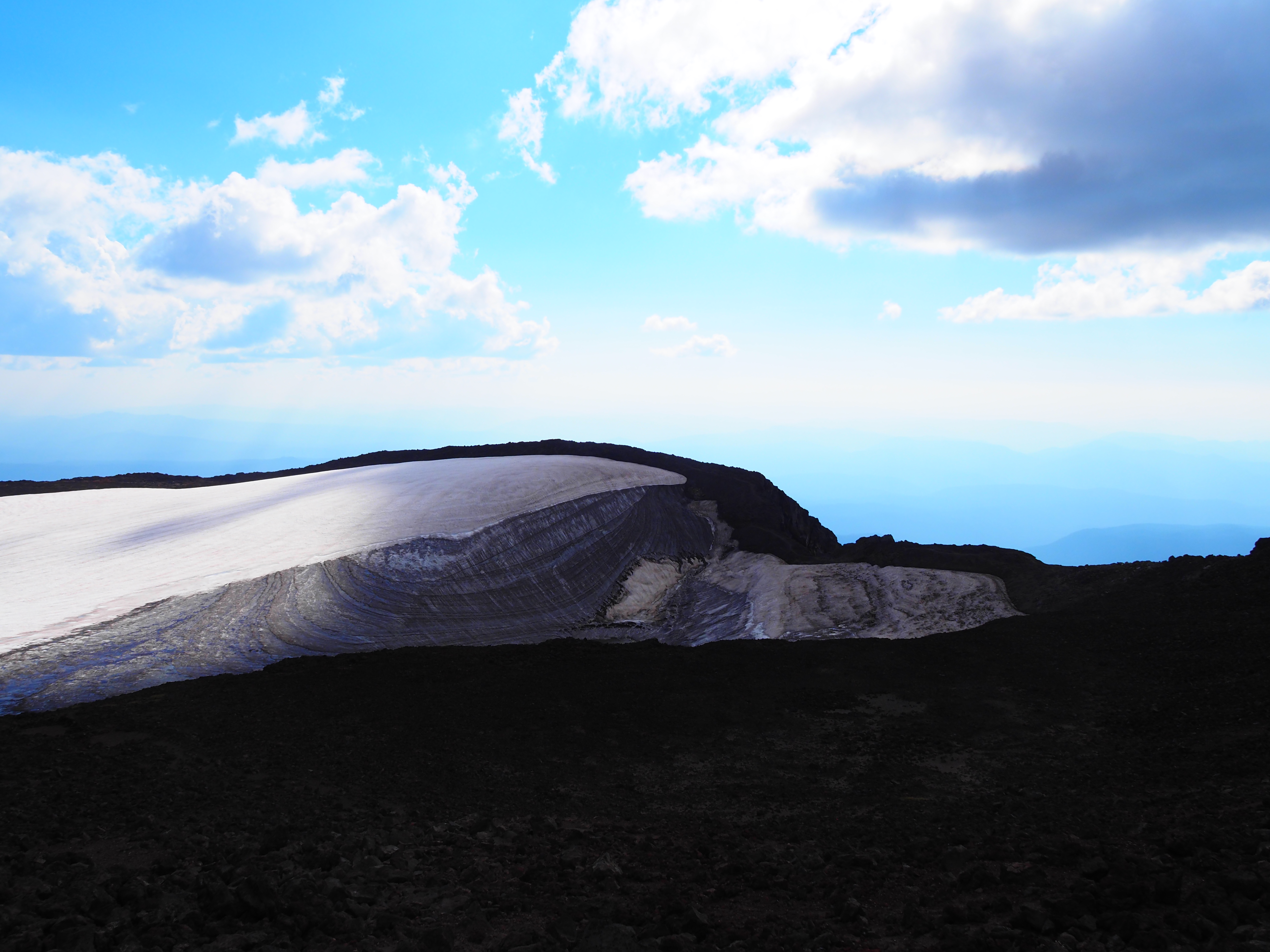
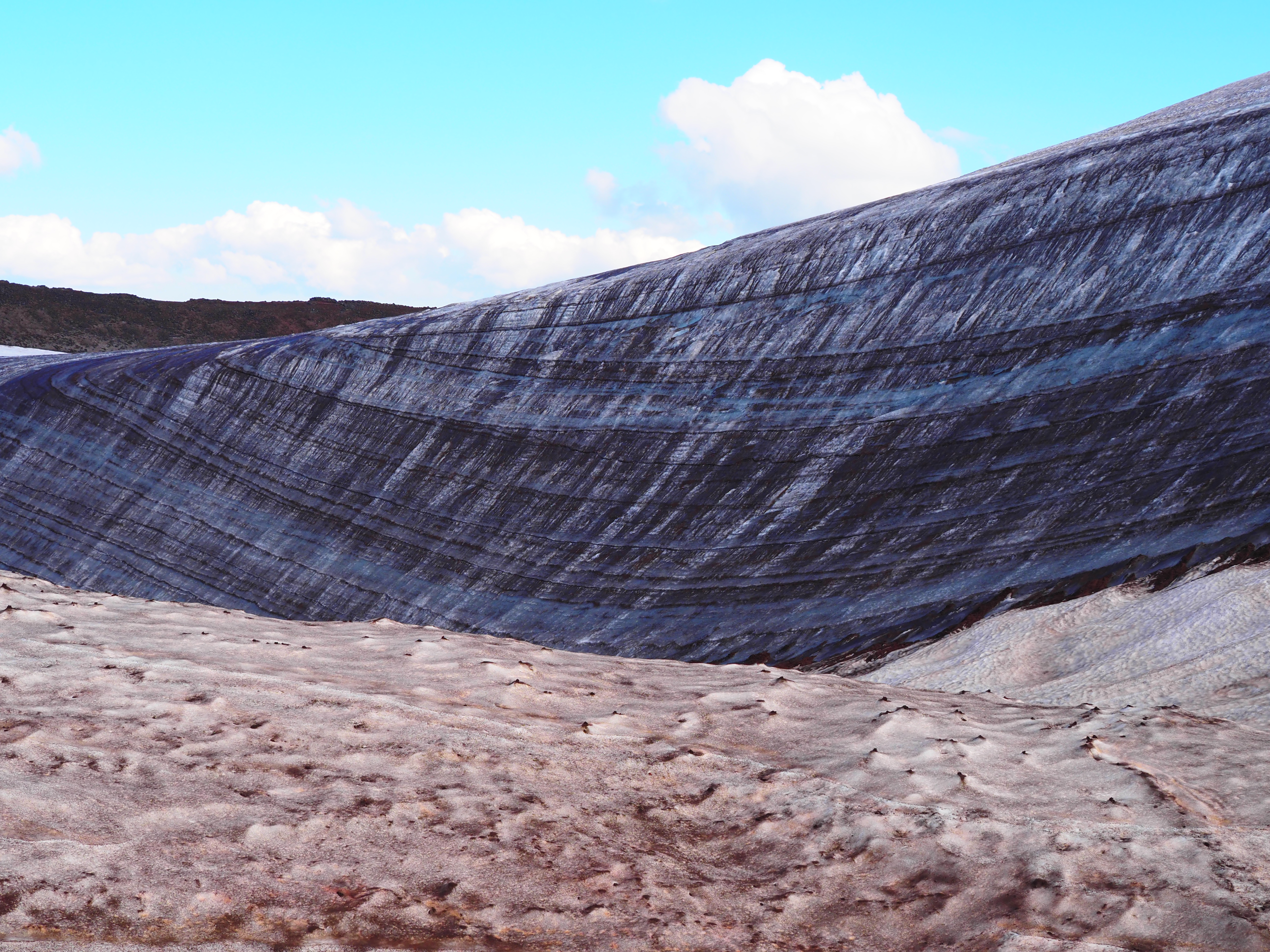
Sabbatical Notes 5

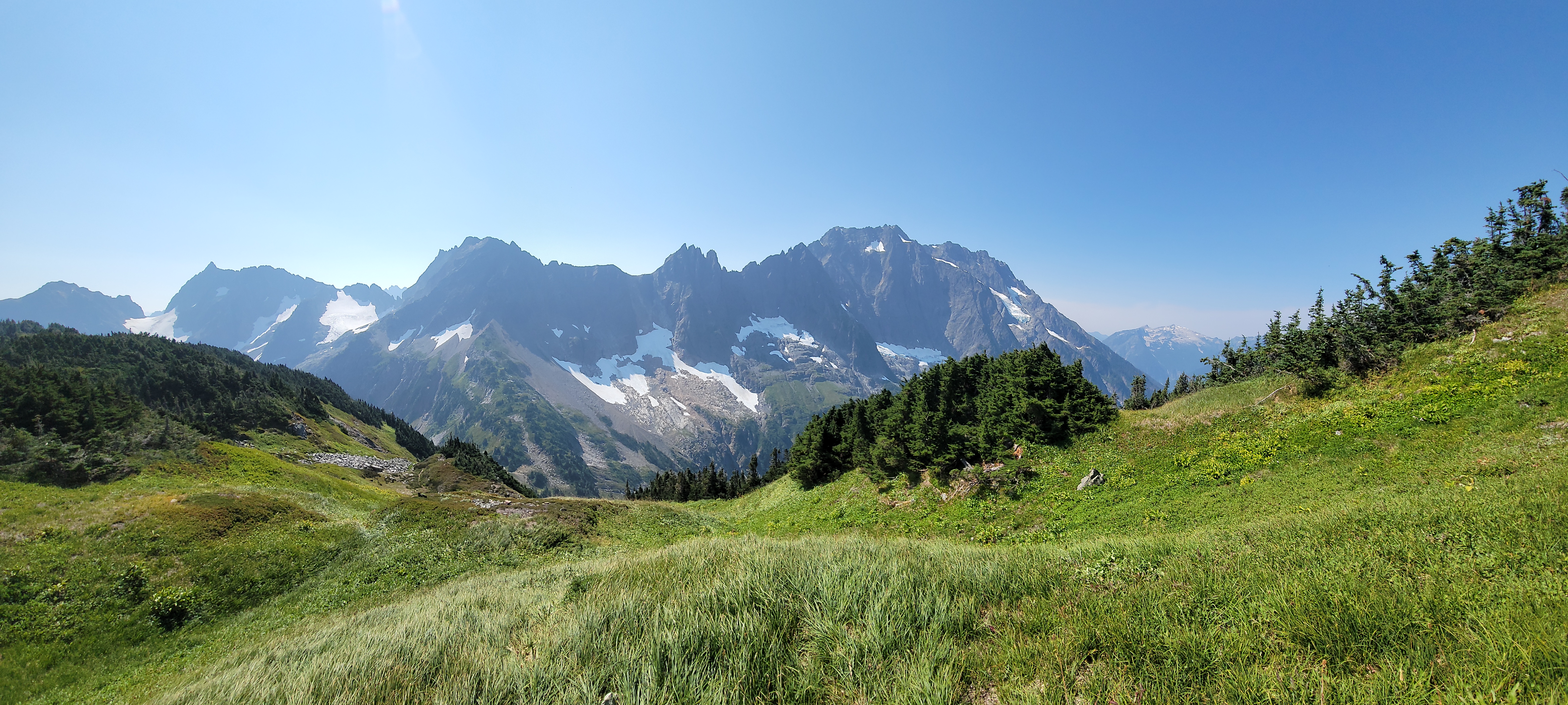
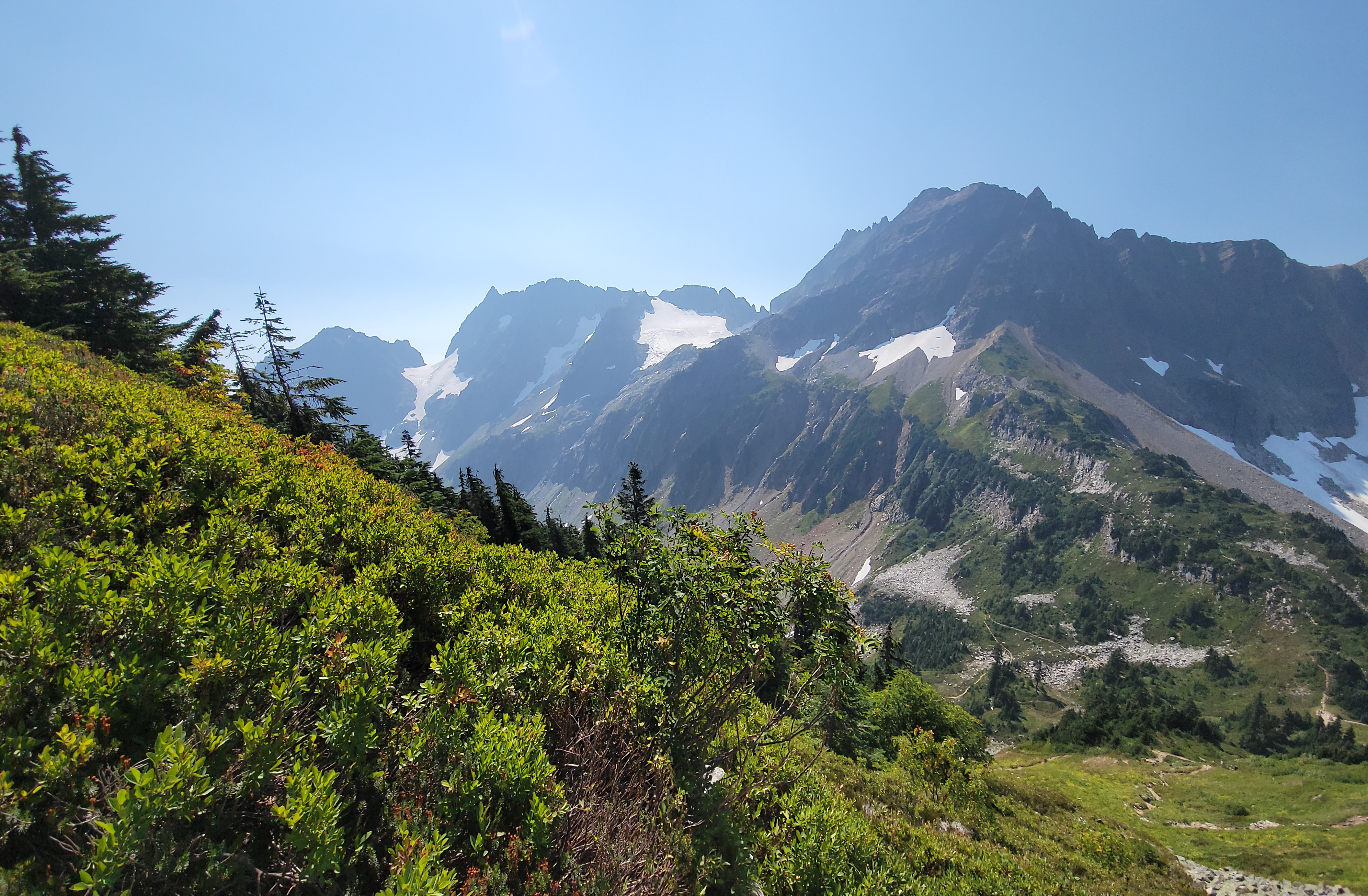
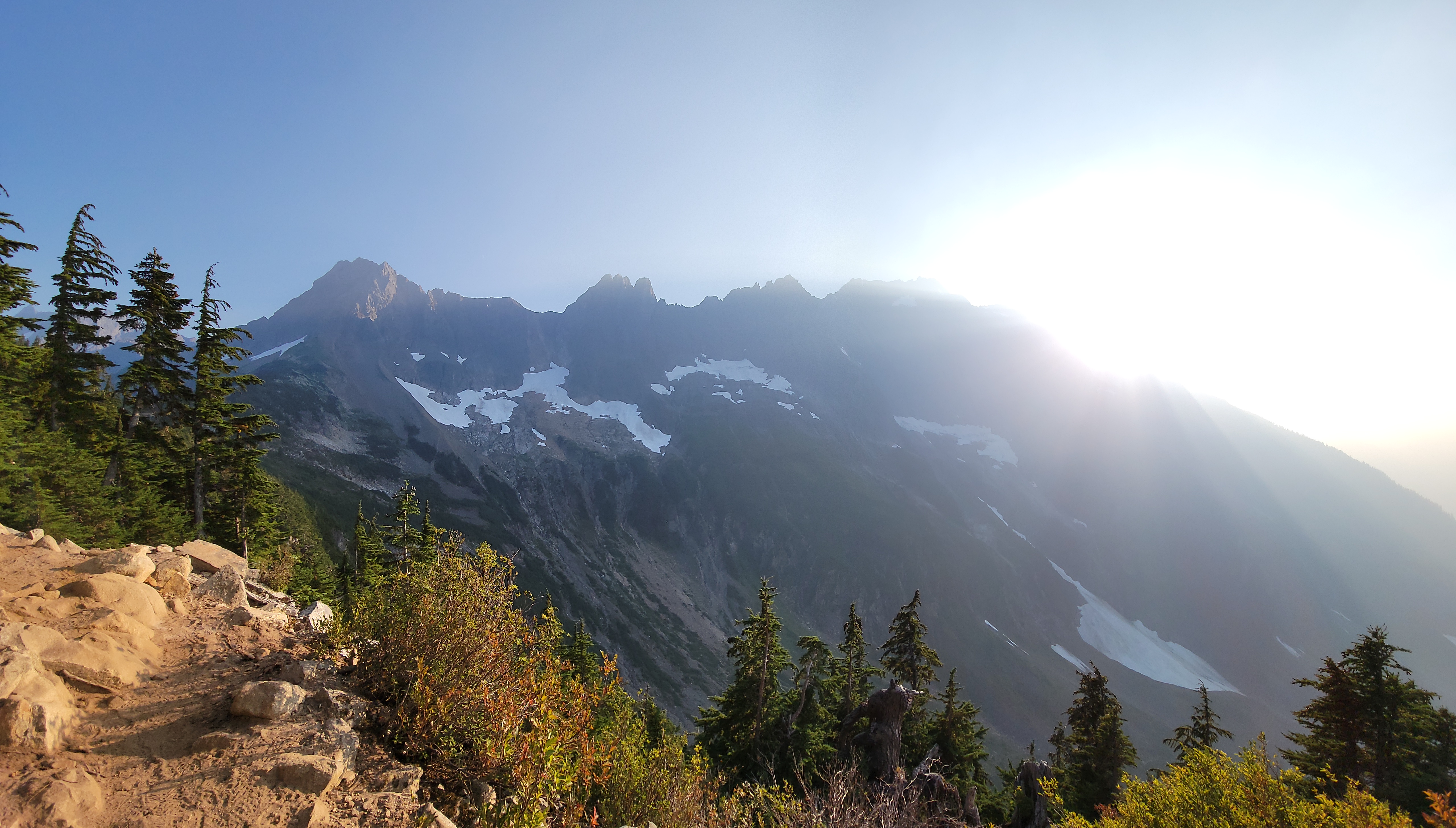
North Cascades National Park is located, as the name suggests, in the northern range of the Cascade Mountains, just east of Seattle, Washington. One look at the top of the Cascade Pass trail and it’s pretty obvious why they are called the American Alps.

Day One: Cascade Pass Trail to Pelton Campground

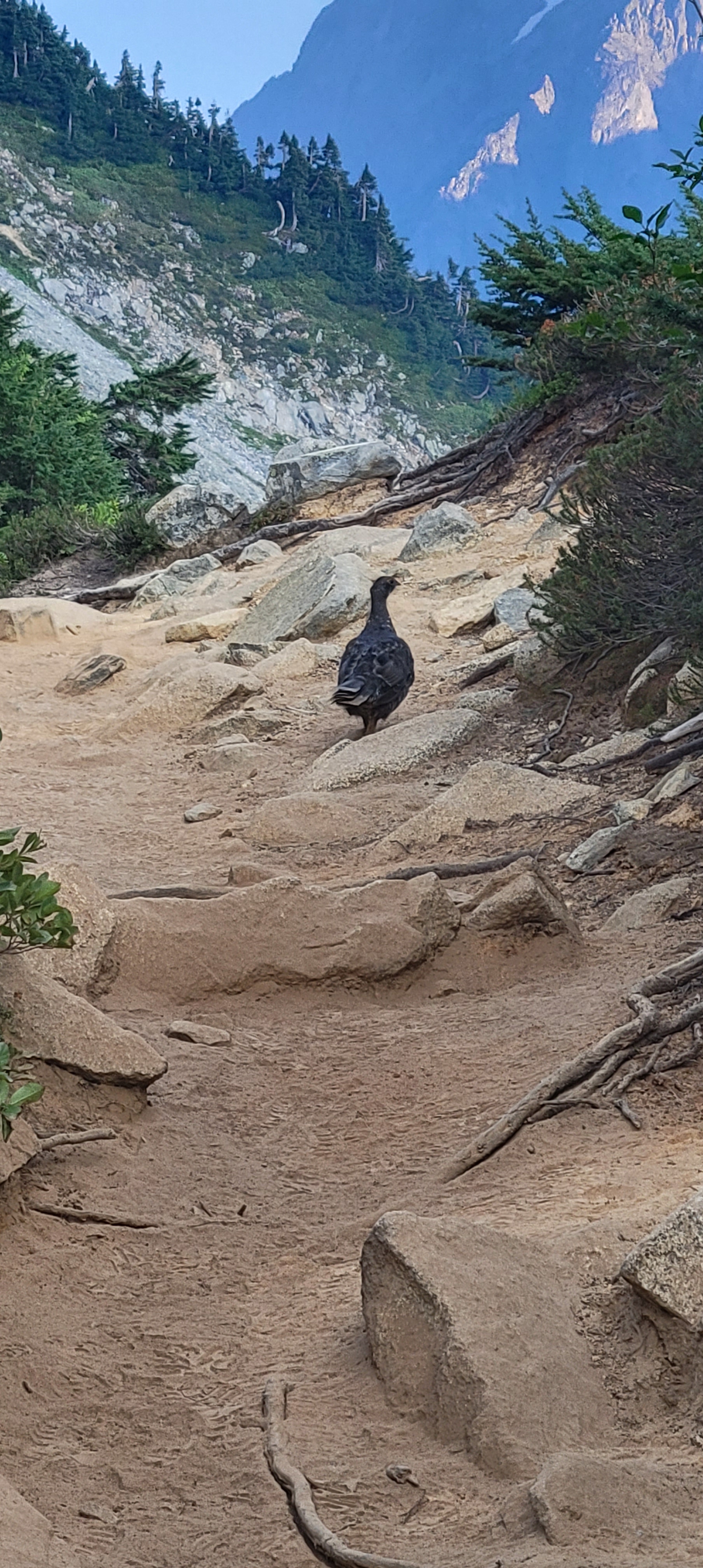
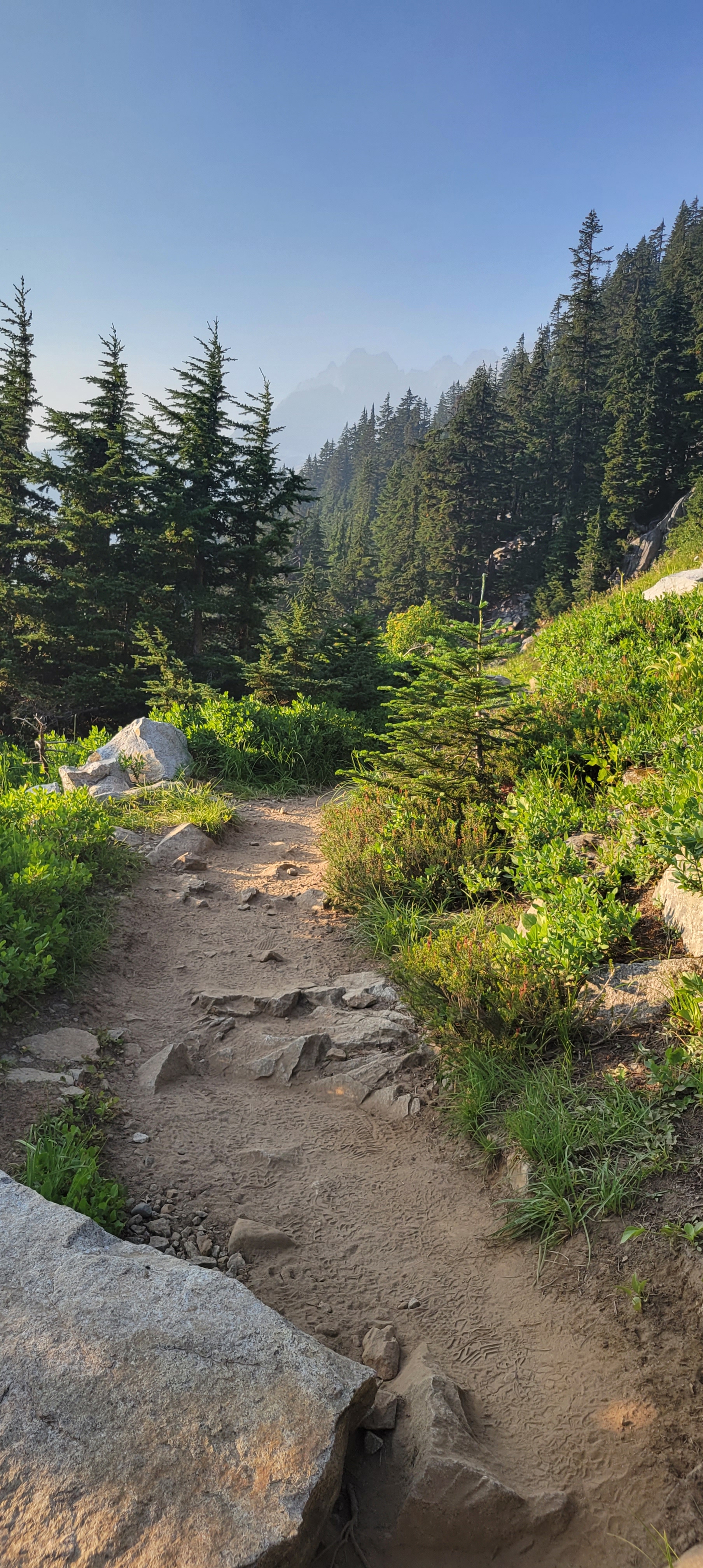
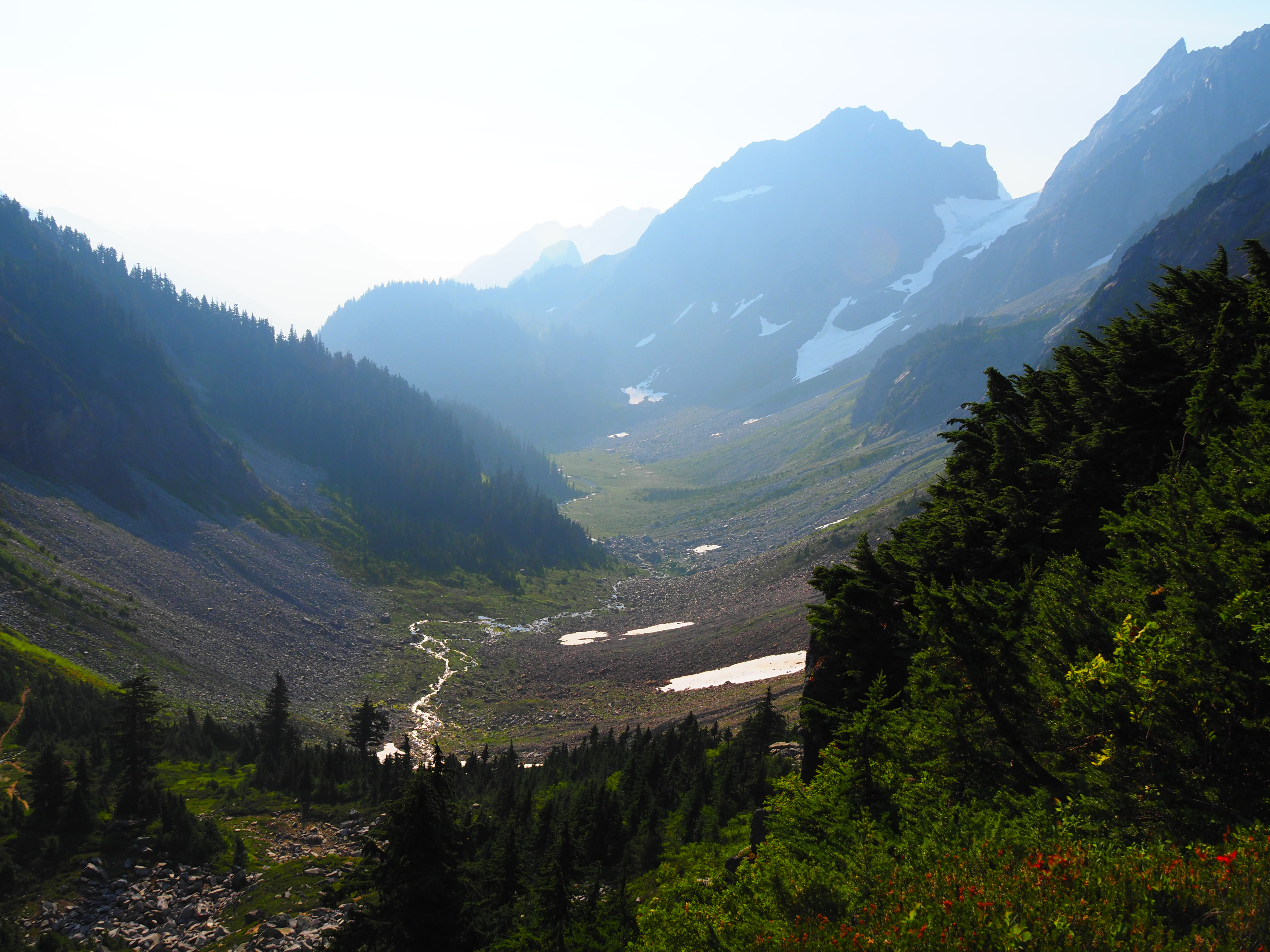
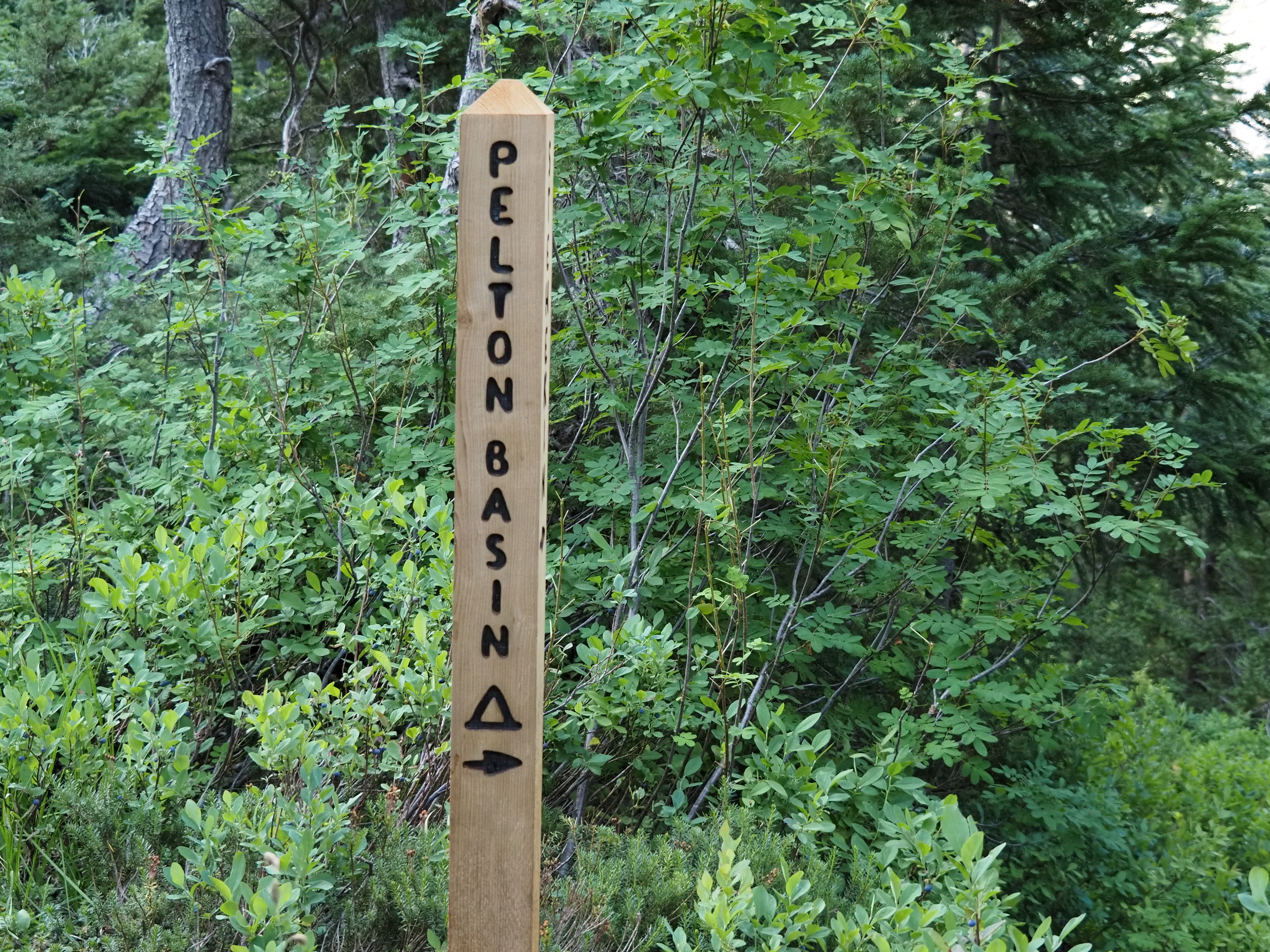
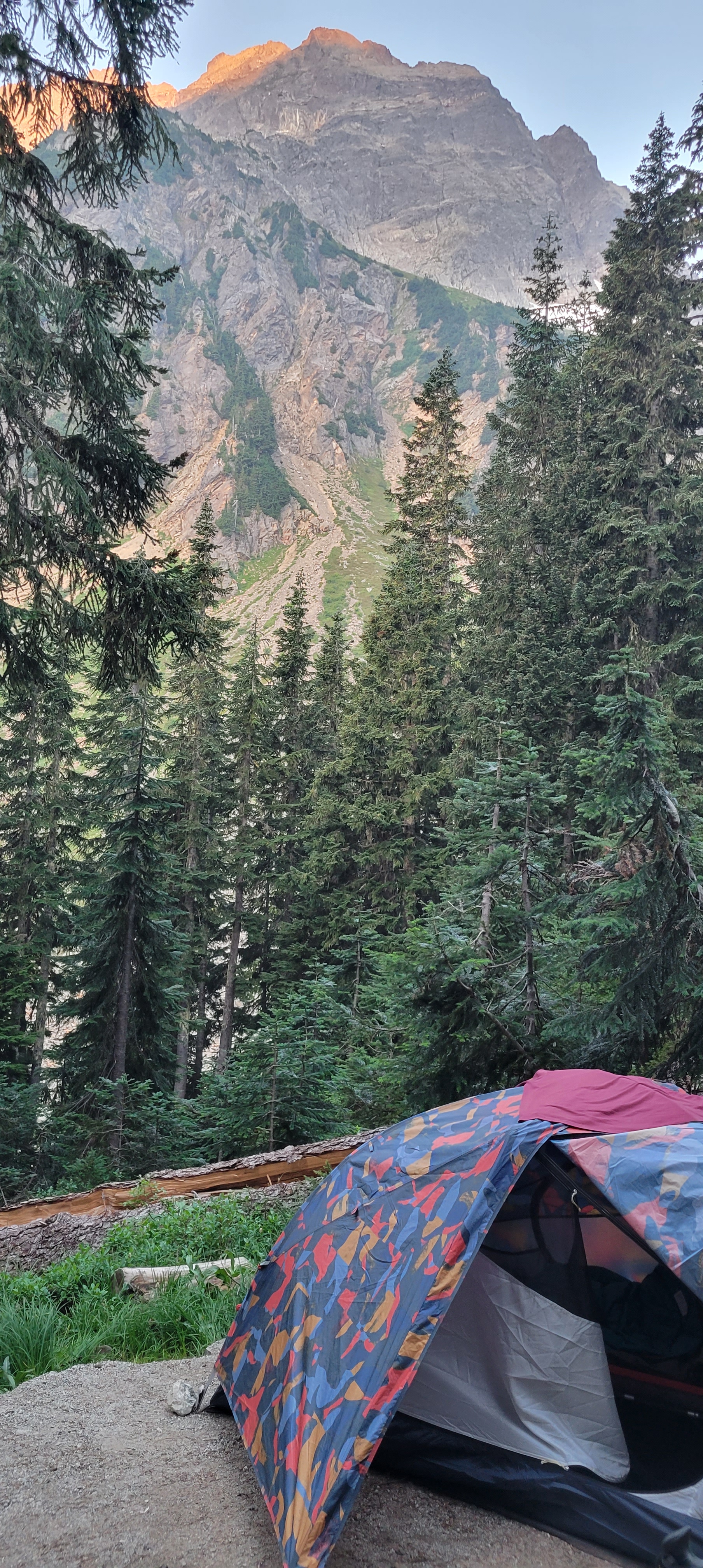
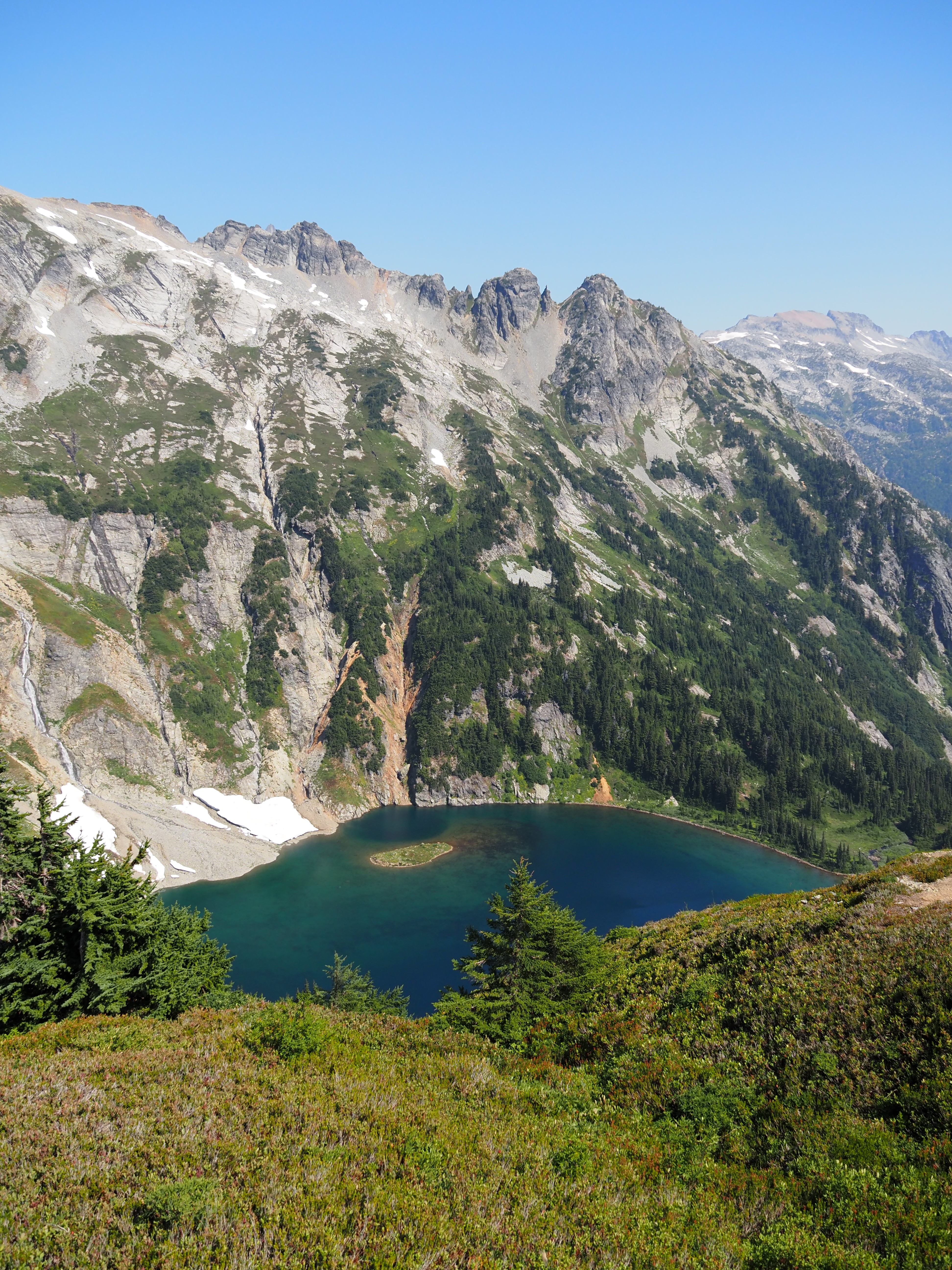
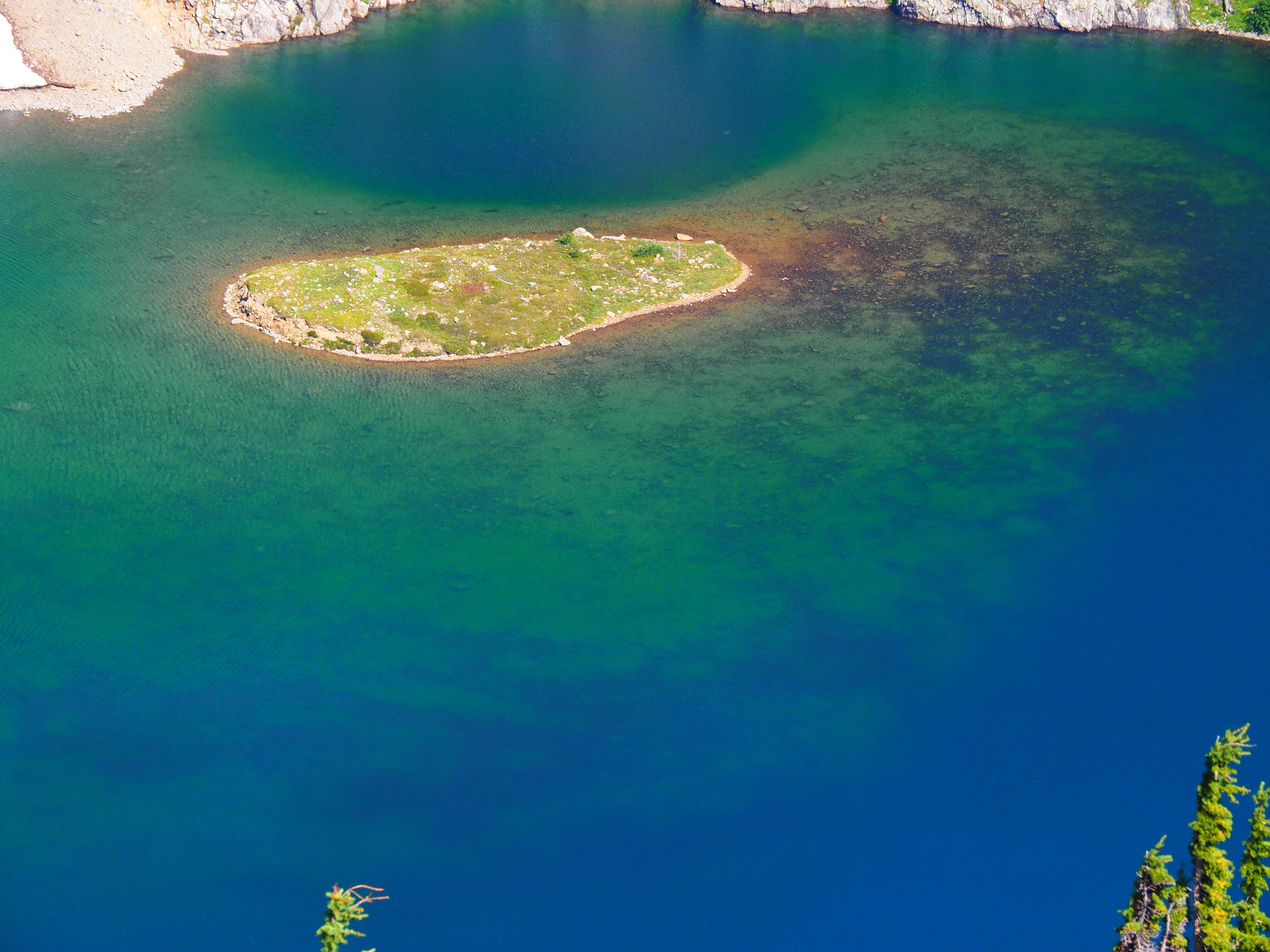
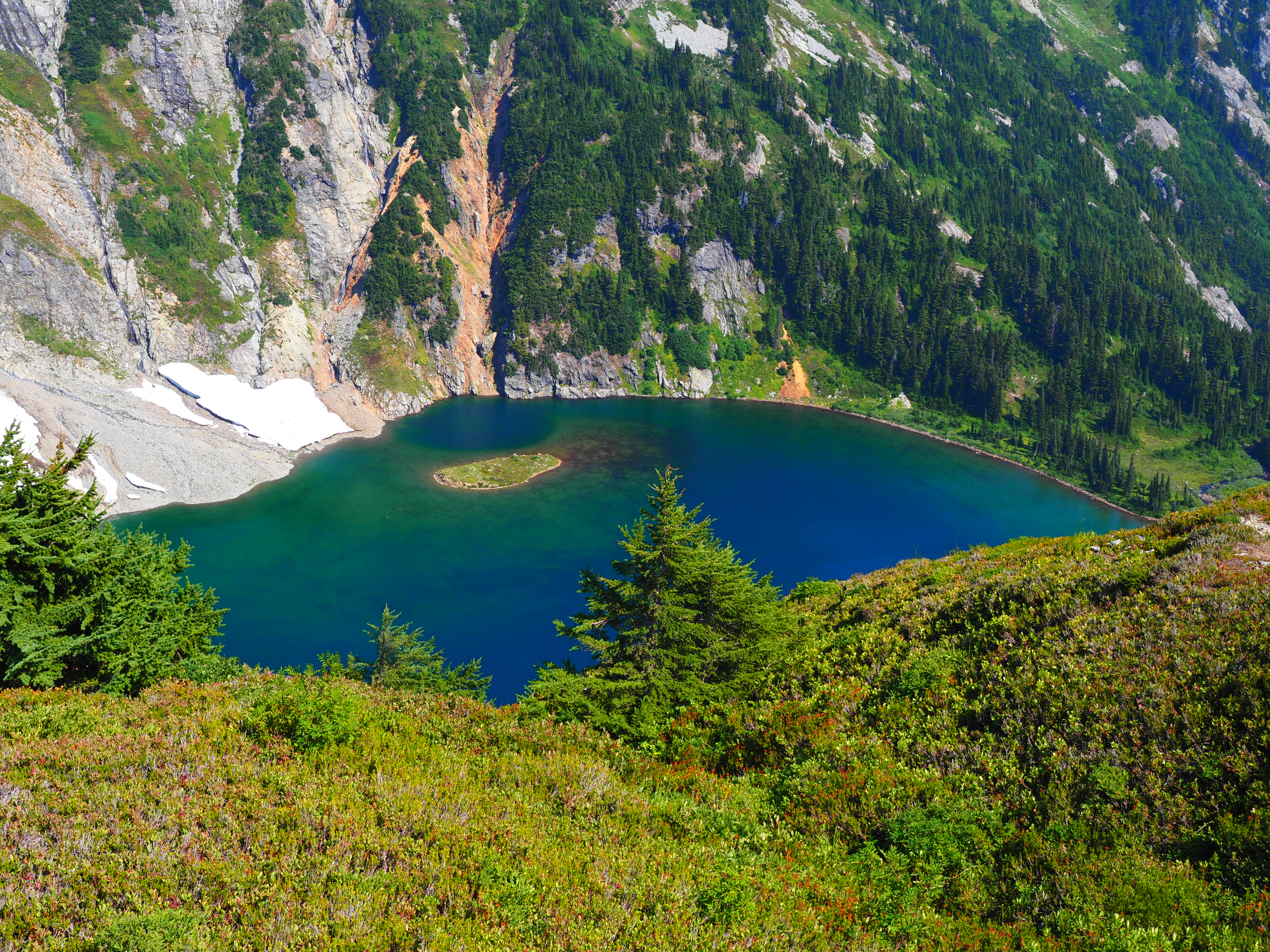
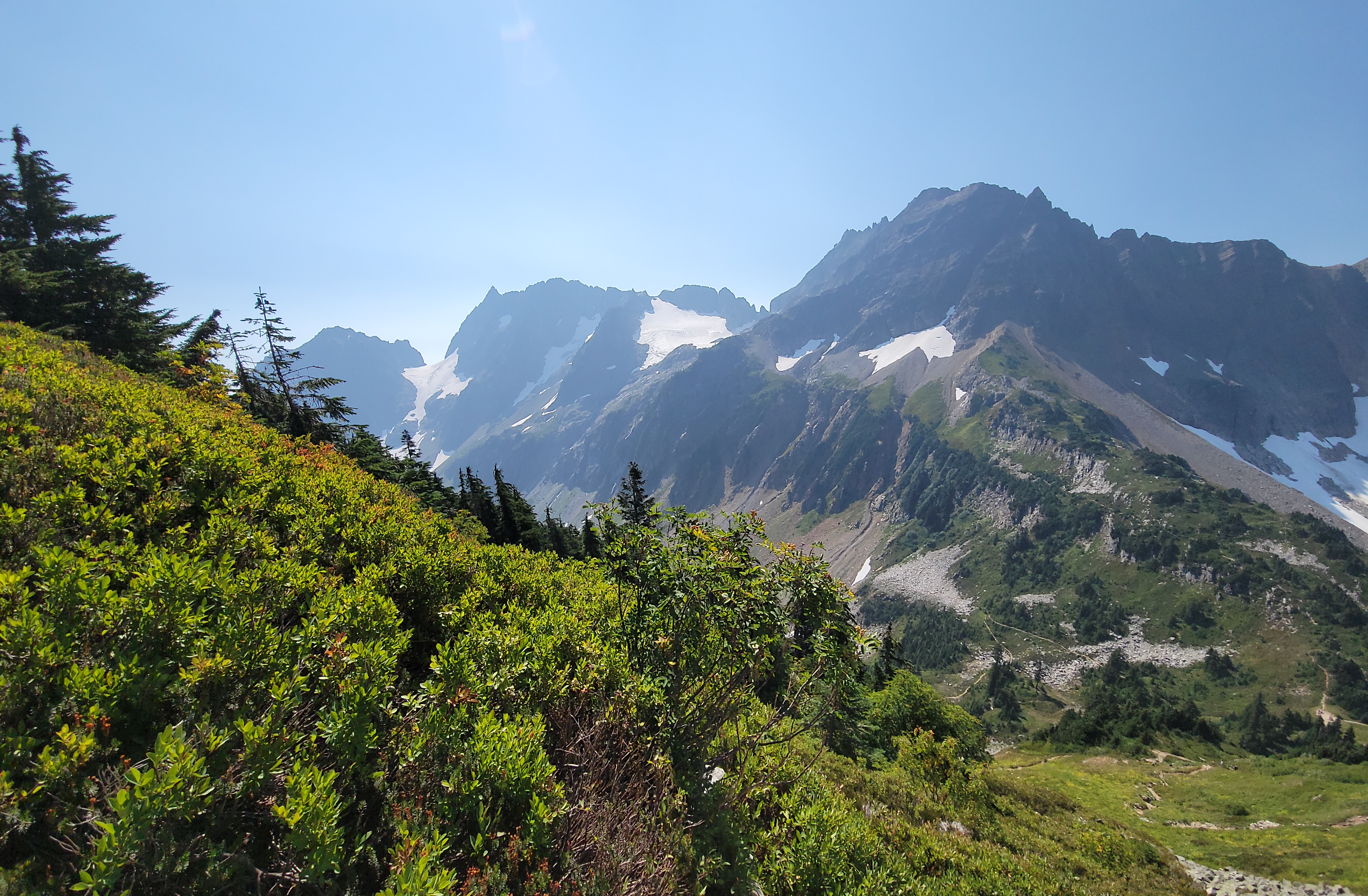
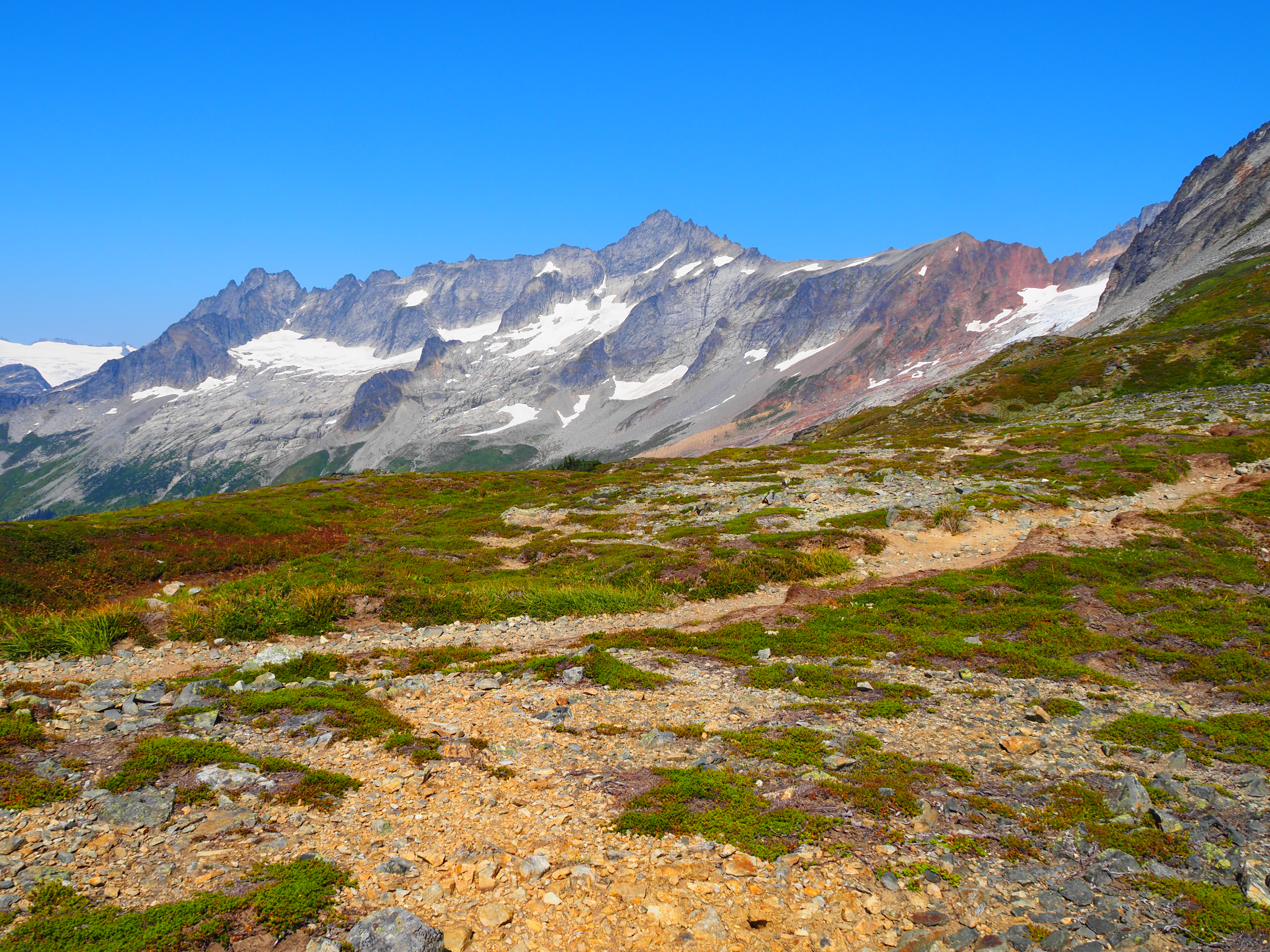
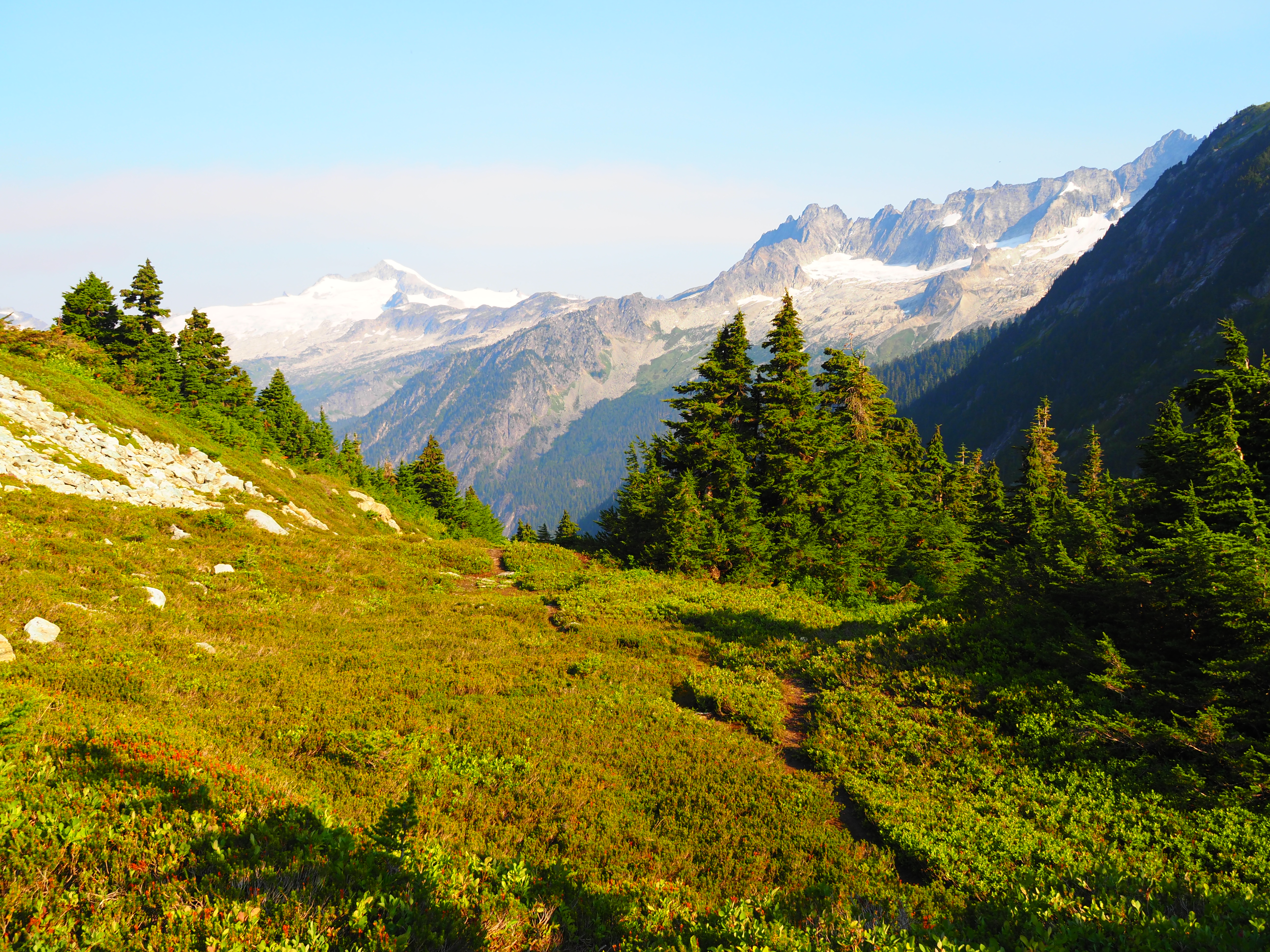
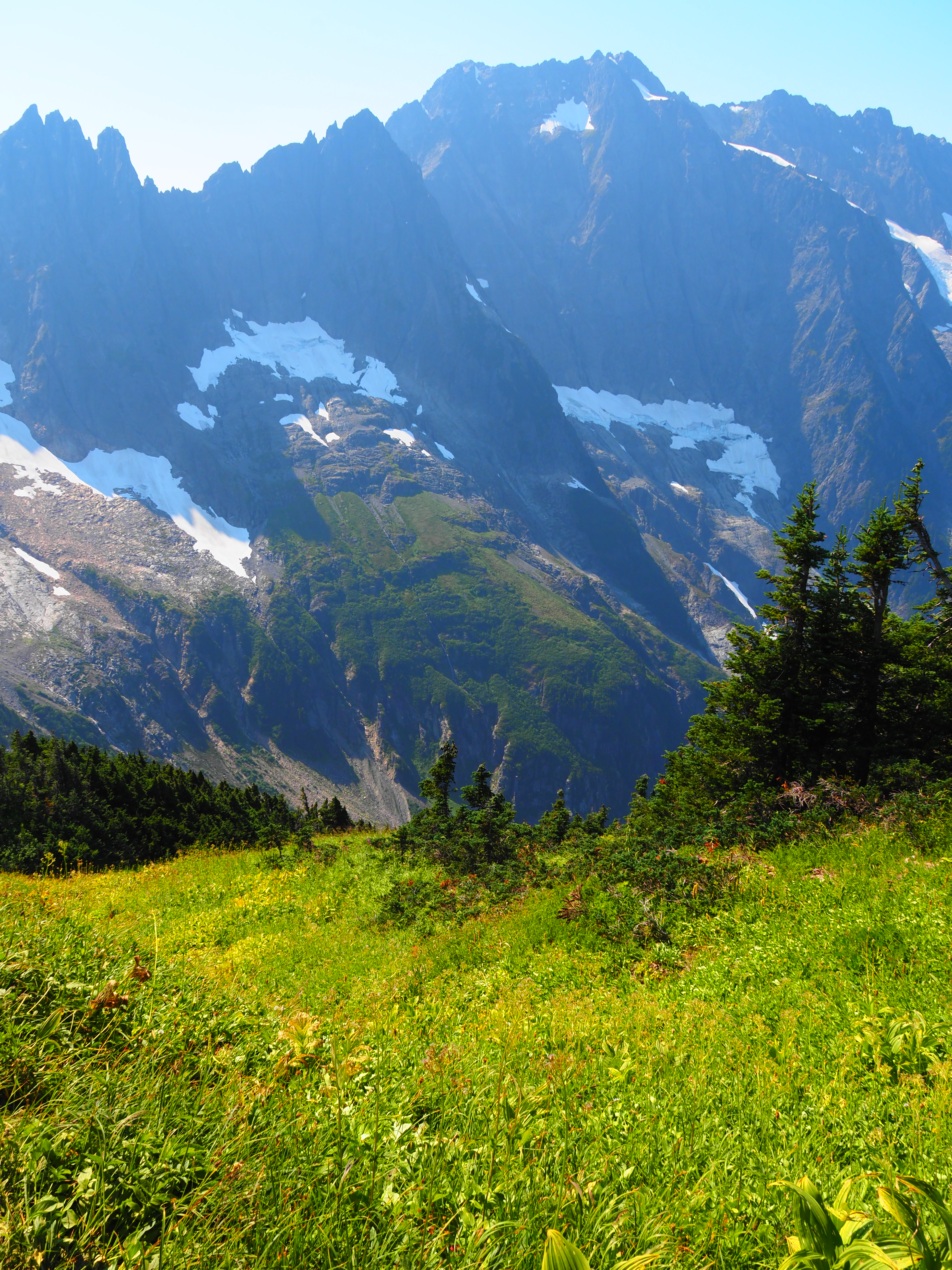
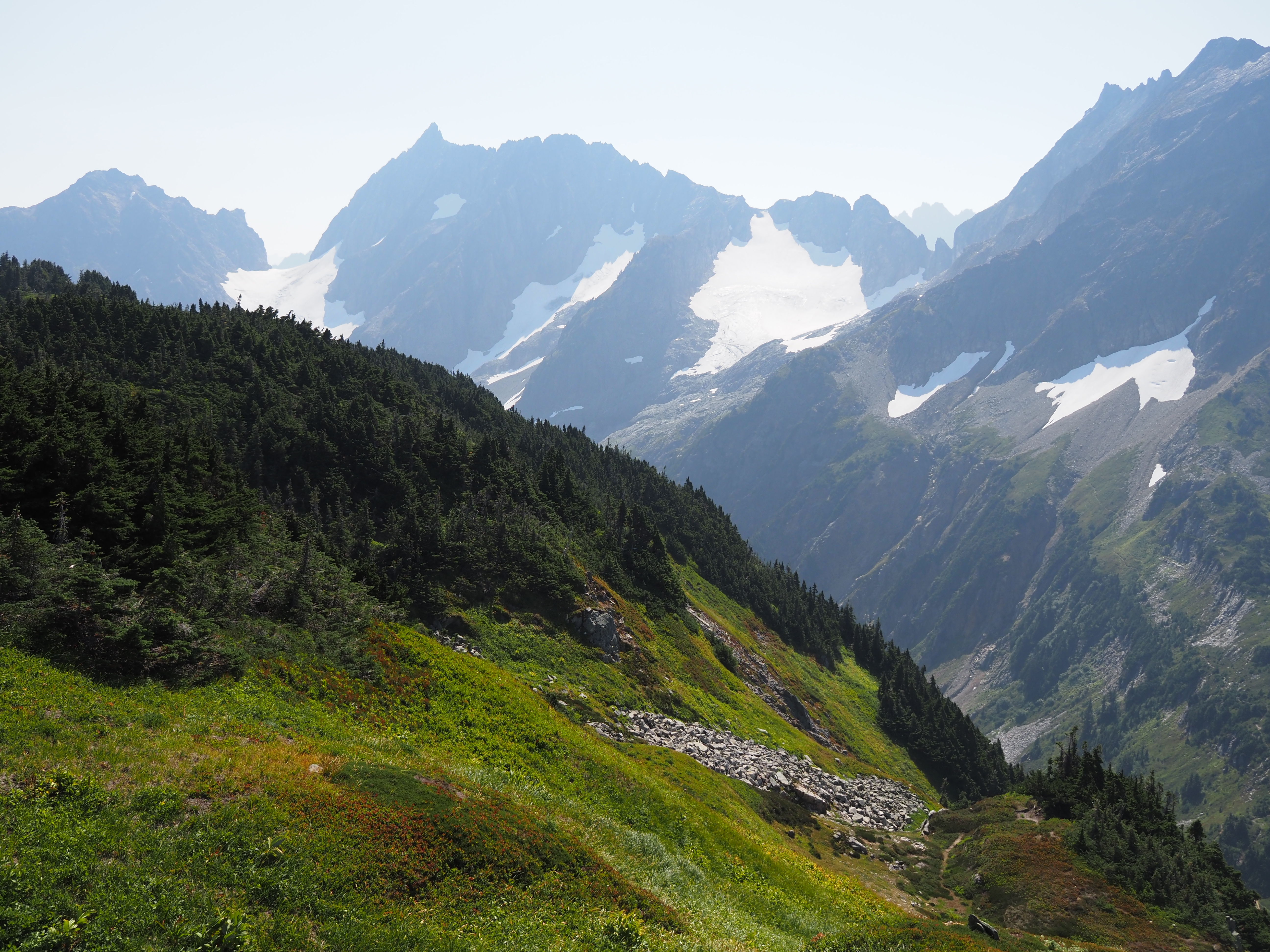
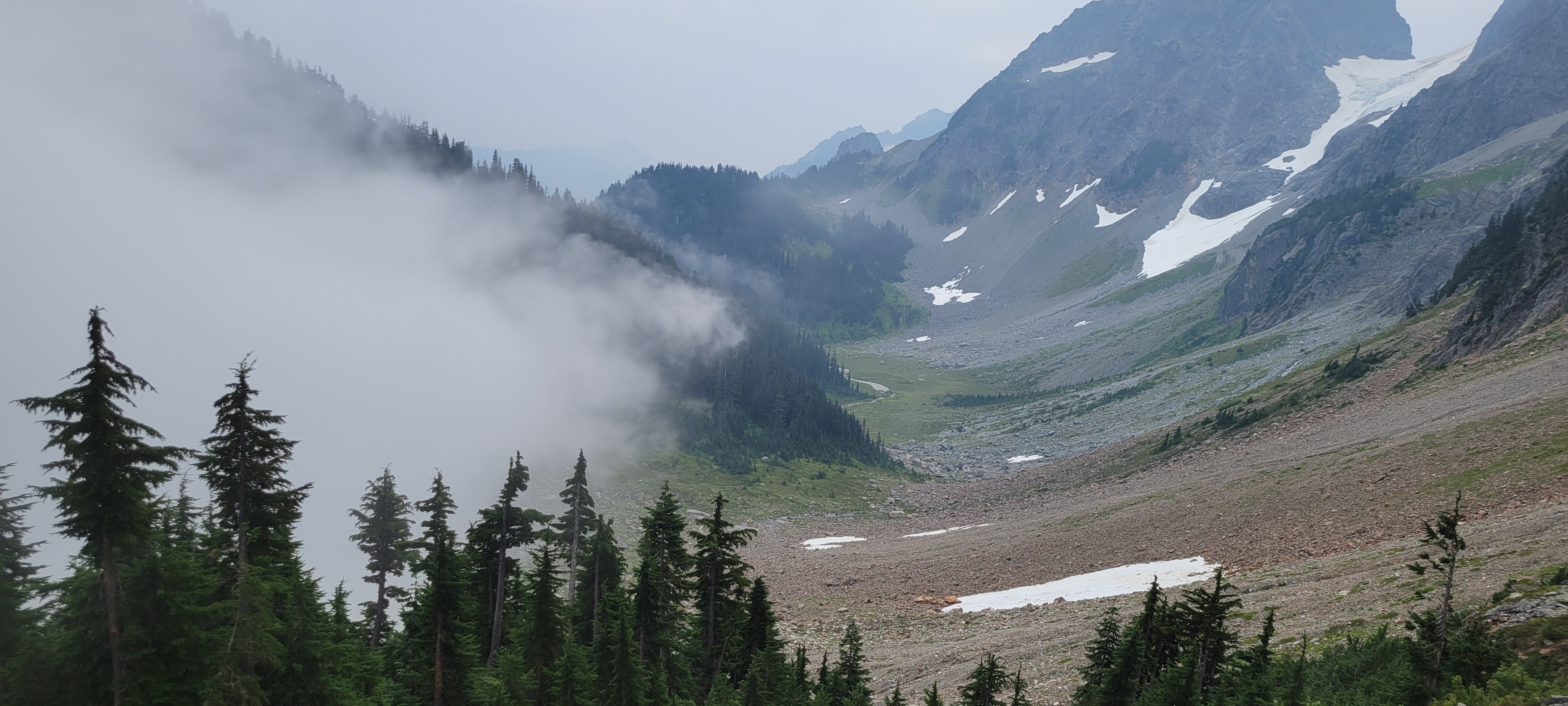
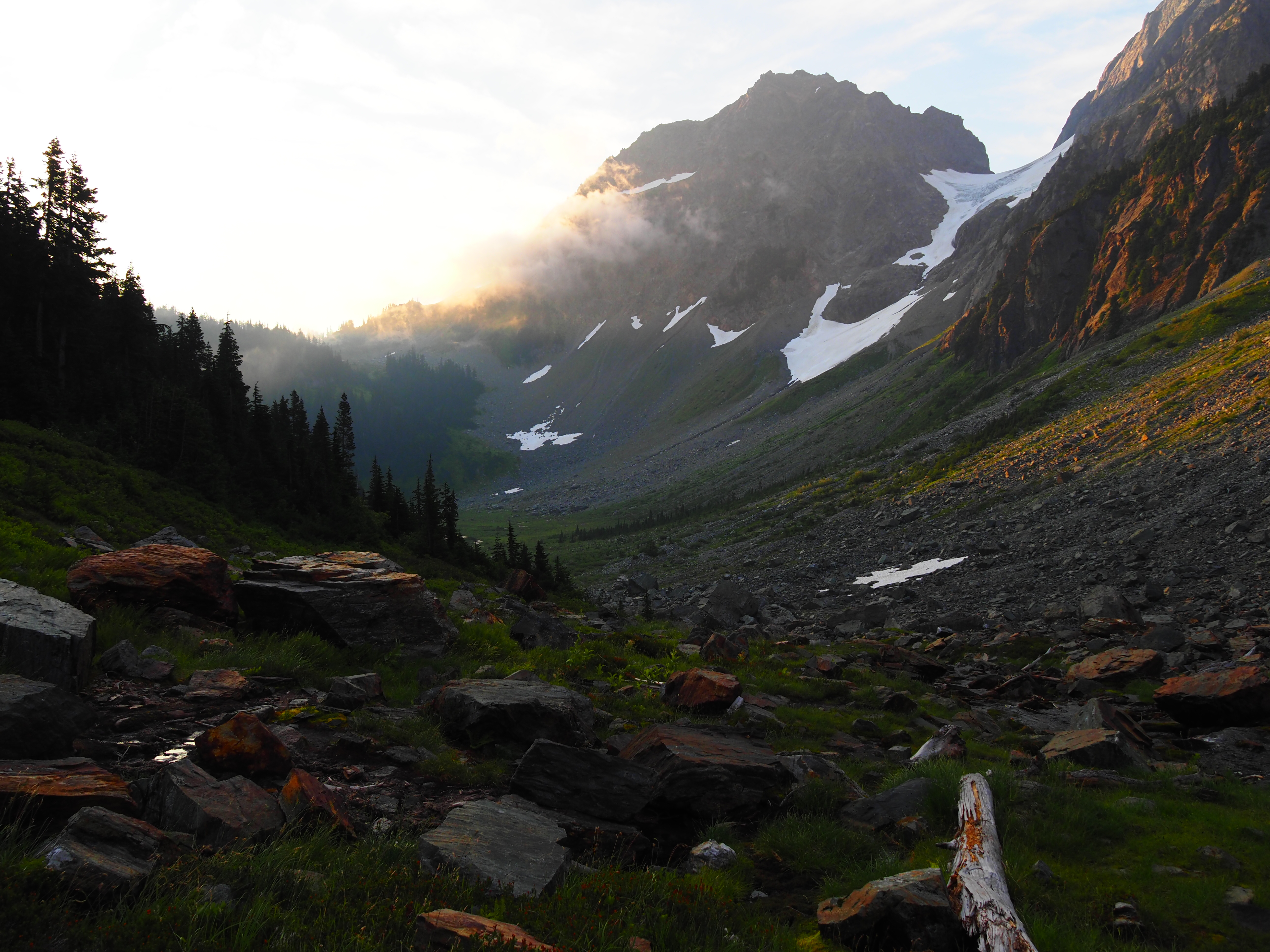
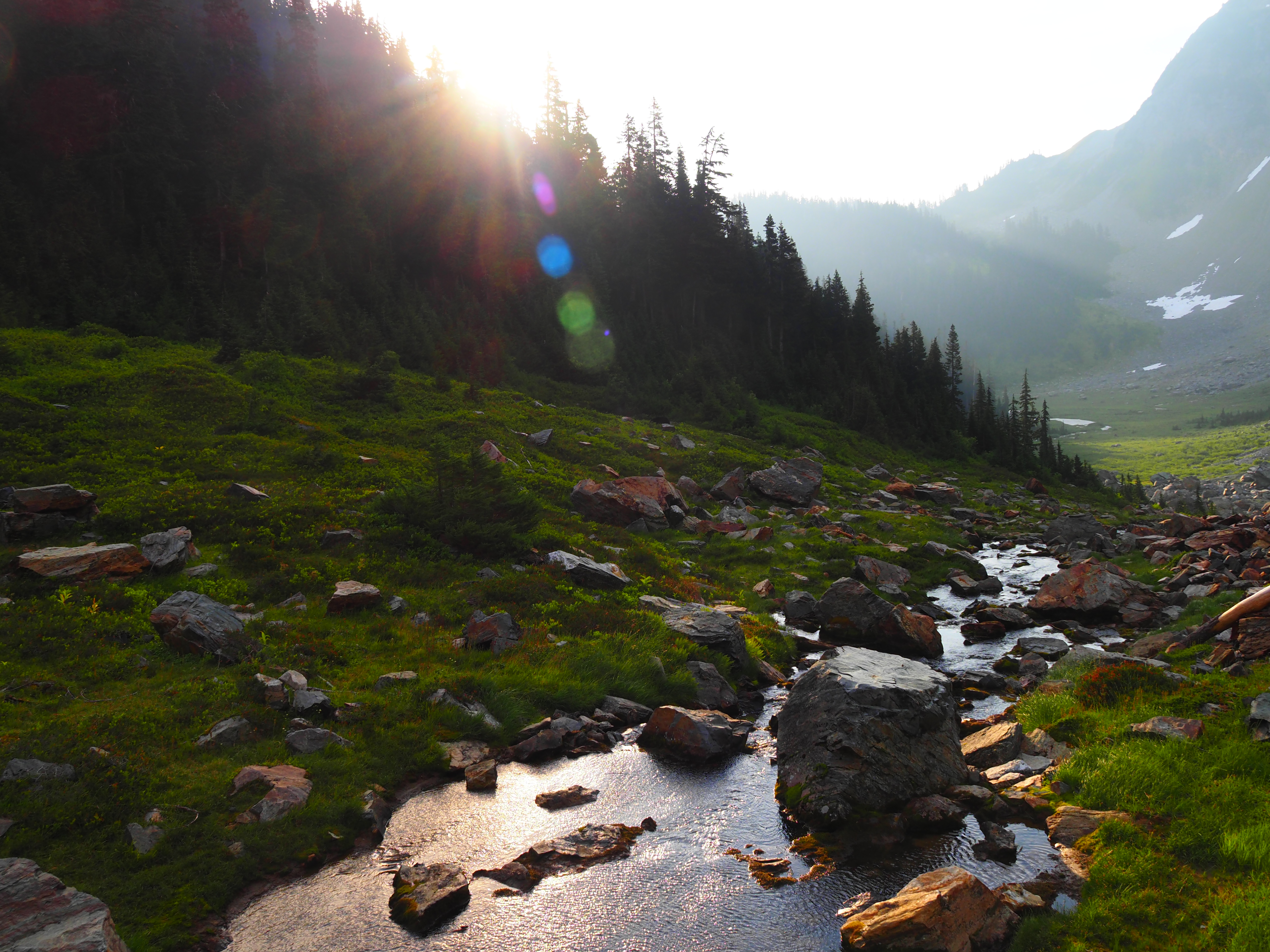
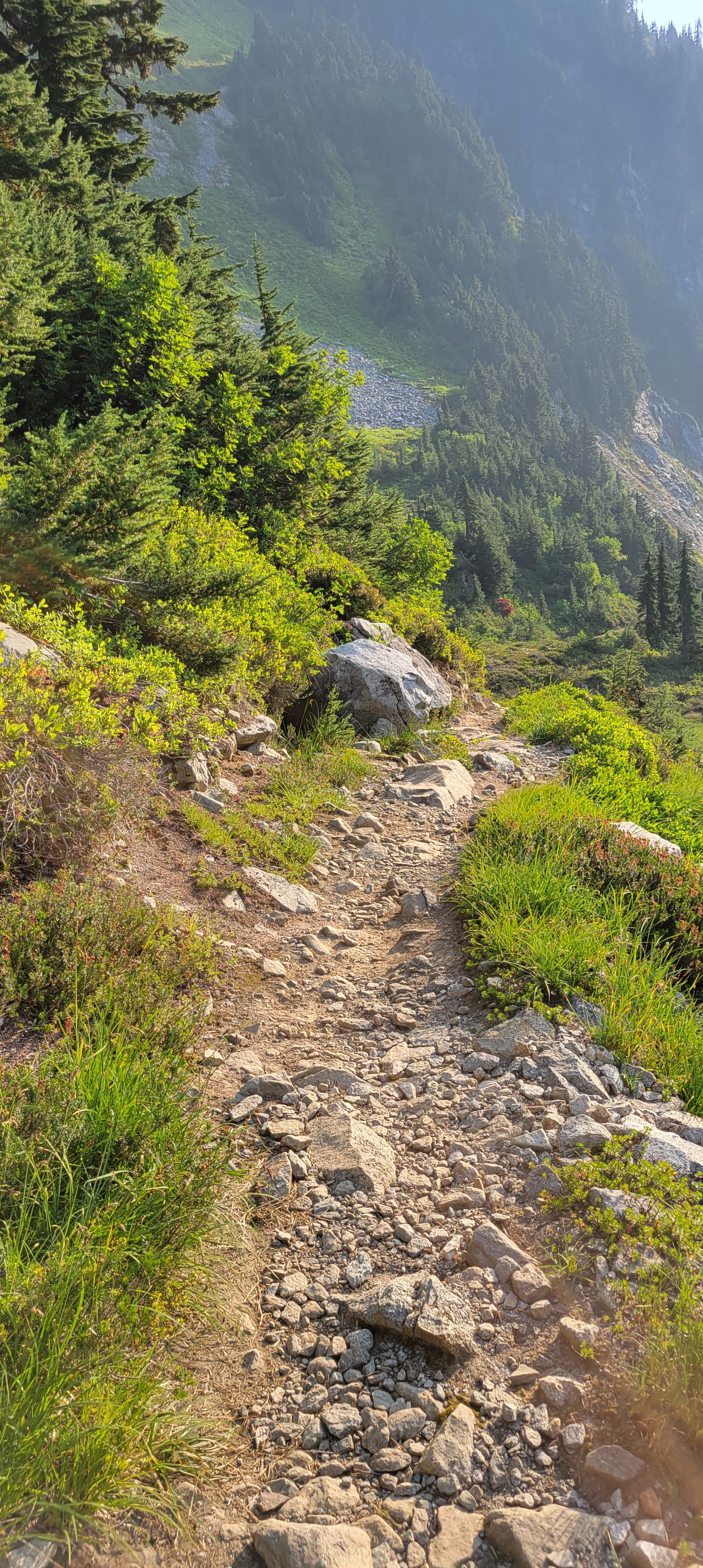
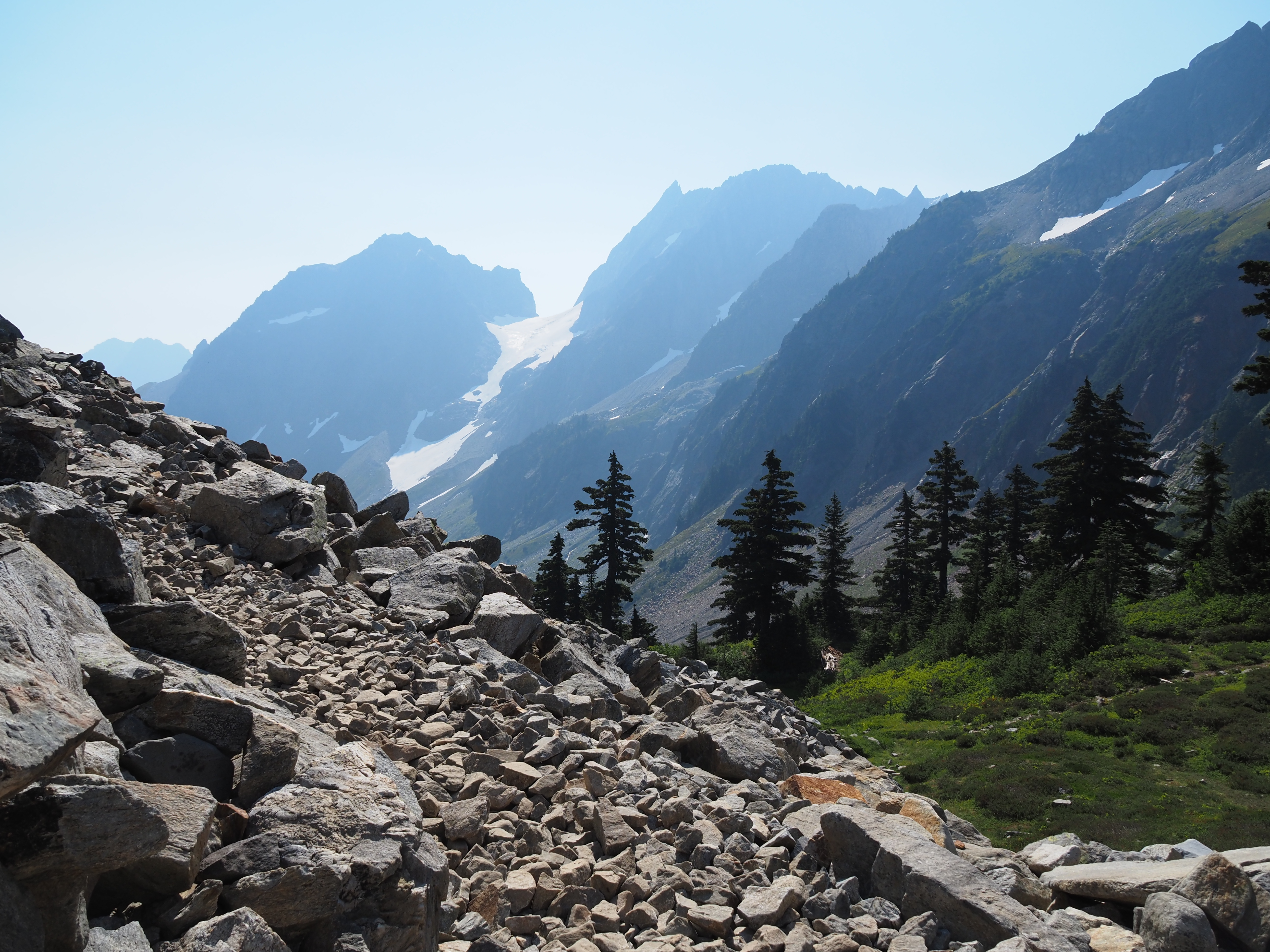
The pictures below were taken on the first day of my three days in North Cascade National Park. The hike up from the parking lot to the camp site at Pelton Basin took about 3 hours. The first few pictures below are from various parts along the trail. The fifth is the ‘basin’ itself, the valley that falls away from Cascade Pass. I’ve had occasion to say this before; the pictures fail to do justice to the sheer magnificence of the landscape.

Day Two: Ptarmigan Traverse Trail

The Ptarmigan Traverse is apparently a famous trail that involves crossing a glacier. It was admittedly a little too much of a climb for me; but I did manage to stumble along the trail for a mile or so. The views over the mountains were something to behold. But at the point where the trail dissolved into a field of loose rock, I gave up and turned back.

I’ve spent much of the week reading Belden Lane’s Solace of Fierce Places, this past week. Lane writes a good deal about apophatic theology, which is essentially the idea that we cannot give words or create images or even construct ideas that describe the fullness of God. God is simply too immense to be easily contained with the natural limits of human language, or even human experience. Except perhaps at the very boundaries of our experience, in those places or circumstances that force us to confront and acknowledge the limits of our capacity to control our environment, or to conform the landscapes we occupy to meet our needs or expectations.

Much of his thought revolves around his spiritual practice of spending time hiking and backpacking in the wilderness; and he calls upon the story of the Exodus to give shape to his own experience. The story of Israel’s forty years in the Sinai wilderness reveals a God who defies human expectations, who invites a spirituality rooted in the practice of relinquishing, of giving up the demands our ego places on us to exert our impulse to control the world around us. Only in giving up the demands our ego to control the world around us can we truly come into an authentic experience of God.

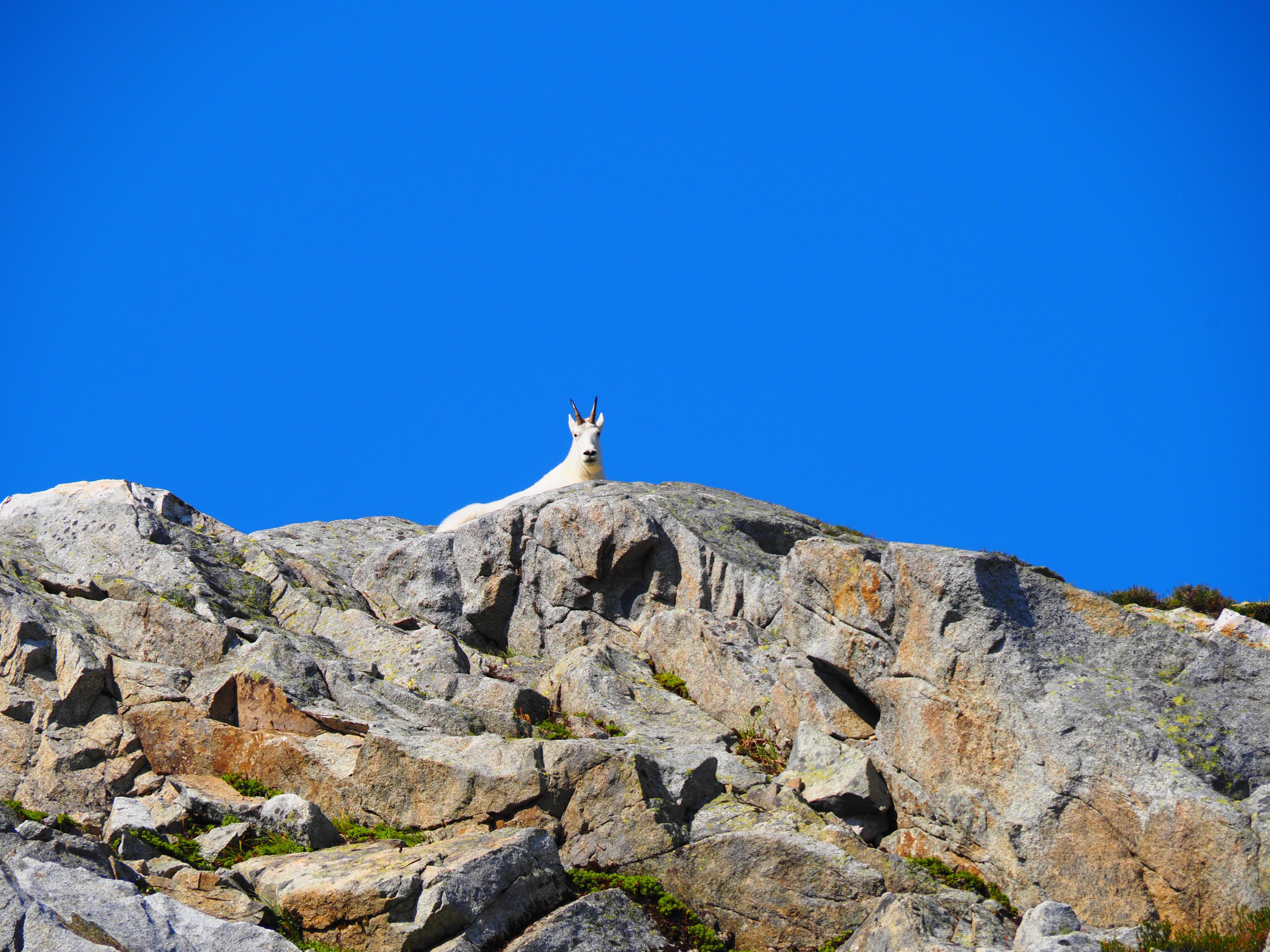
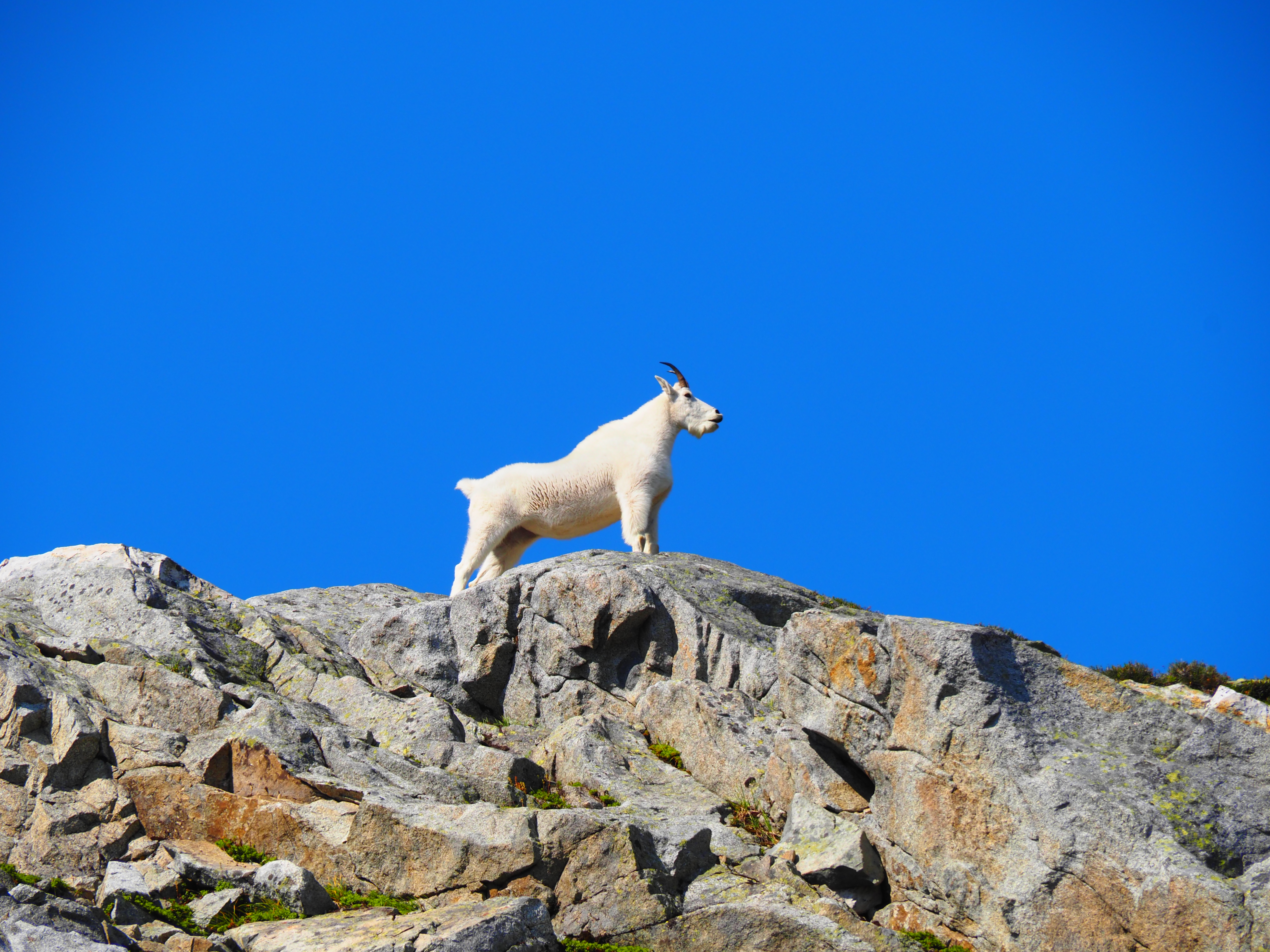
I was thinking about all of this along the trail back from Ptarmigan Traverse, as I listened to the cracking of the ice of multiple glaciers, as the reality of walking (and sometimes crawling) through a landscape that held me entirely in its control. The mountain goat staring down at me from his perch at the top of the ridge above the trail seemed to confirm all this.

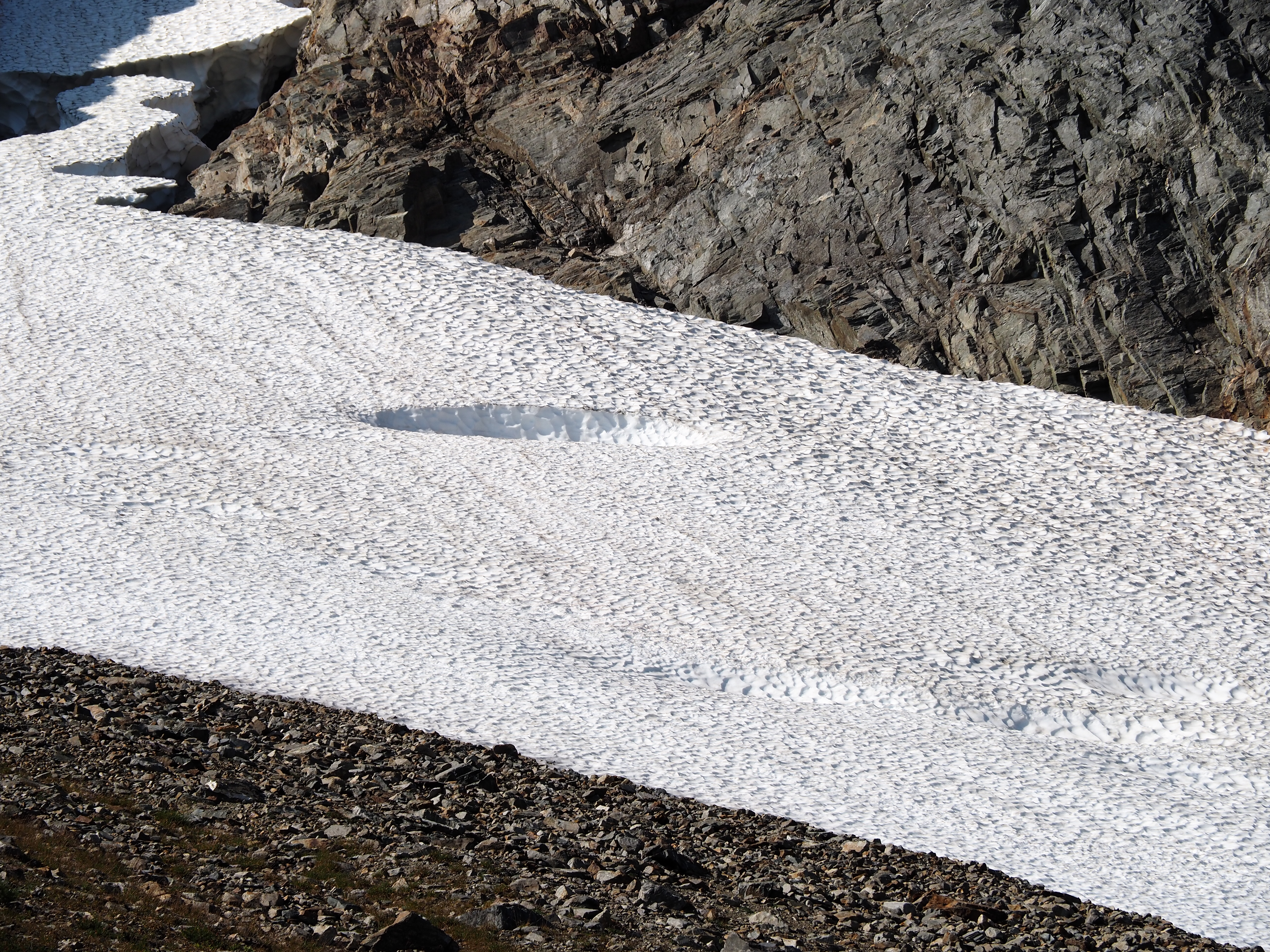
The pictures at the bottom show a glacial moulin, a roughly circular hole in glacial ice. Moulin is the French word for ‘mill,’ and they can run to hundreds of feet in depth. This was much smaller, only 10′ or so. They serve to carry meltwater from the surface to the drainage at the edge of the glacier; and to accelerate the movement of the glacier.
Day Three: Sahale Arm

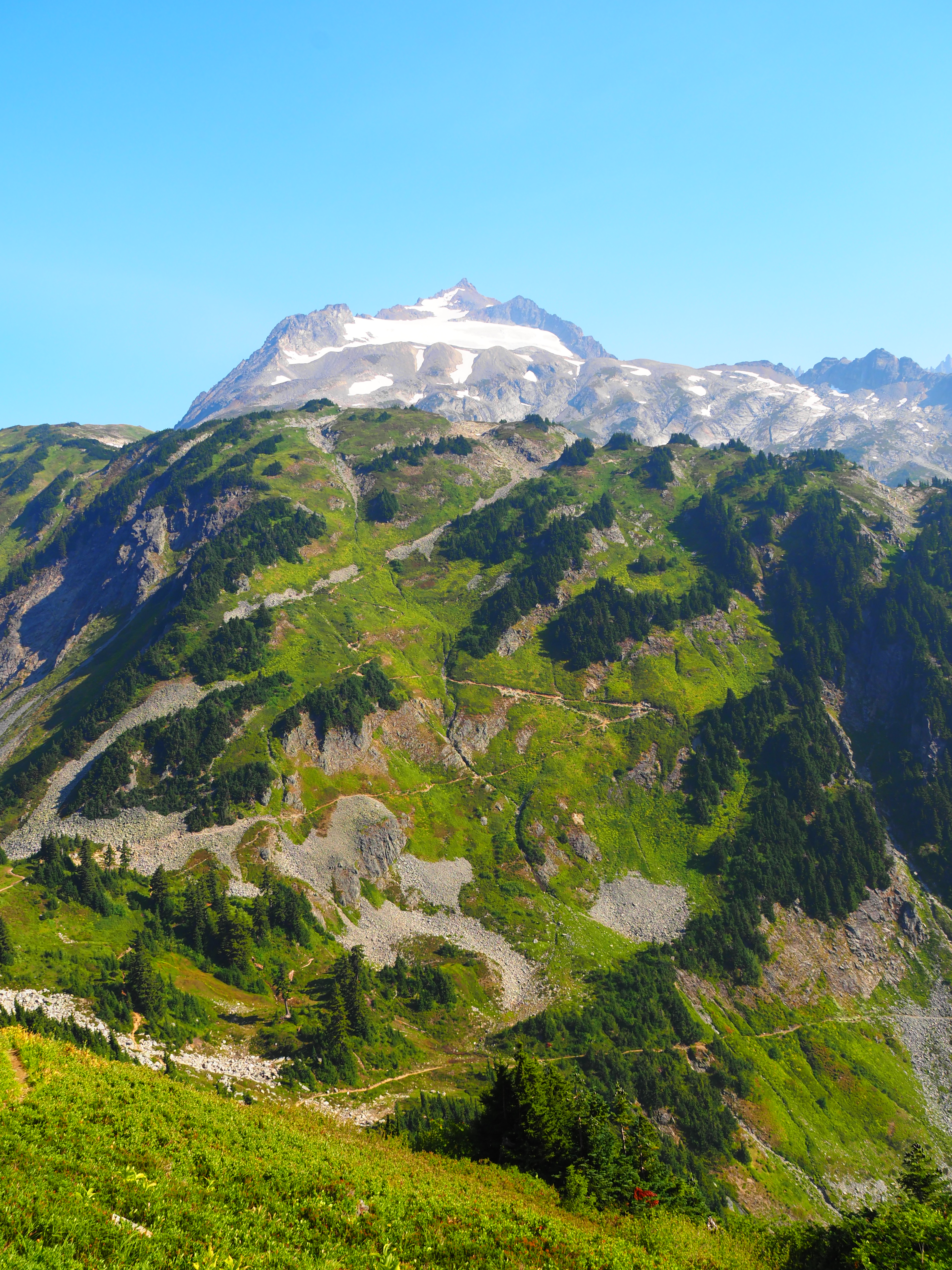
Sahale (Sa-ha-lee) is the most prominent high point in this part of the Cascade range, reaching up to about 8600 feet. I ran into a number of people (much younger than I am) who were planning on climbing to the top. It seemed prudent to me to walk to the start of the glacier (Sahale Peak can be seen in the last two pictures in this set).

Even without reaching the peak, the views from the top of the climb were spectacular. I don’t know that I’ve ever seen a range of mountains that seem to go on and on, without a visible end.
Day Four: Wind & Fog

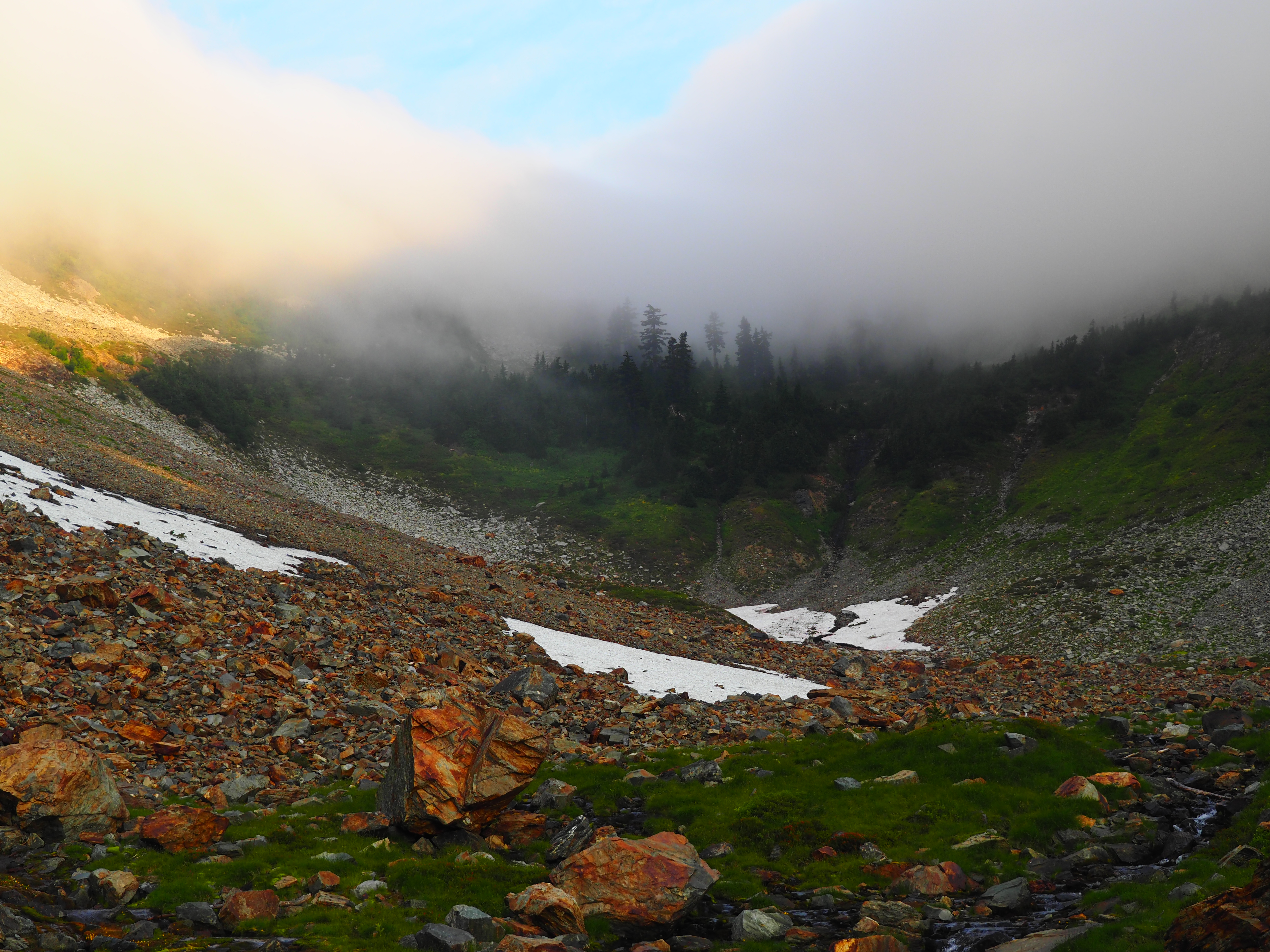
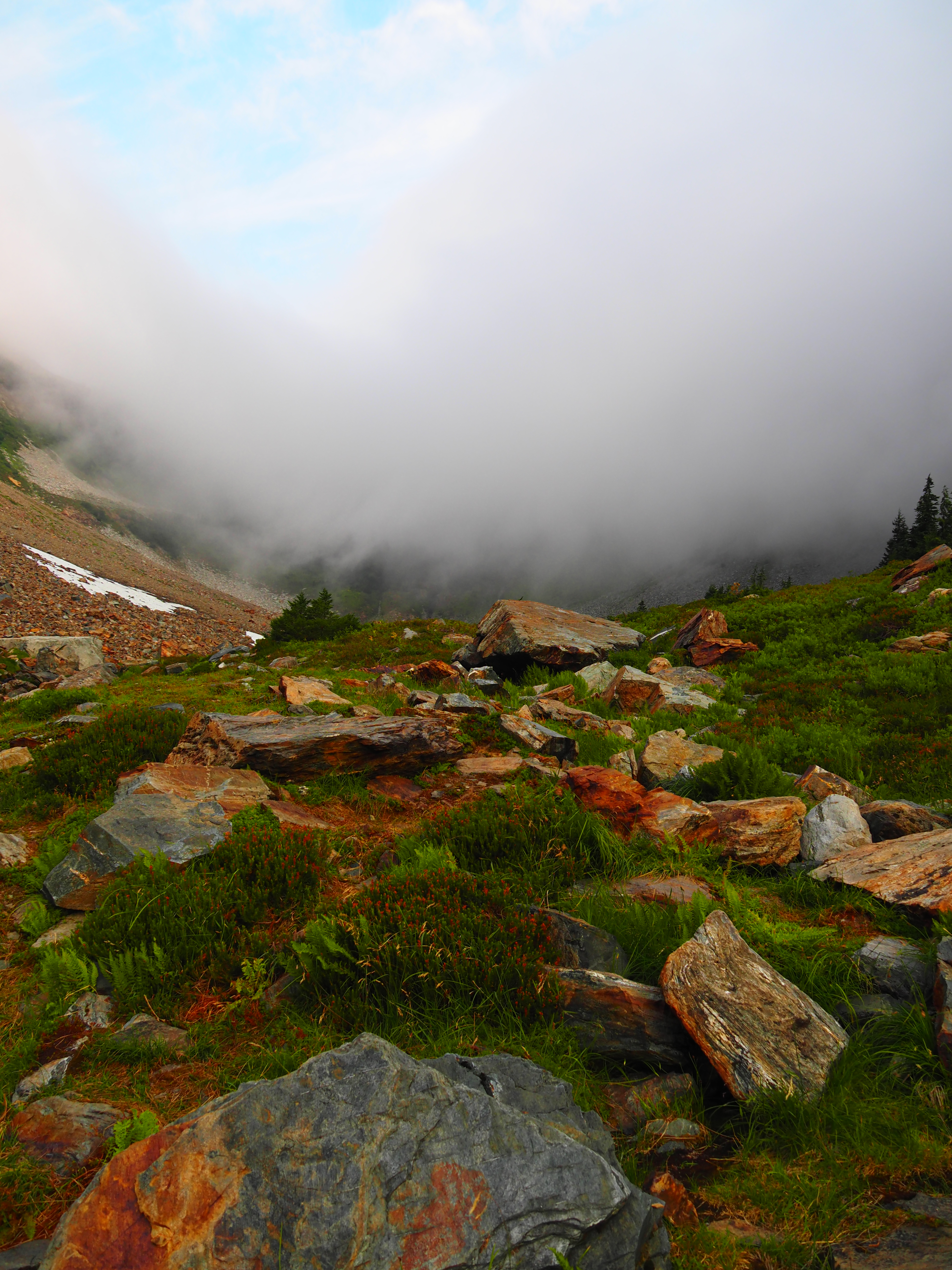
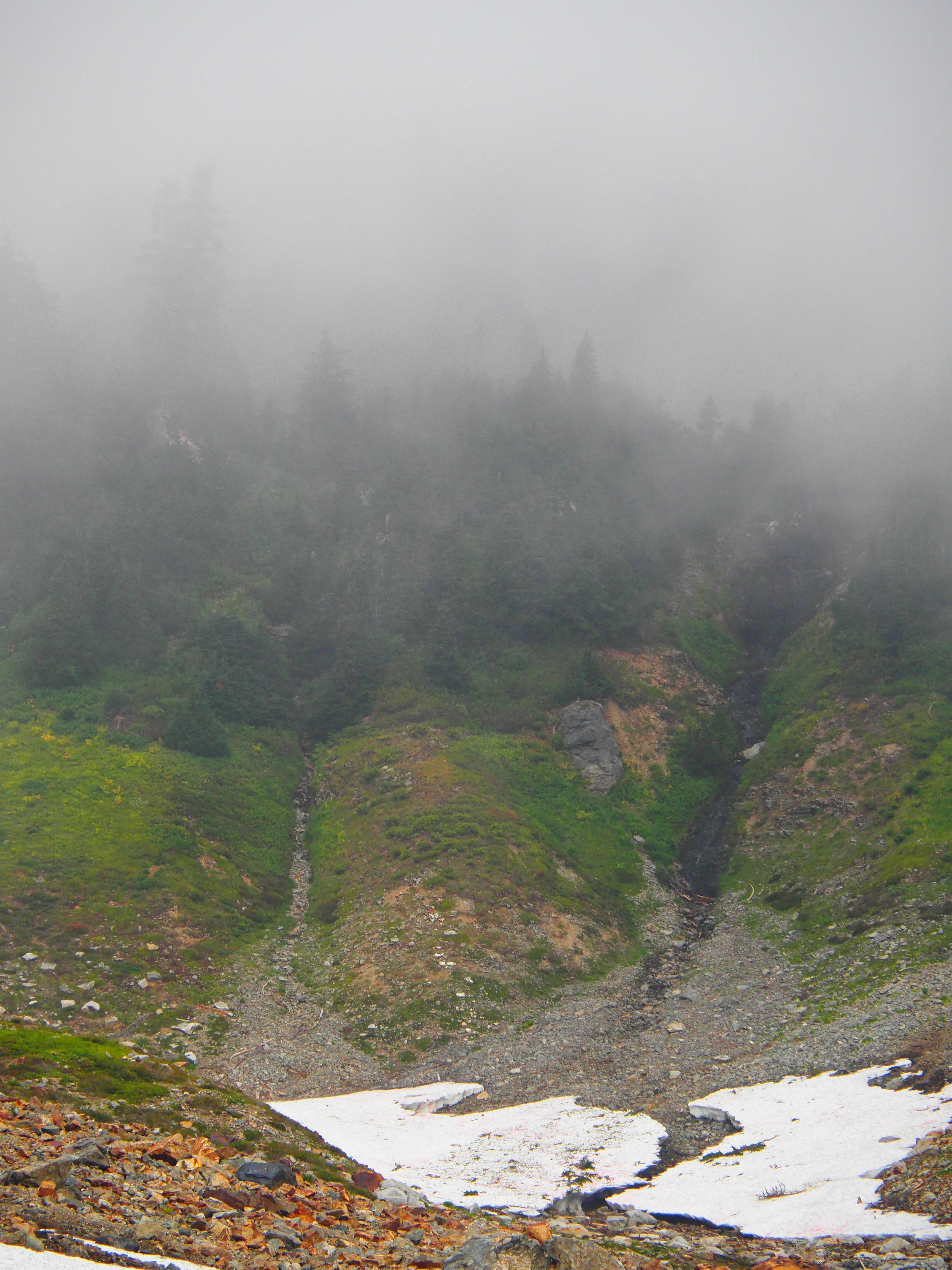
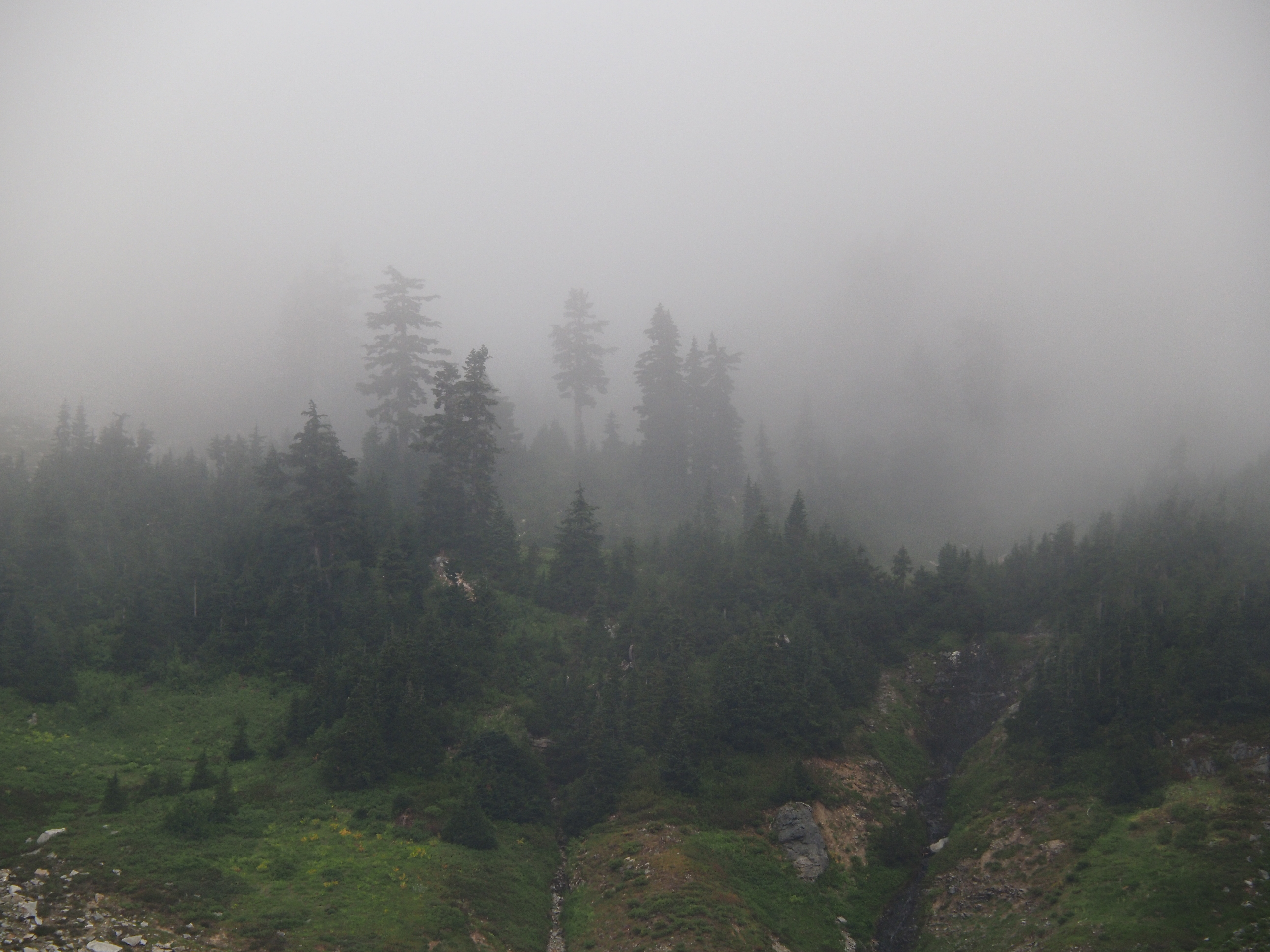
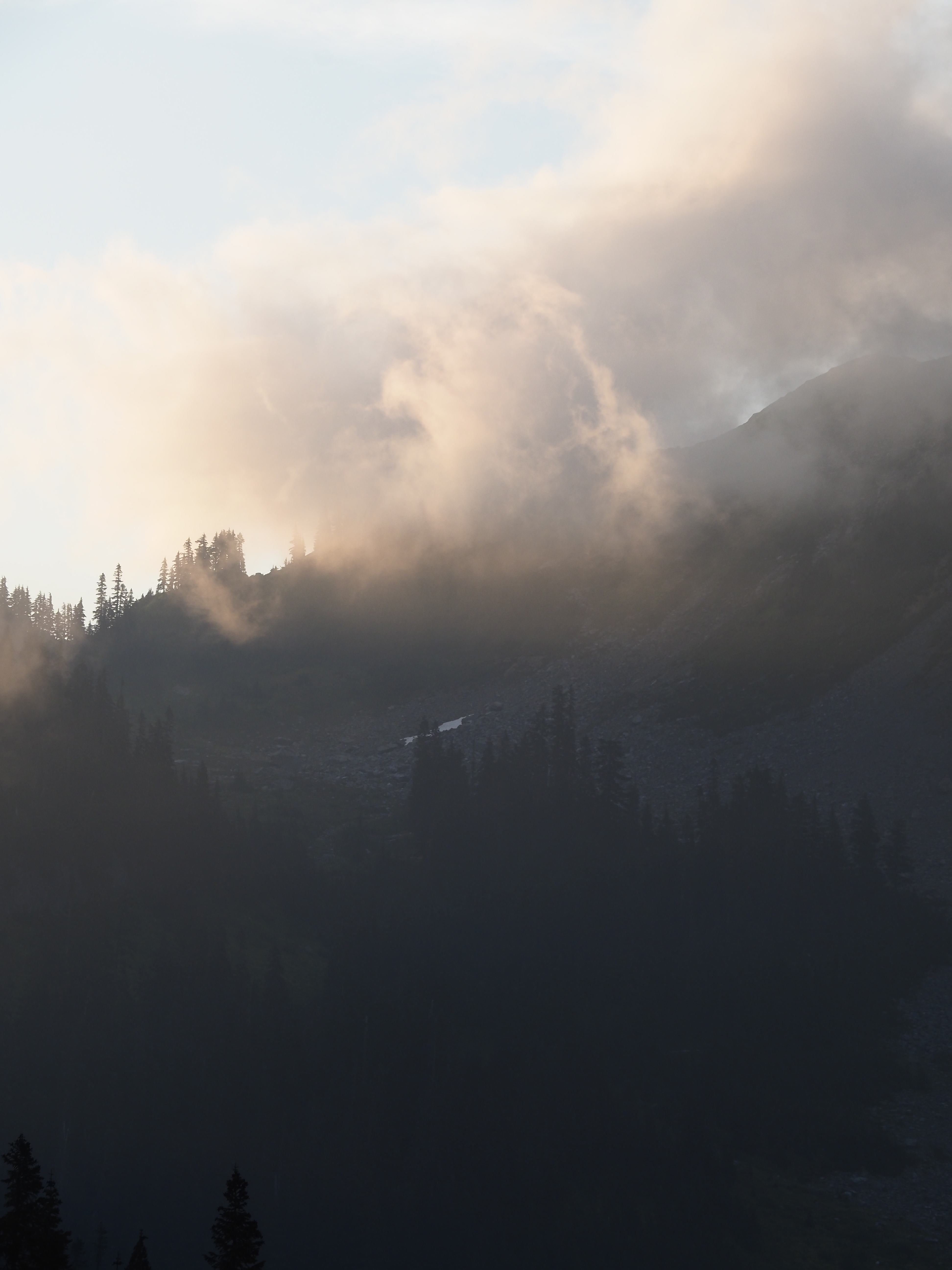
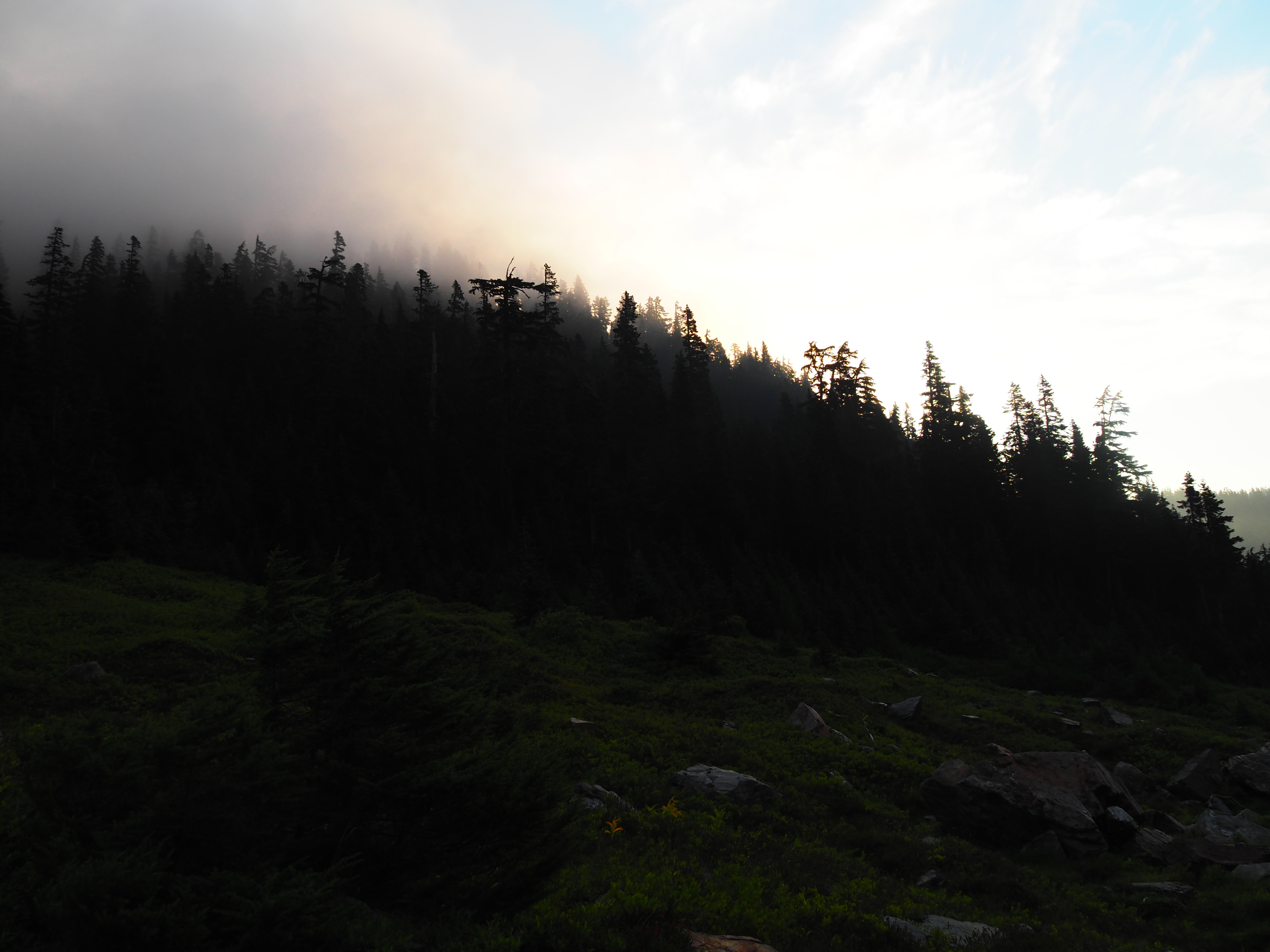
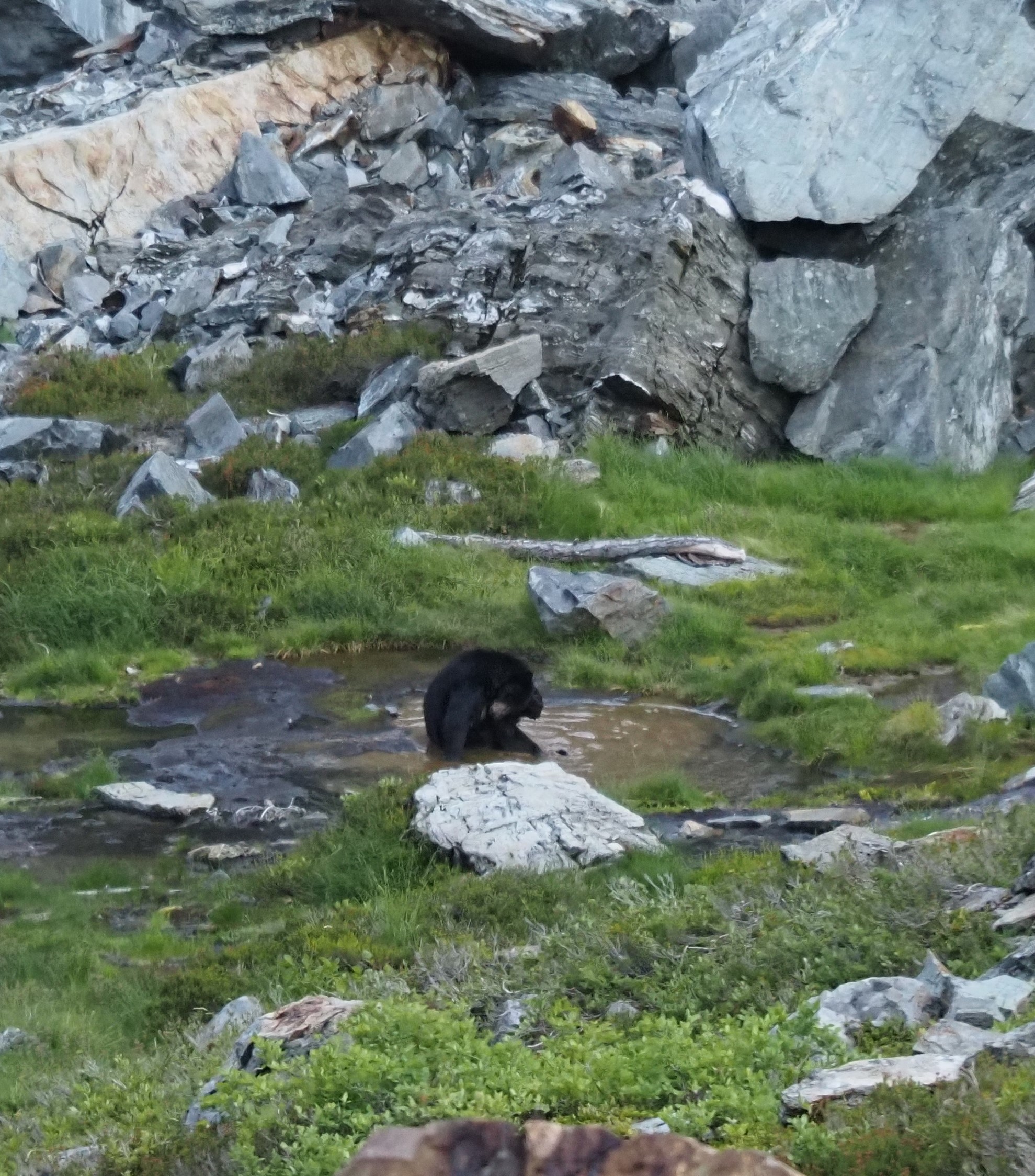
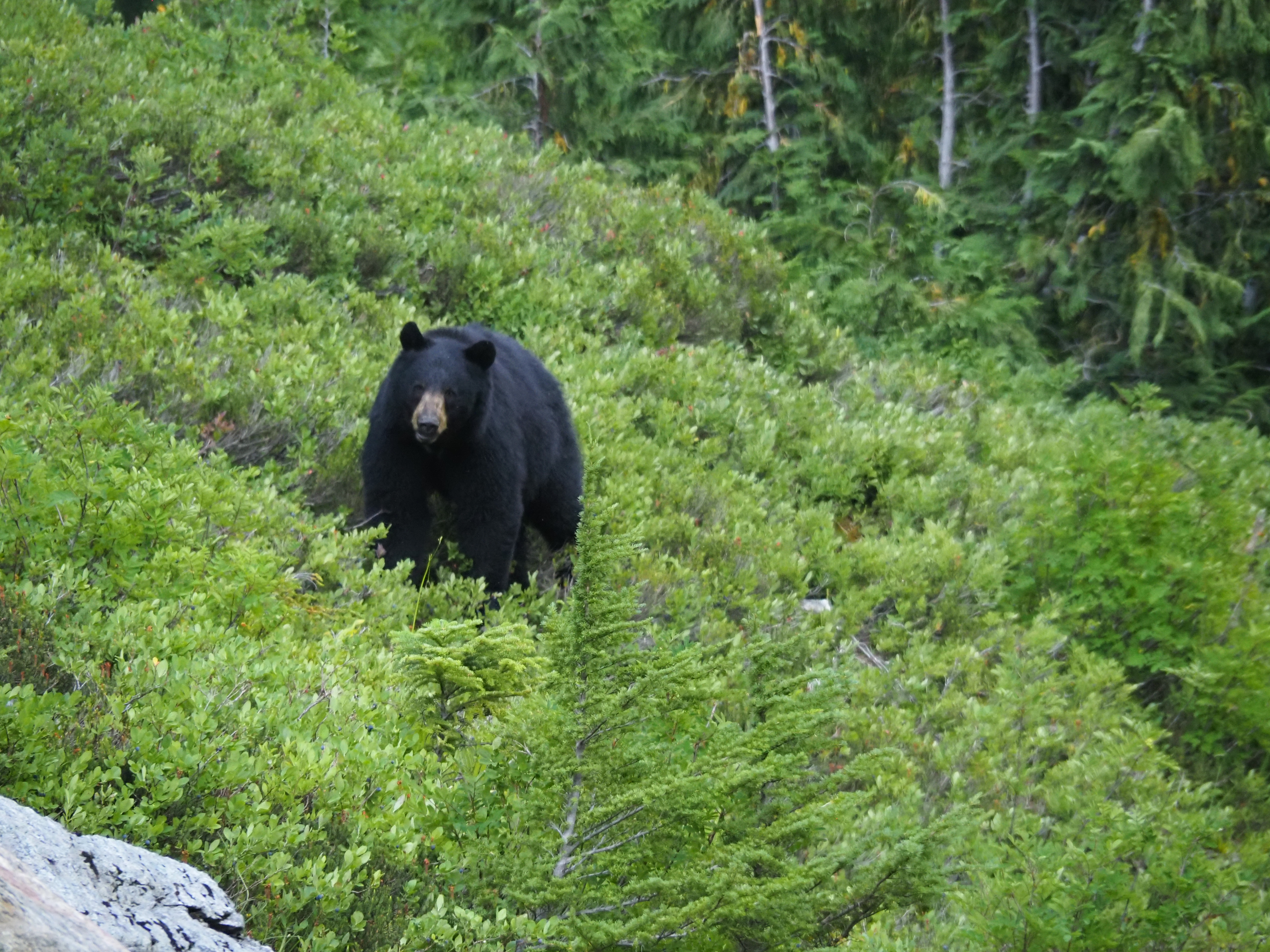
Weather can change quickly and dramatically in the Pacific Northwest. I woke up on my final day in the North Cascades to a biting wind and this immense fog bank drifting over the top of Cascade Pass on pushed down the valley by an almost constant wind. It didn’t keep our resident bear away, though. Apparently wild blueberries are great in any weather.

Sabbatical Notes: Animals

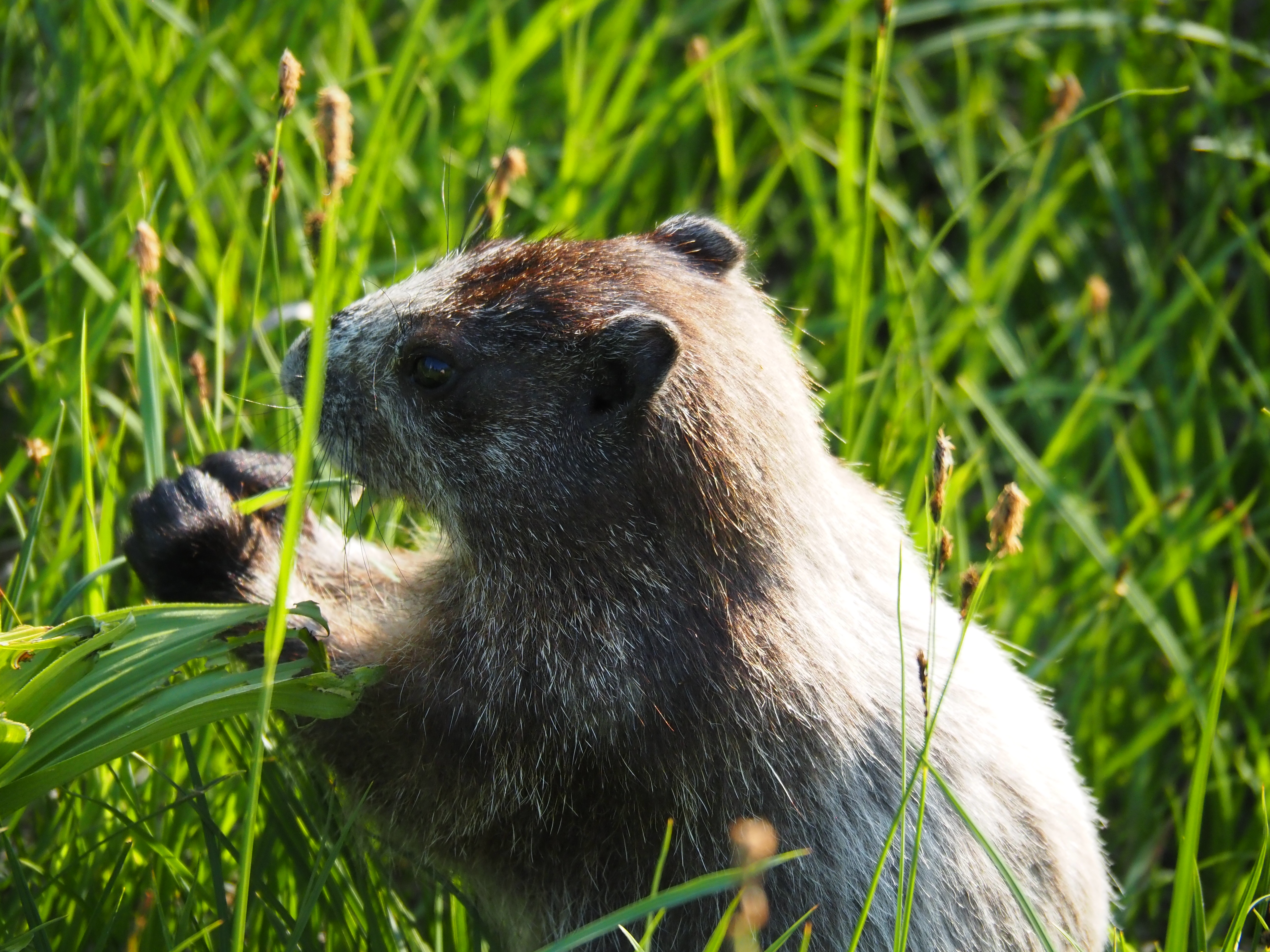
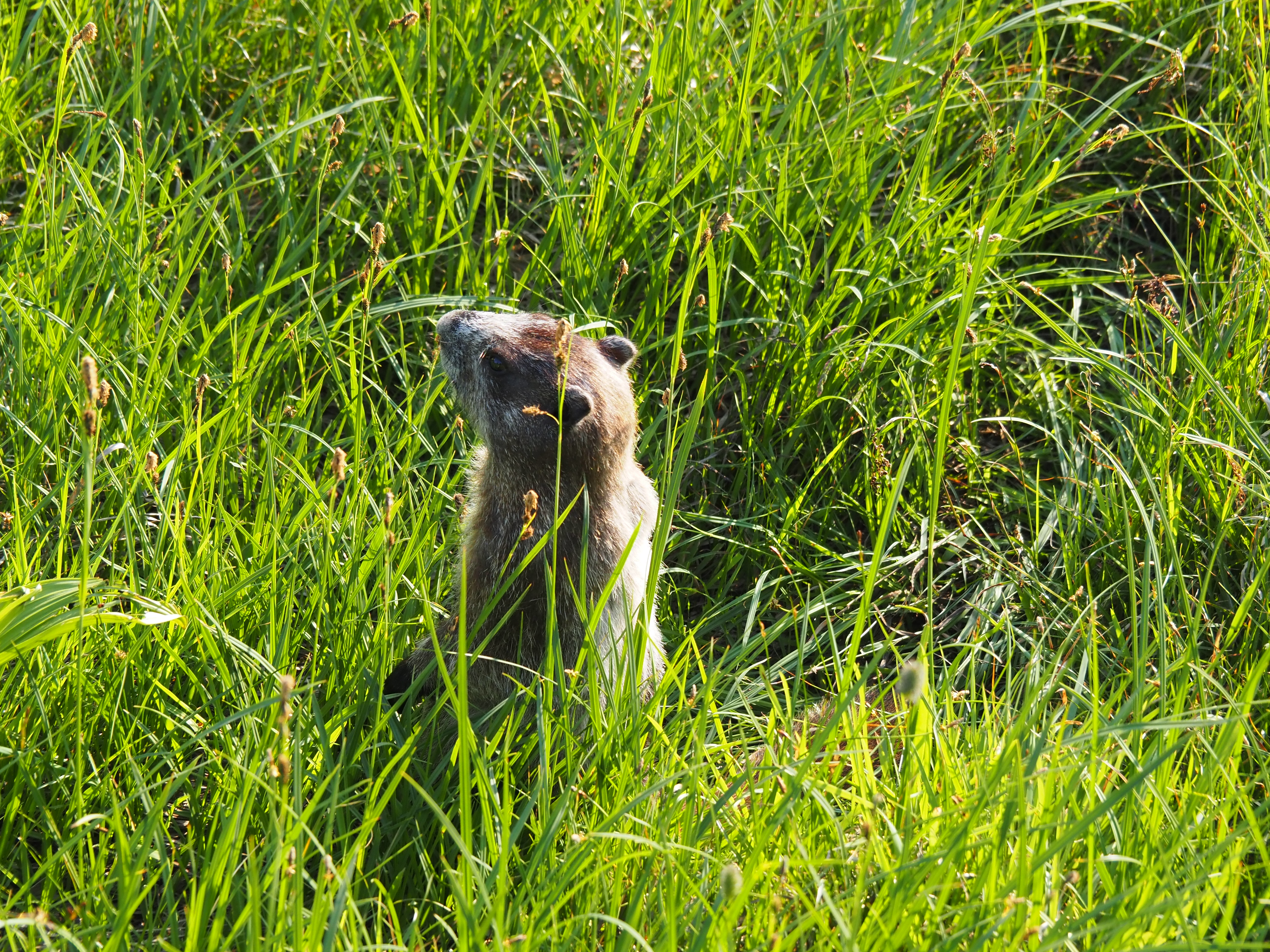
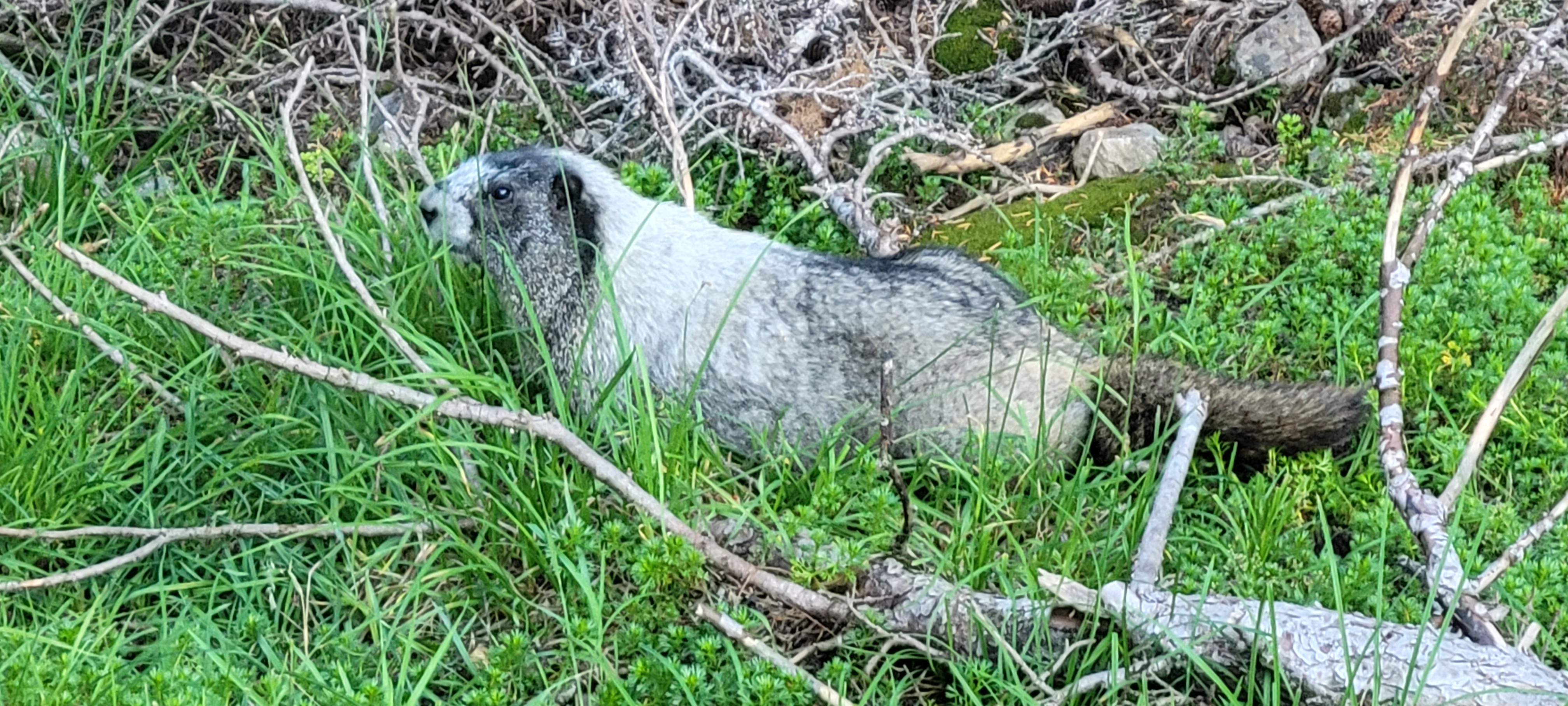
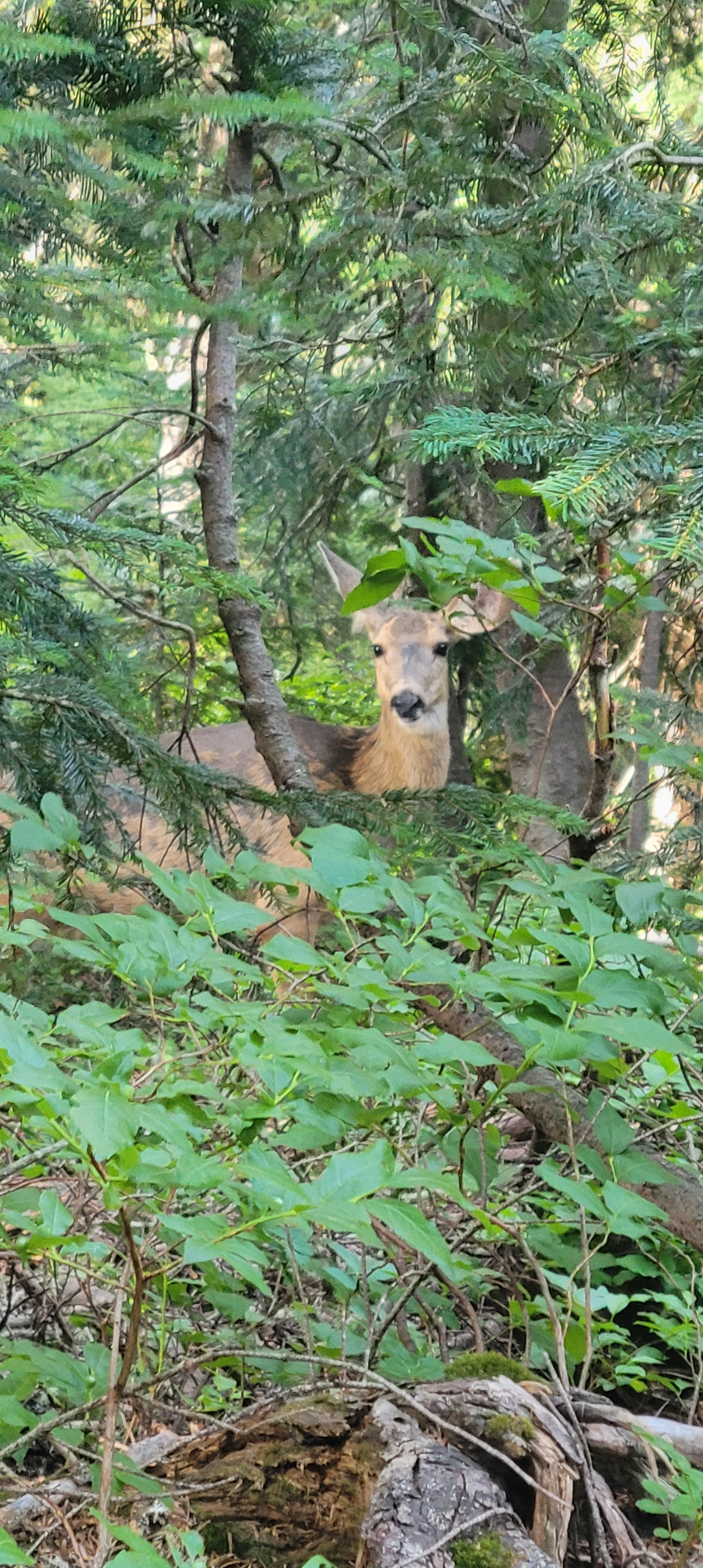
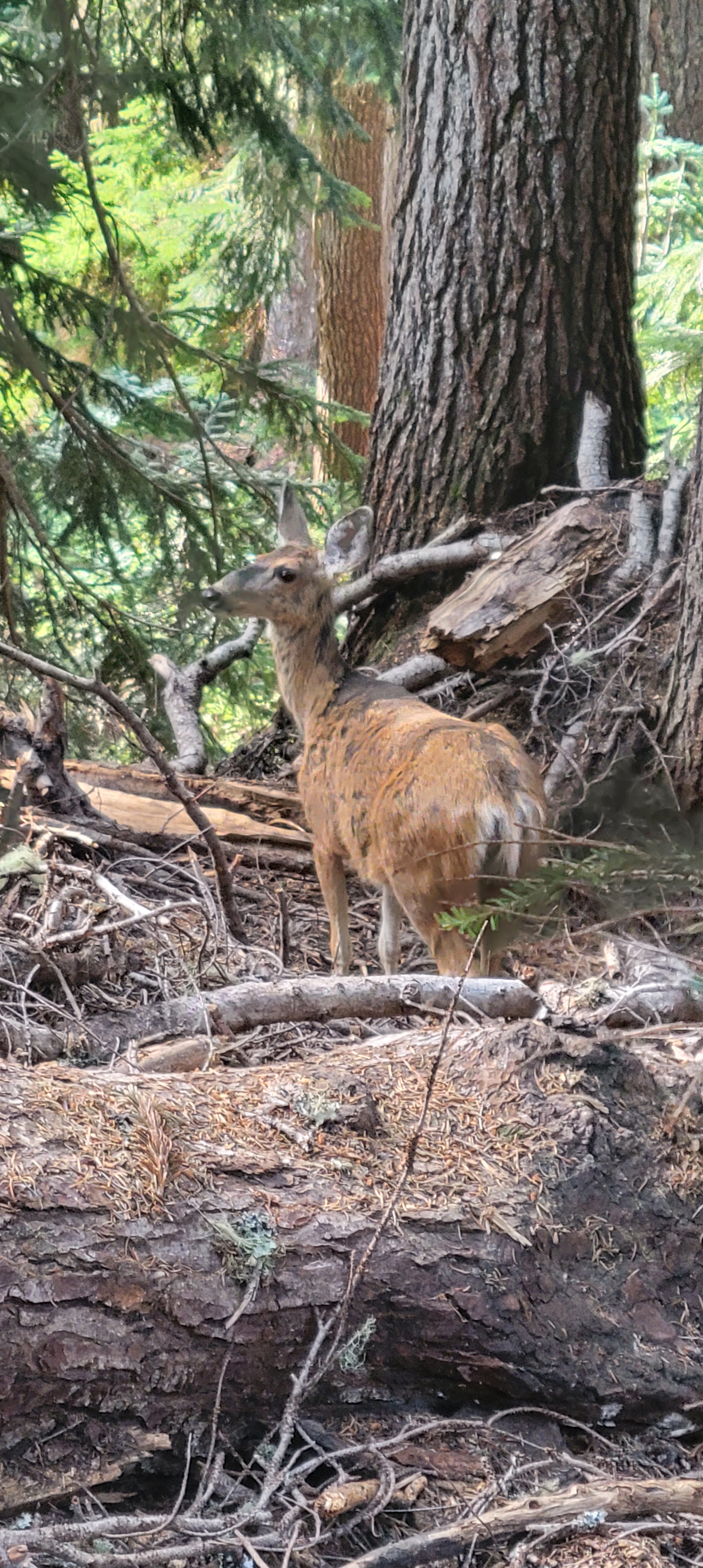
Animal sightings were pretty rare in the first few weeks of my sabbatical, but in Cascades National Park, there was a sudden abundance of encounters. I had never seen a Marmot before, but they seem a completely endearing little animal. I sat in a little glen with this one for about 15 minutes, as she grazed about five feet from me.

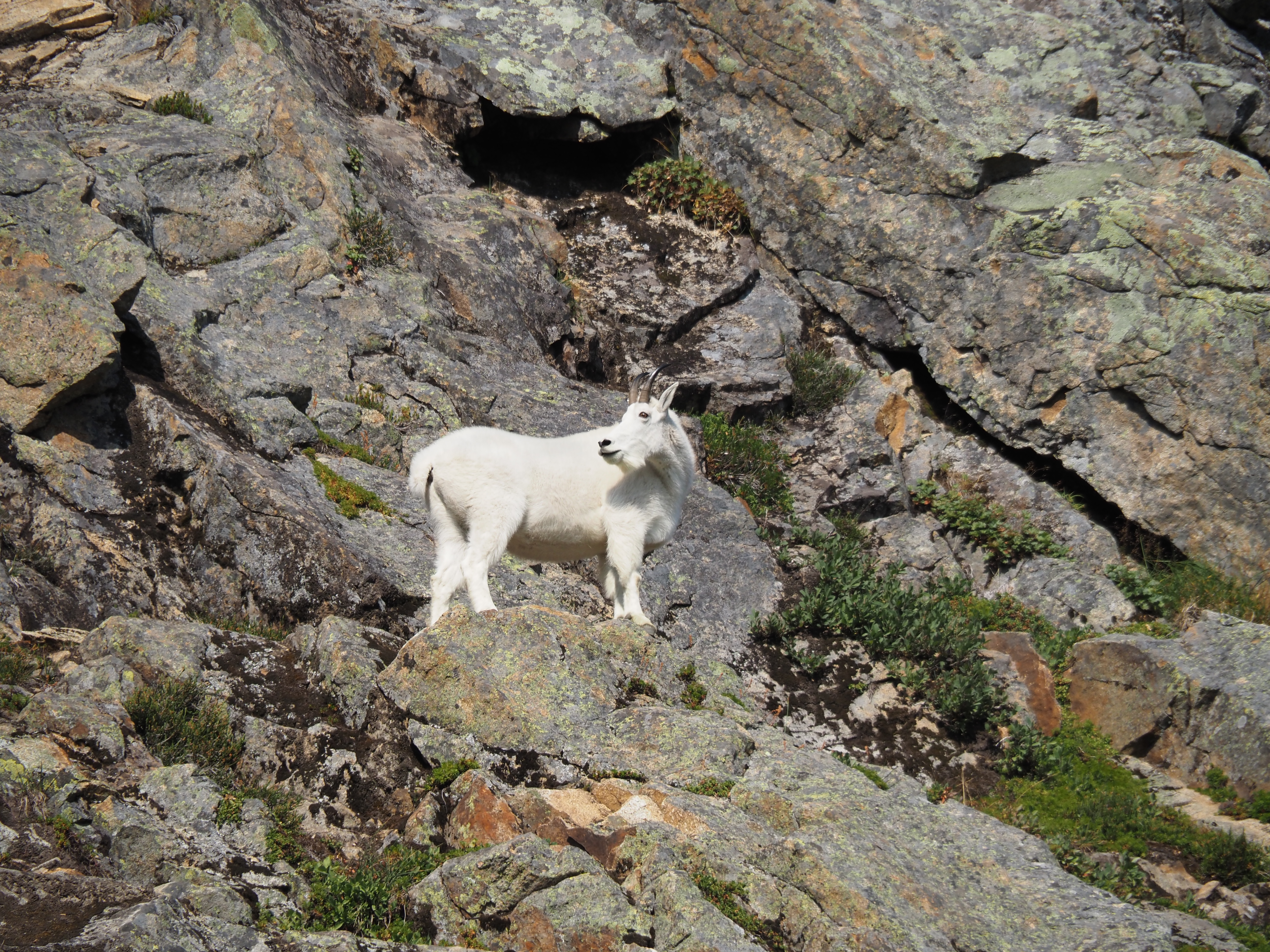
The Mountain Goat appeared along a ridge during the course of a morning hike, and drifted over a series of rock ledges as I walked along the trail below.

The Black Bear is one of a pair of siblings living in the valley adjacent to the campground at Pelton Basin. They spend much of the day grazing on the abundance of wild blueberries that thrive along the creek running down from the glaciers. This one was around for all three days, seemingly aware of the our presence and generally content to keep his distance. His brother or sister seemed a little more adventurous, wandering into the woods to look for food along the trails leading from the campground down to the creek. One morning, as I was coming up from the creek with water for breakfast, I came around a corner of the trail into a small glade to find her eating breakfast a few feet off the trail. It’s difficult to say for certain which of us was more startled; but she jumped quickly back into the woods and continued to graze (the last picture in the bear series).

Even armed with the knowledge that Black Bears are typically harmless unless threatened, coming so close to something this big was a fairly powerful reminder of how marginal our place is in wild places.

Sabbatical Notes 4 Wildflowers

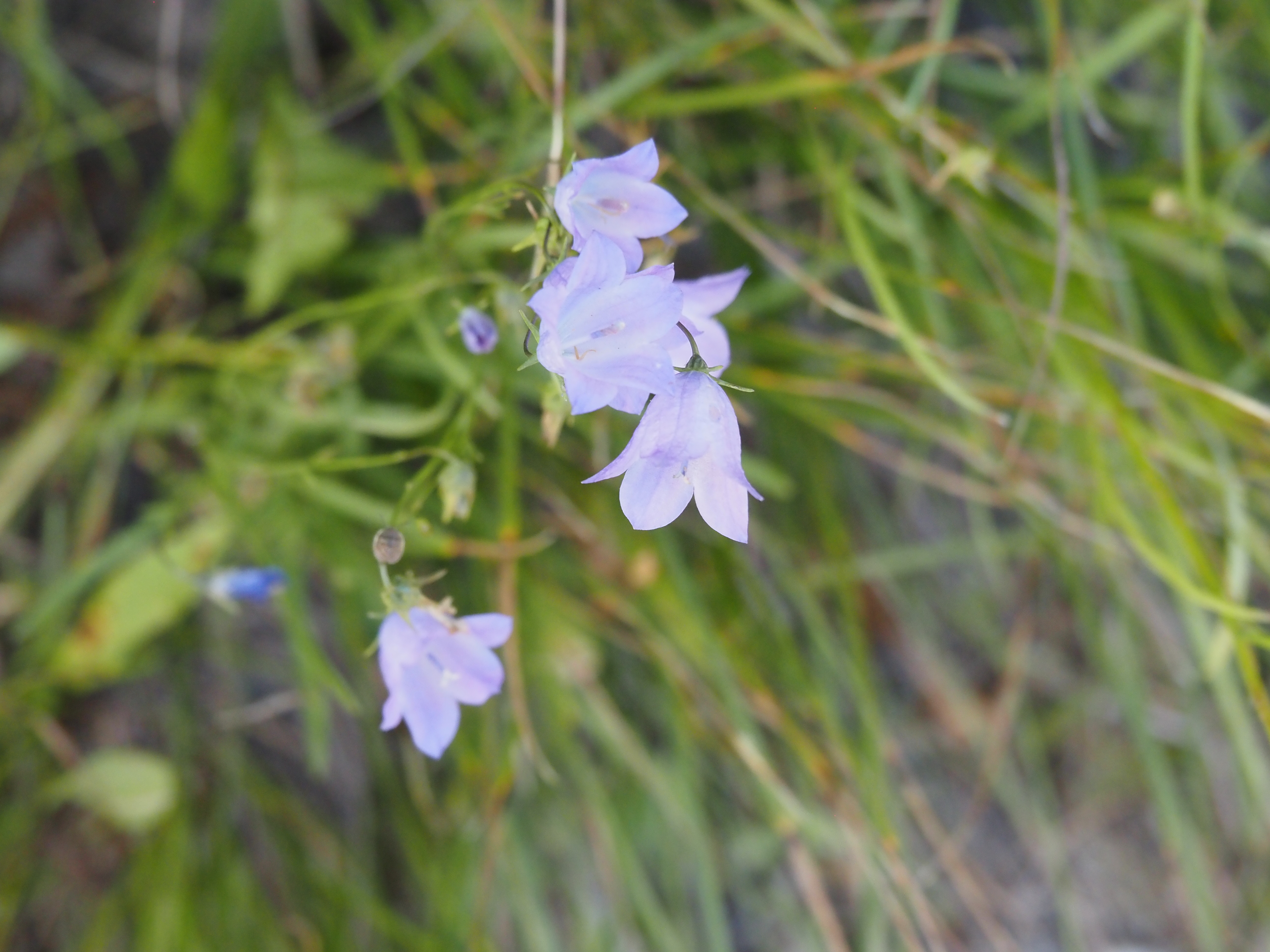
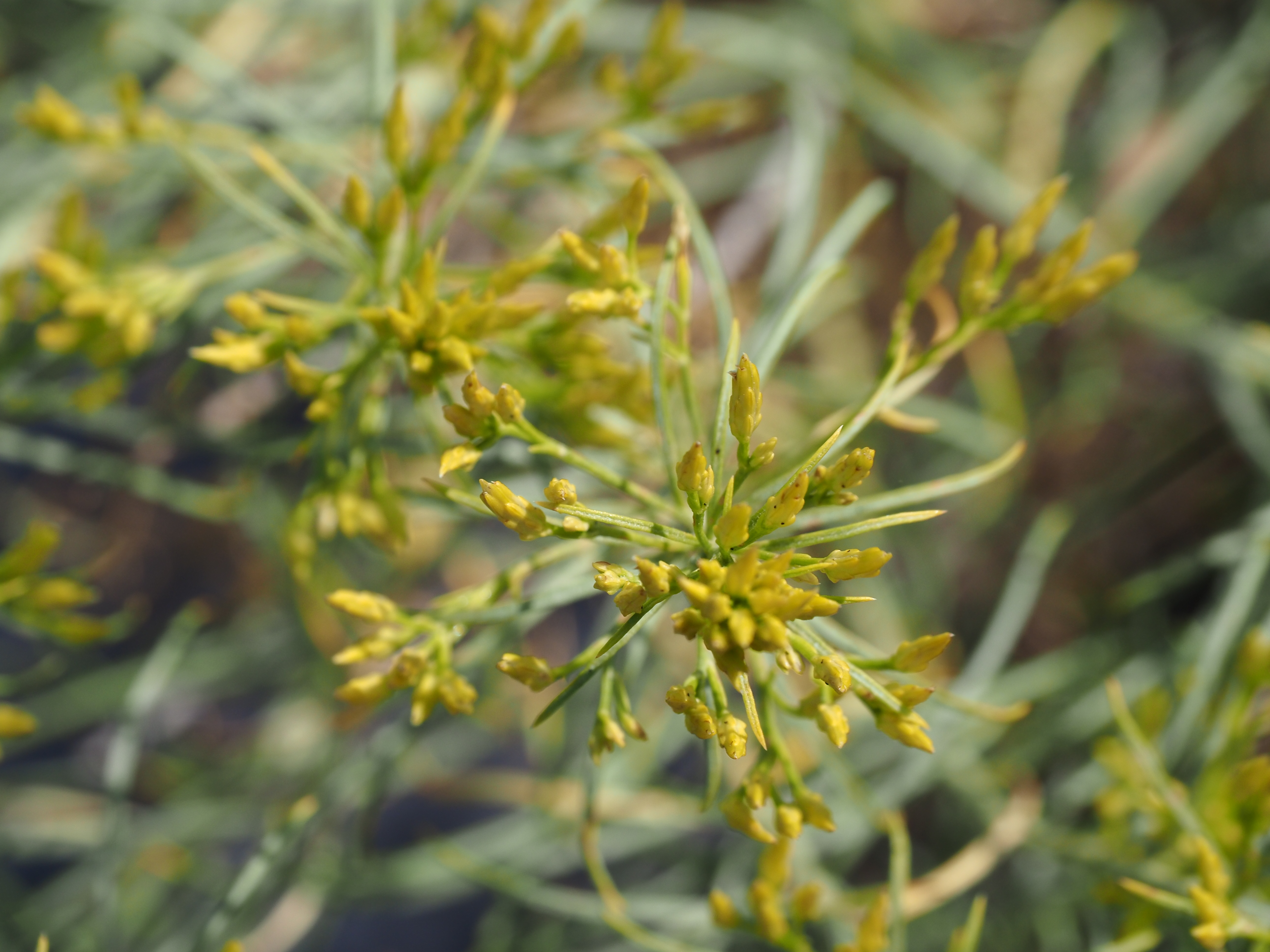
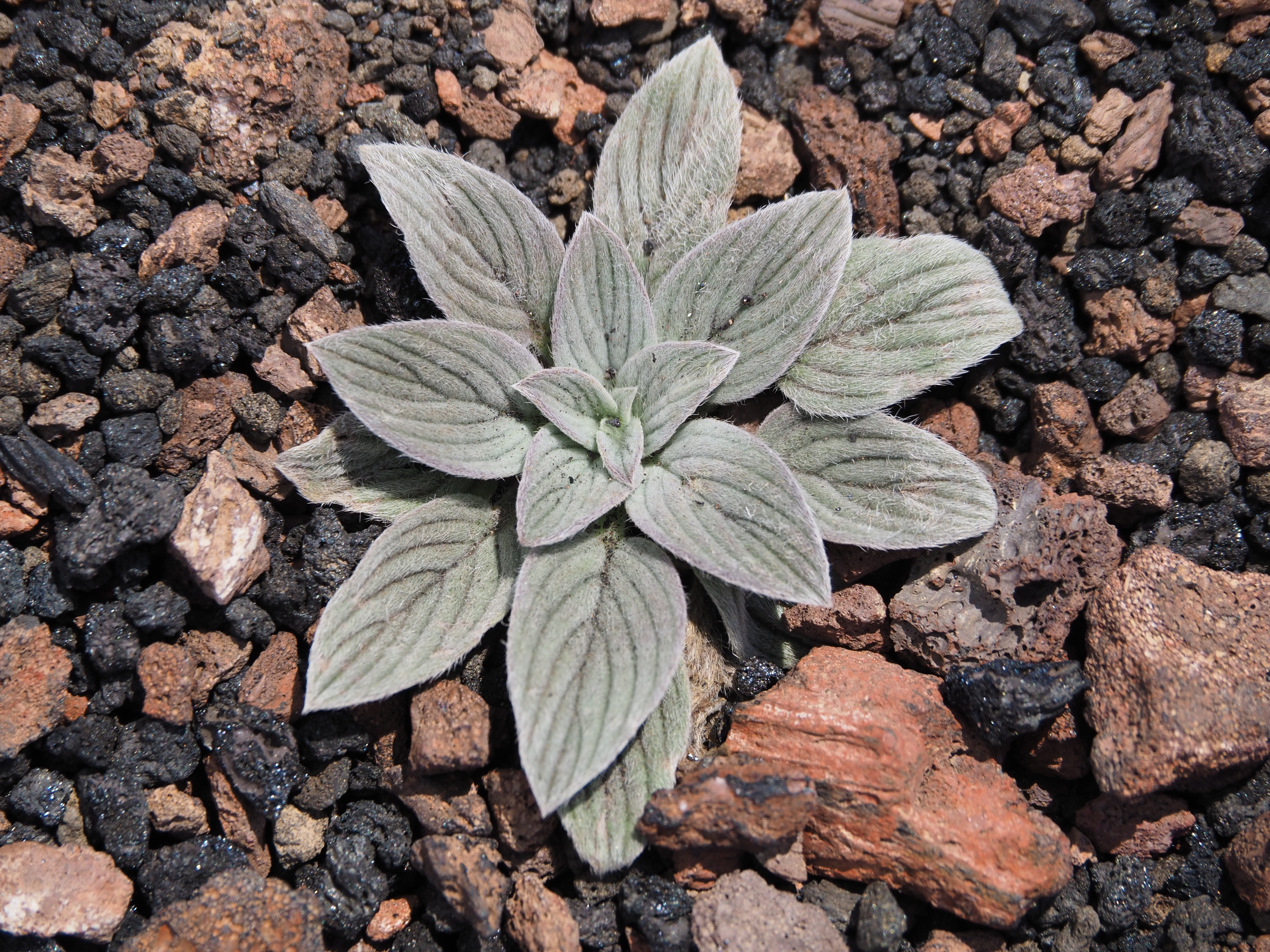
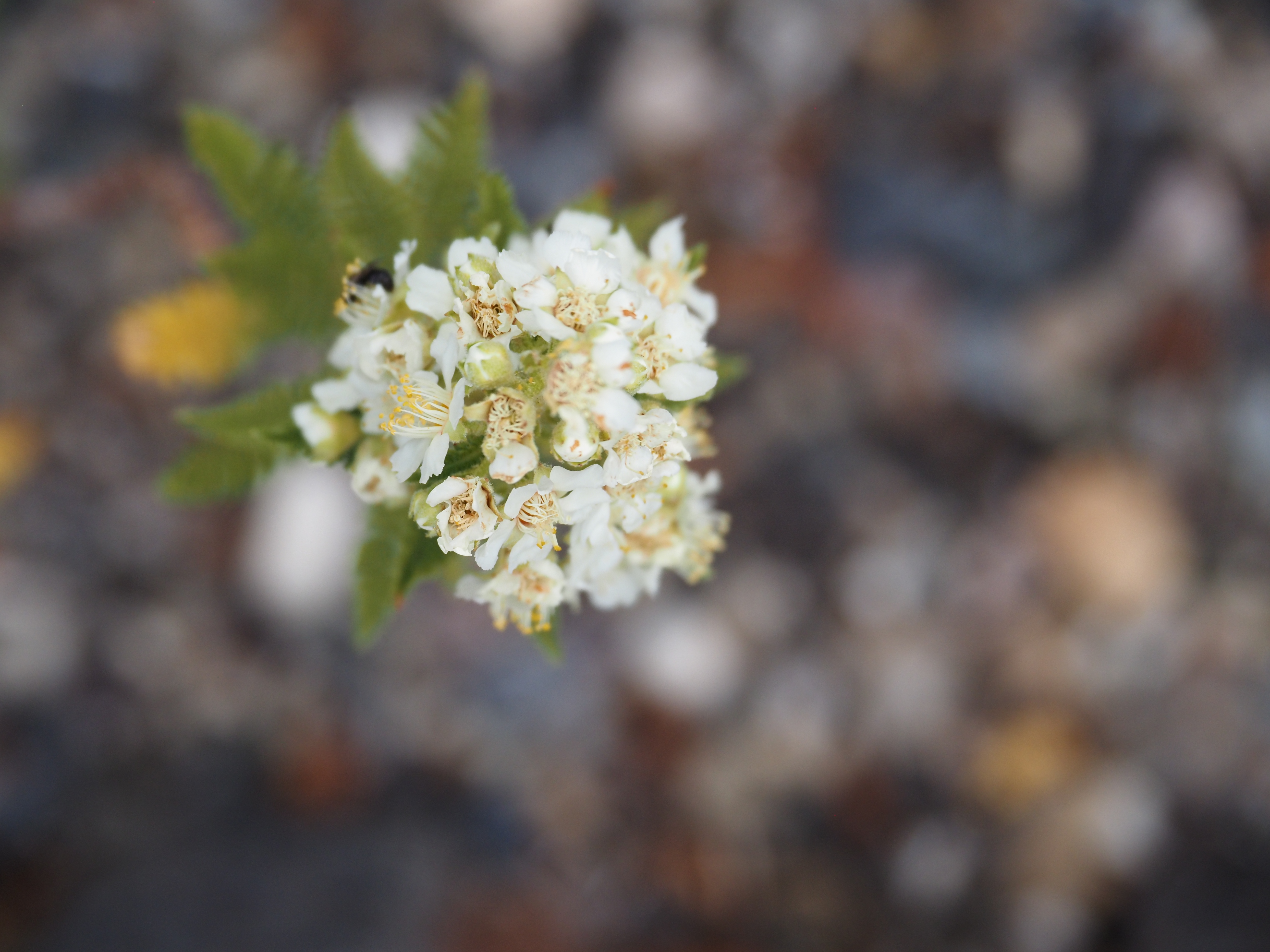
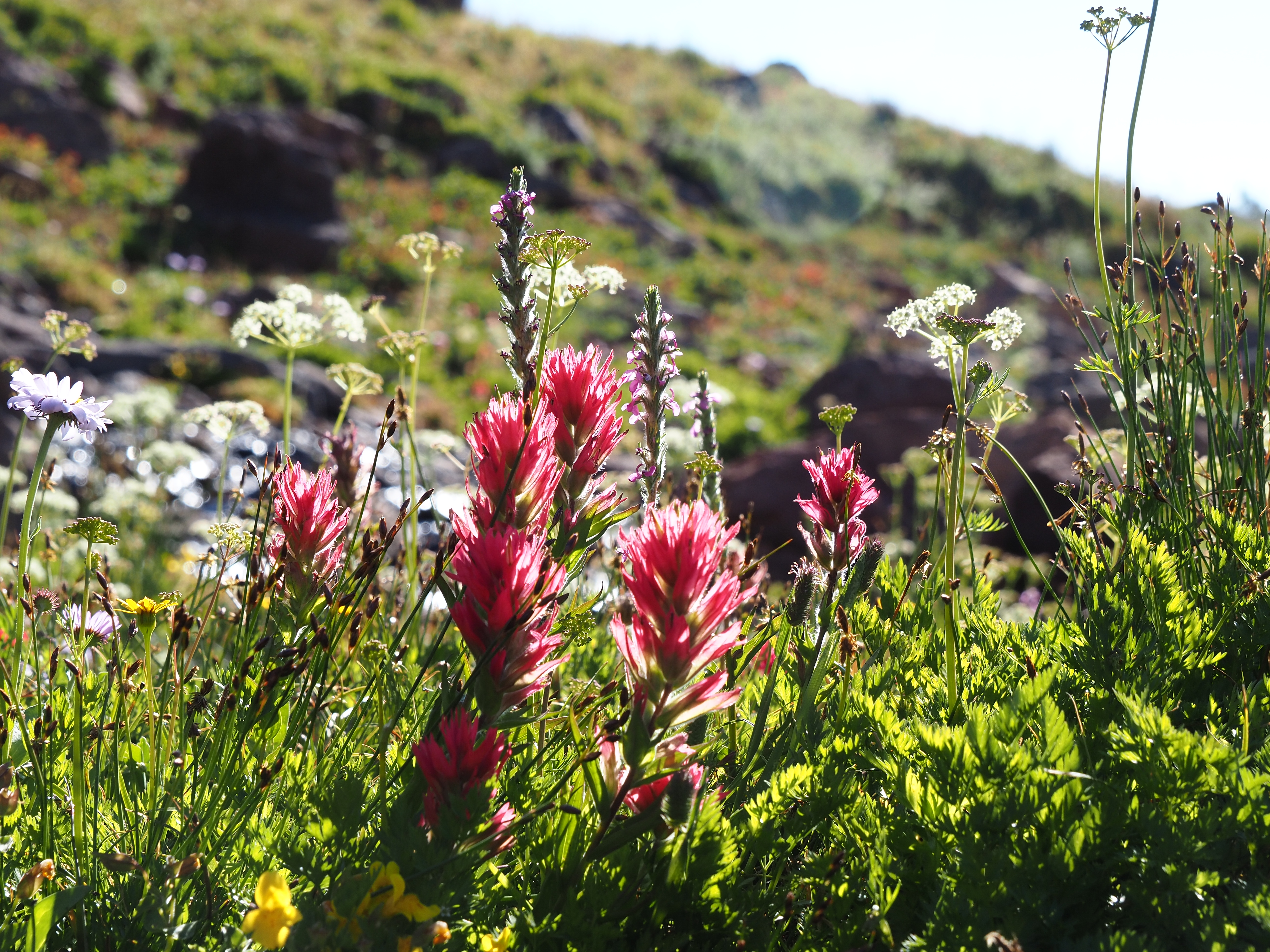
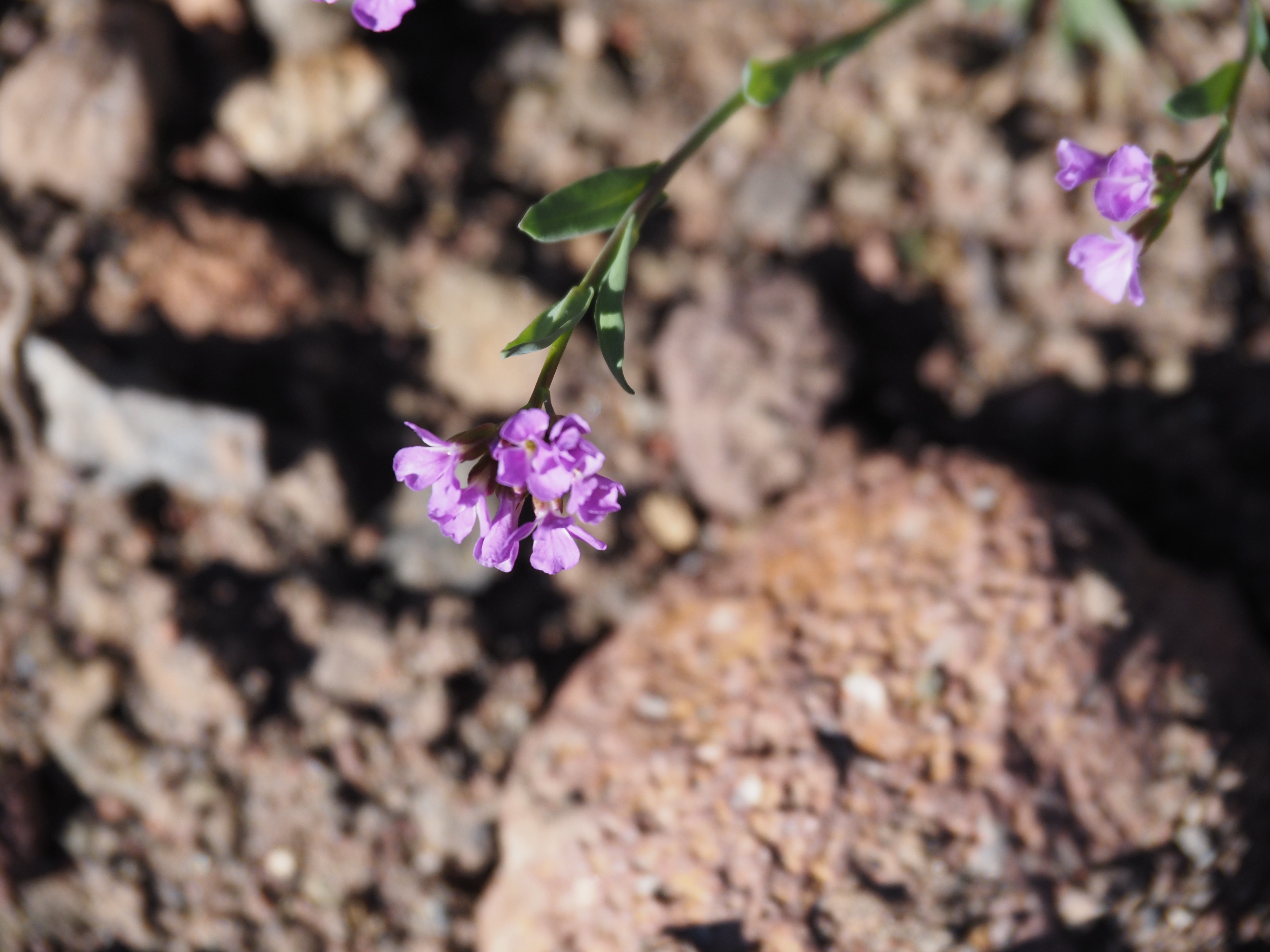
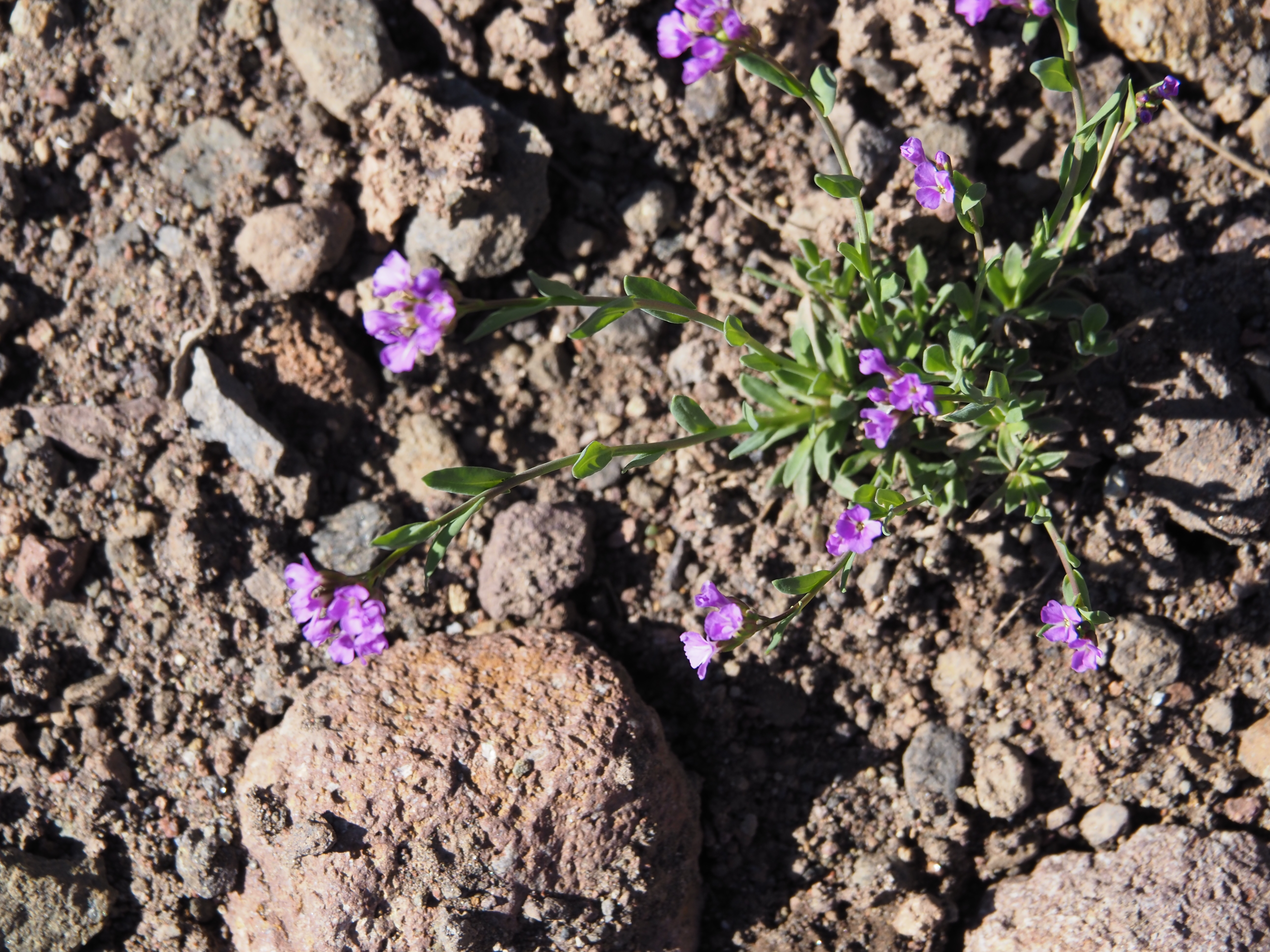
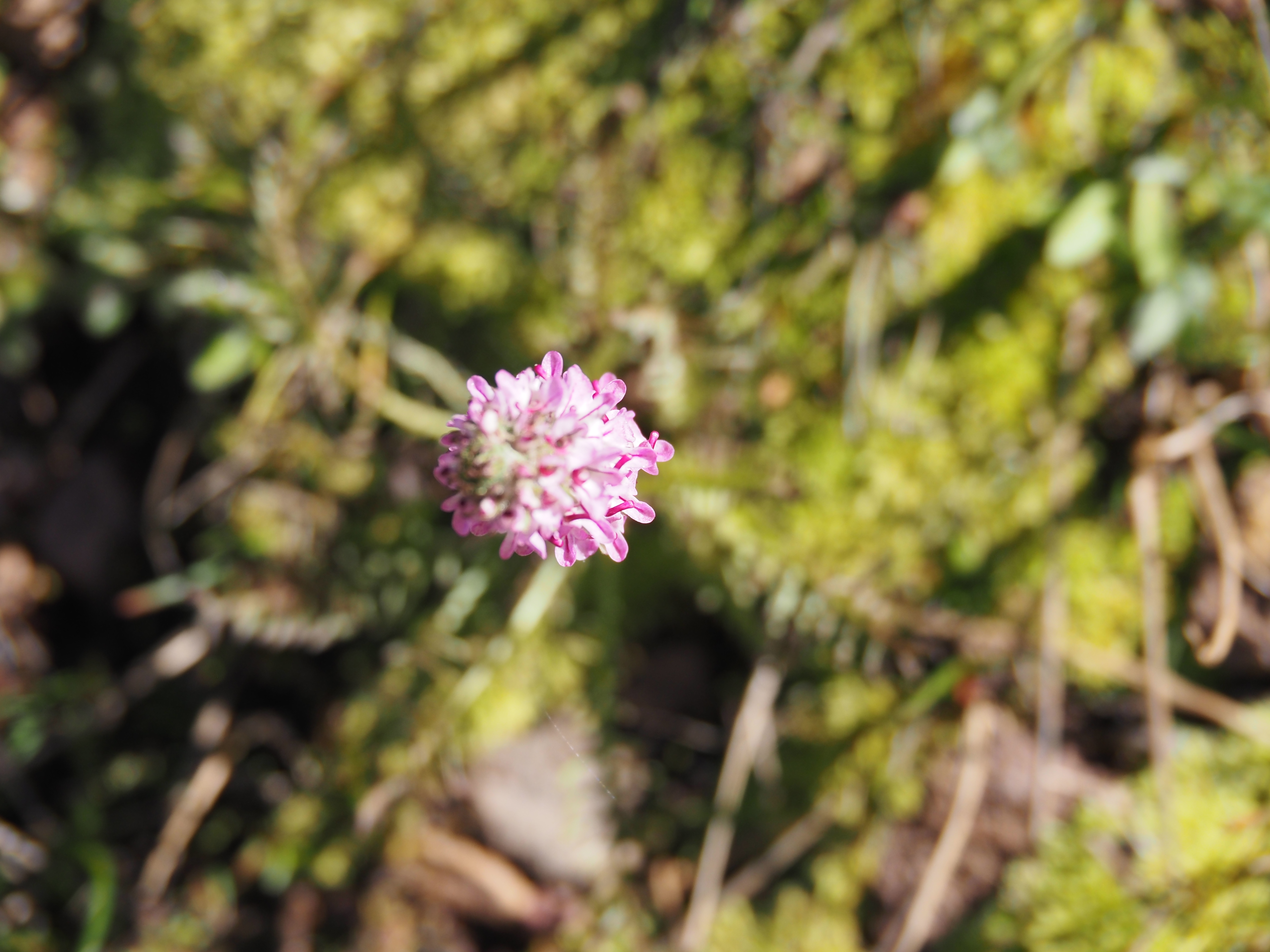
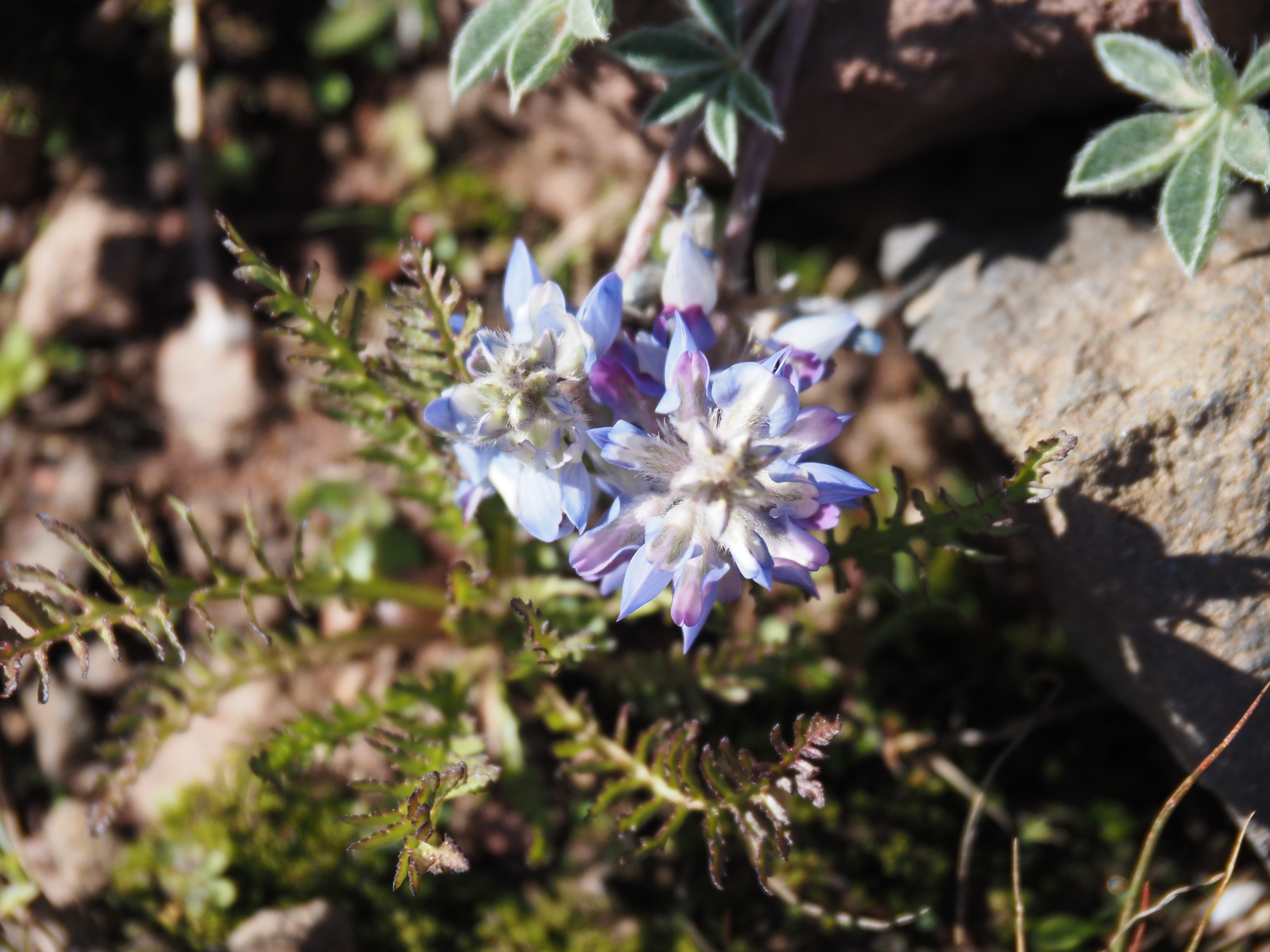
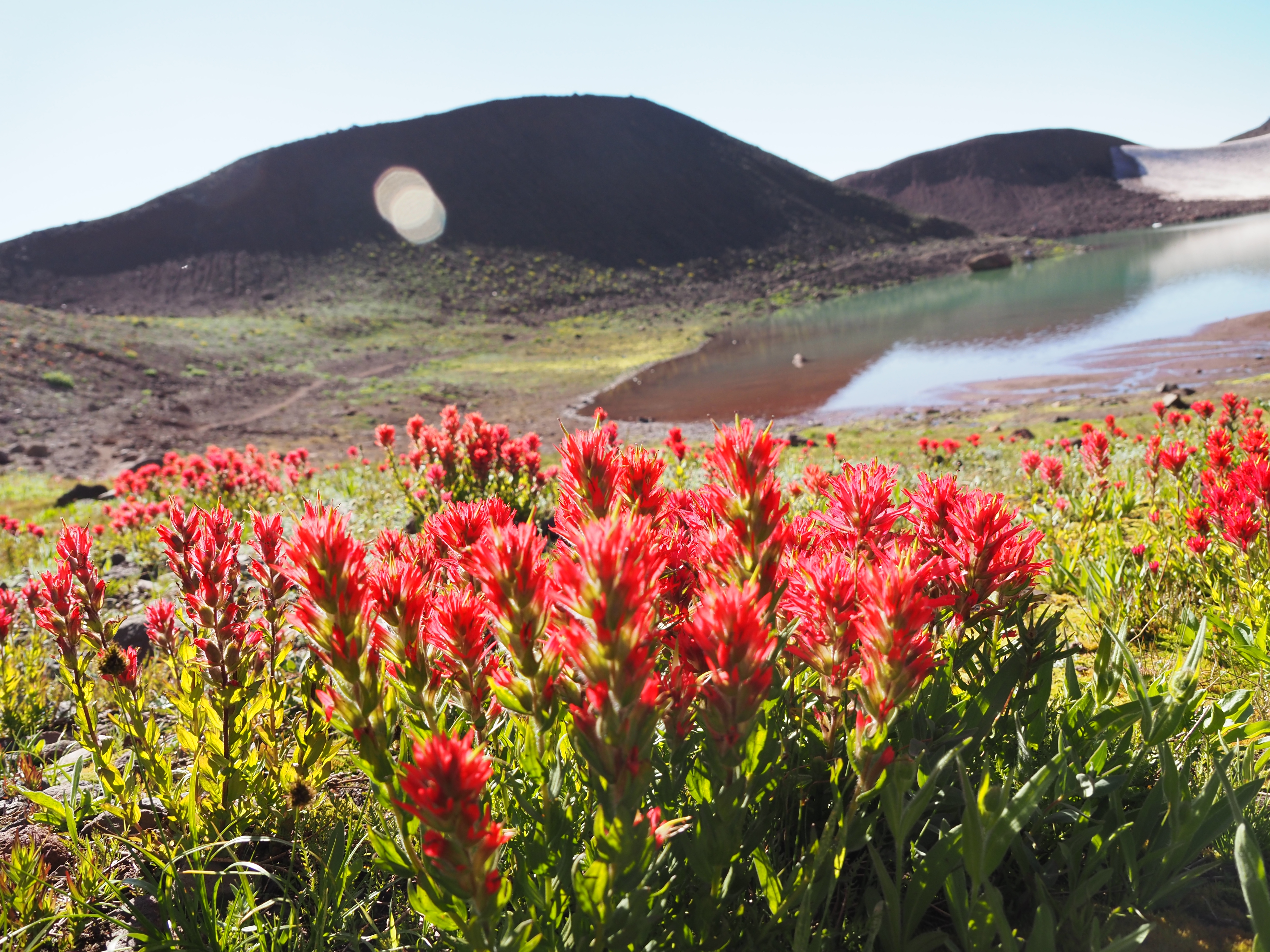
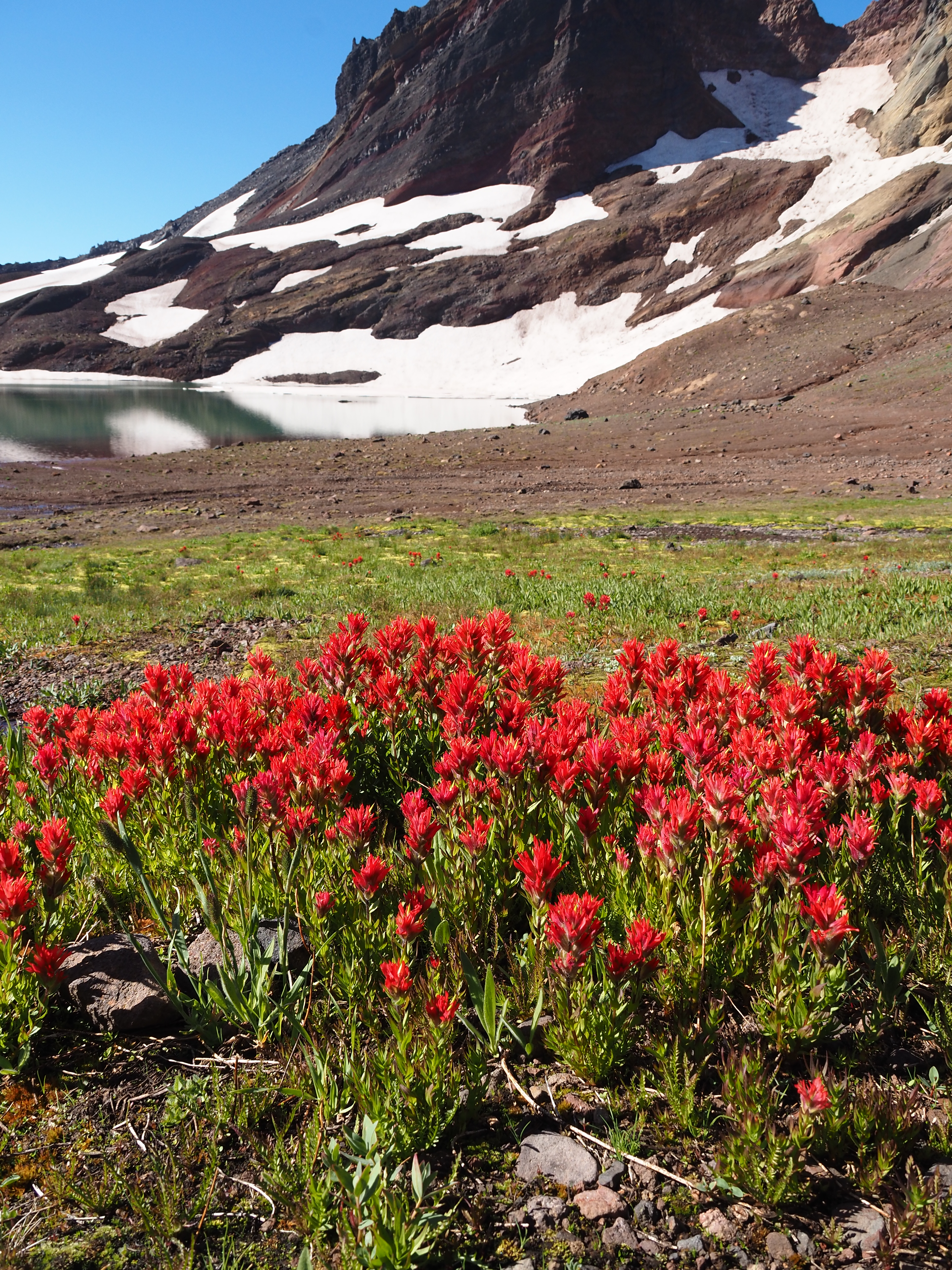
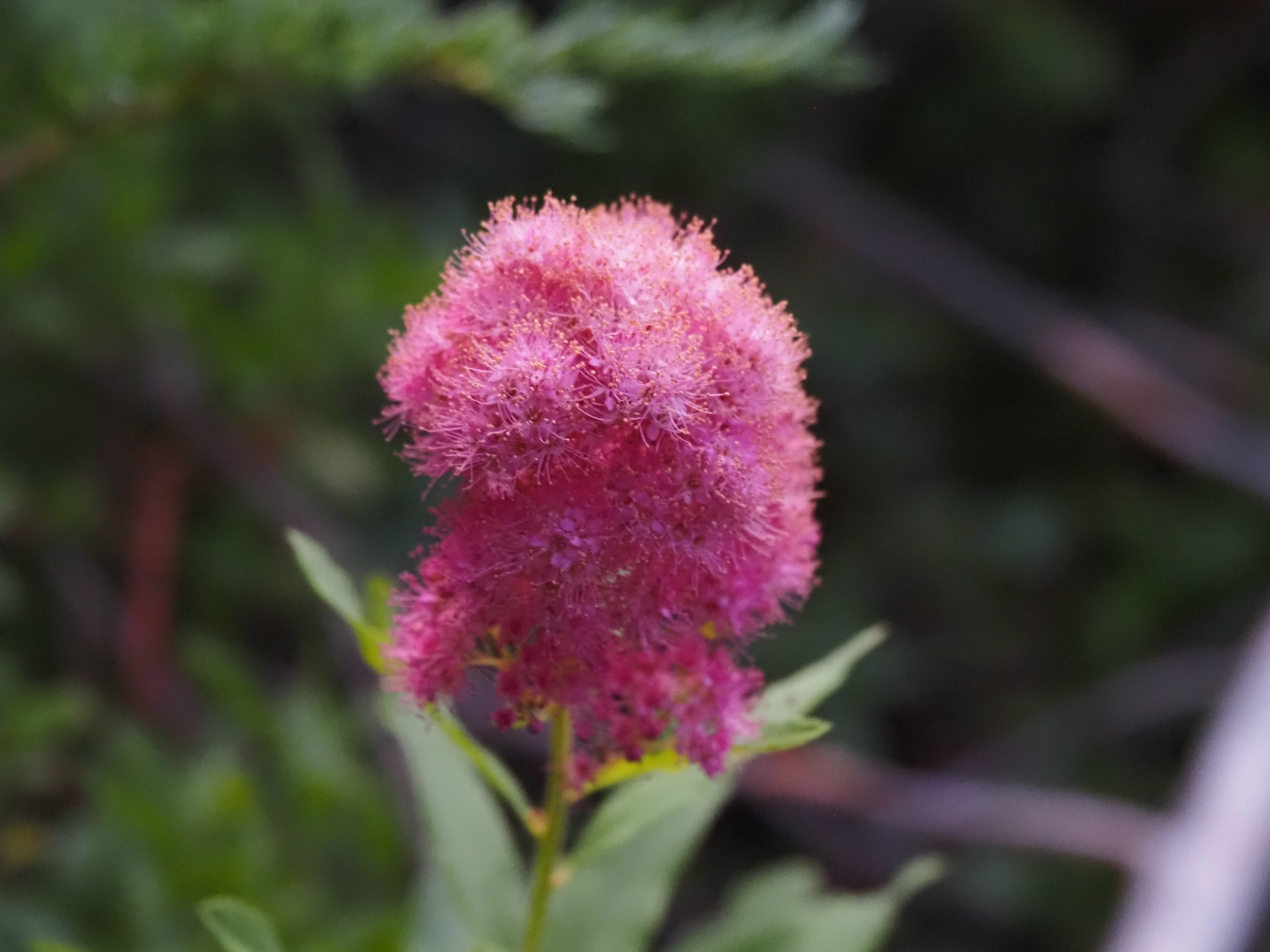
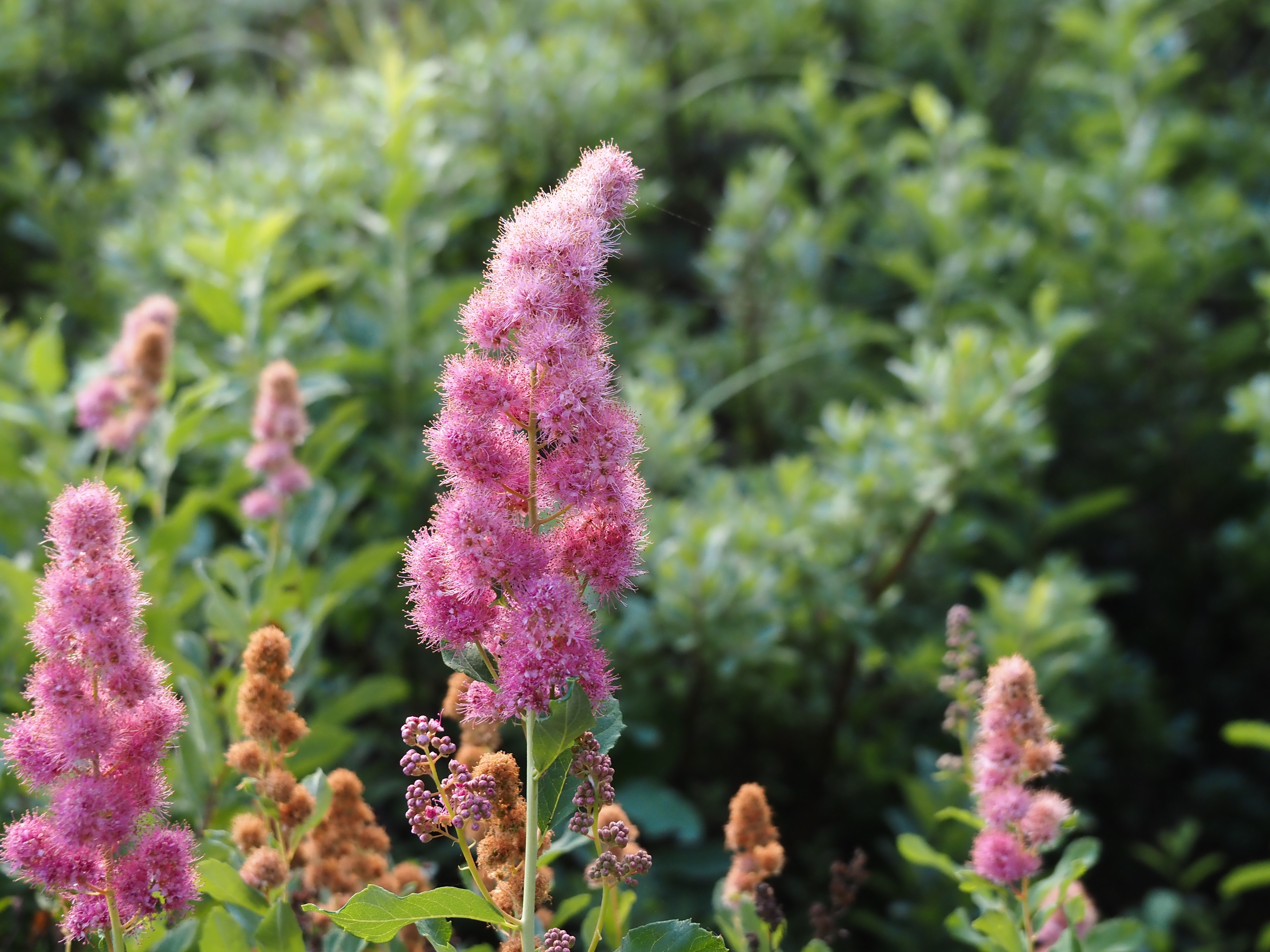
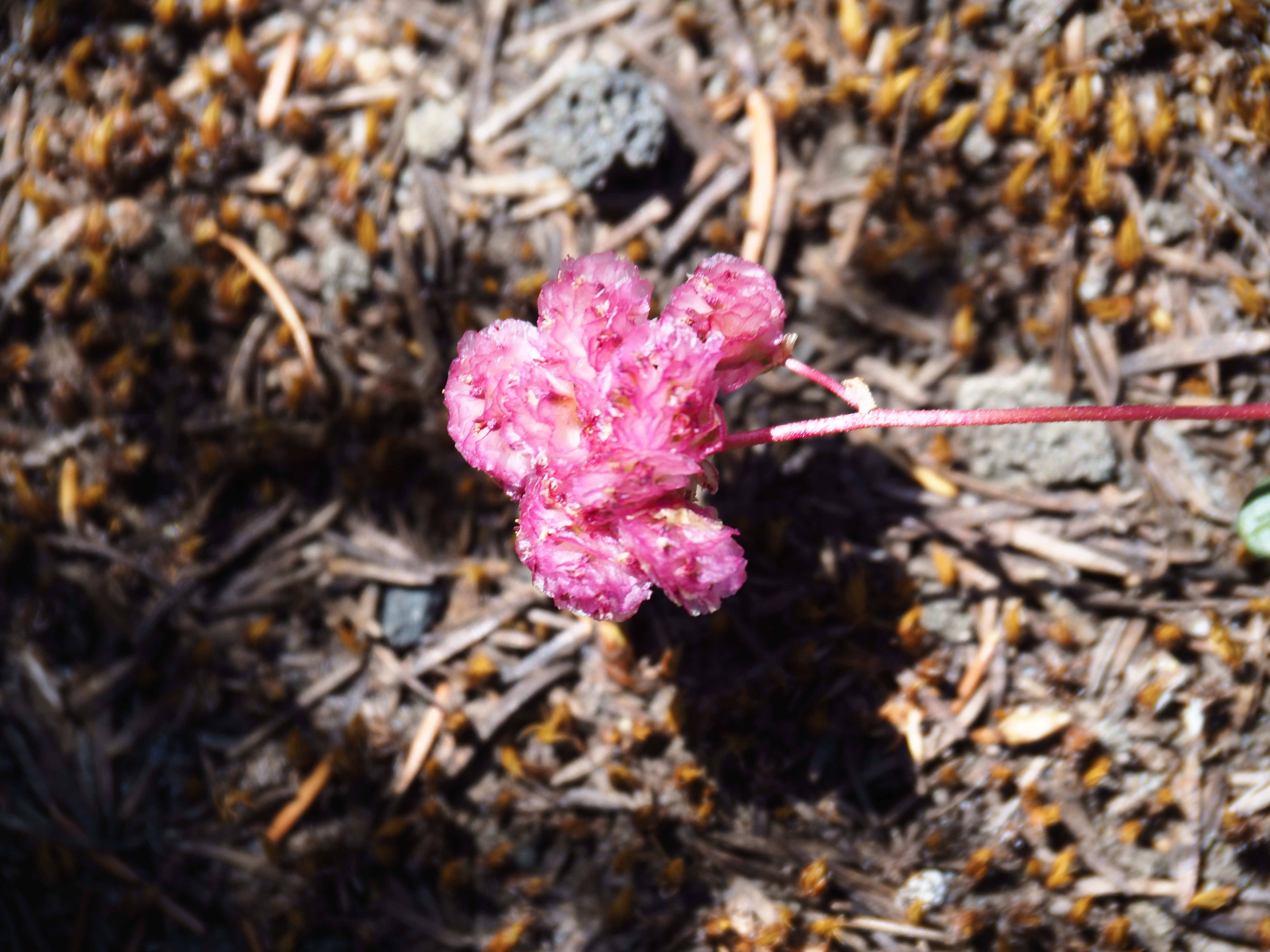
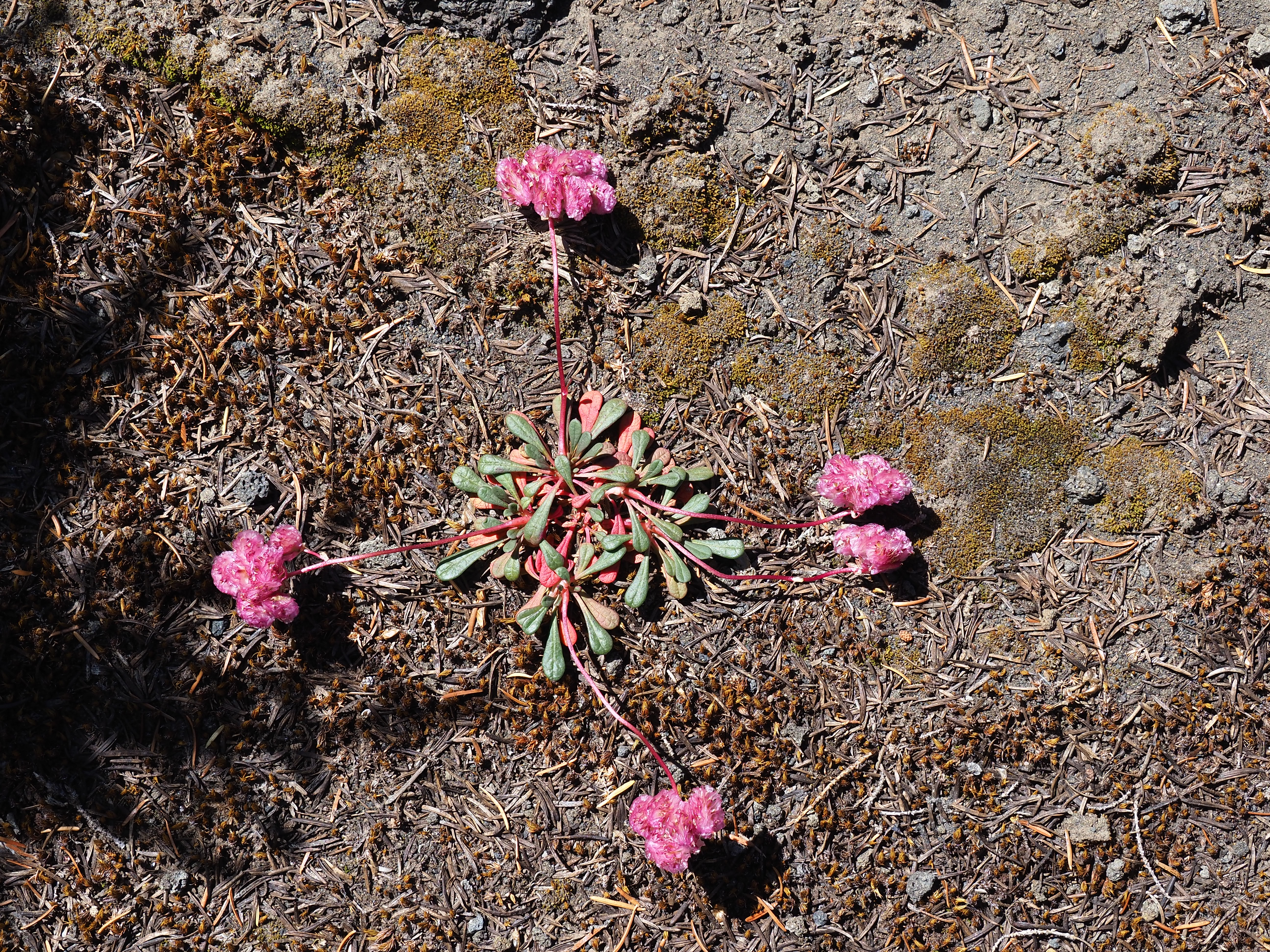
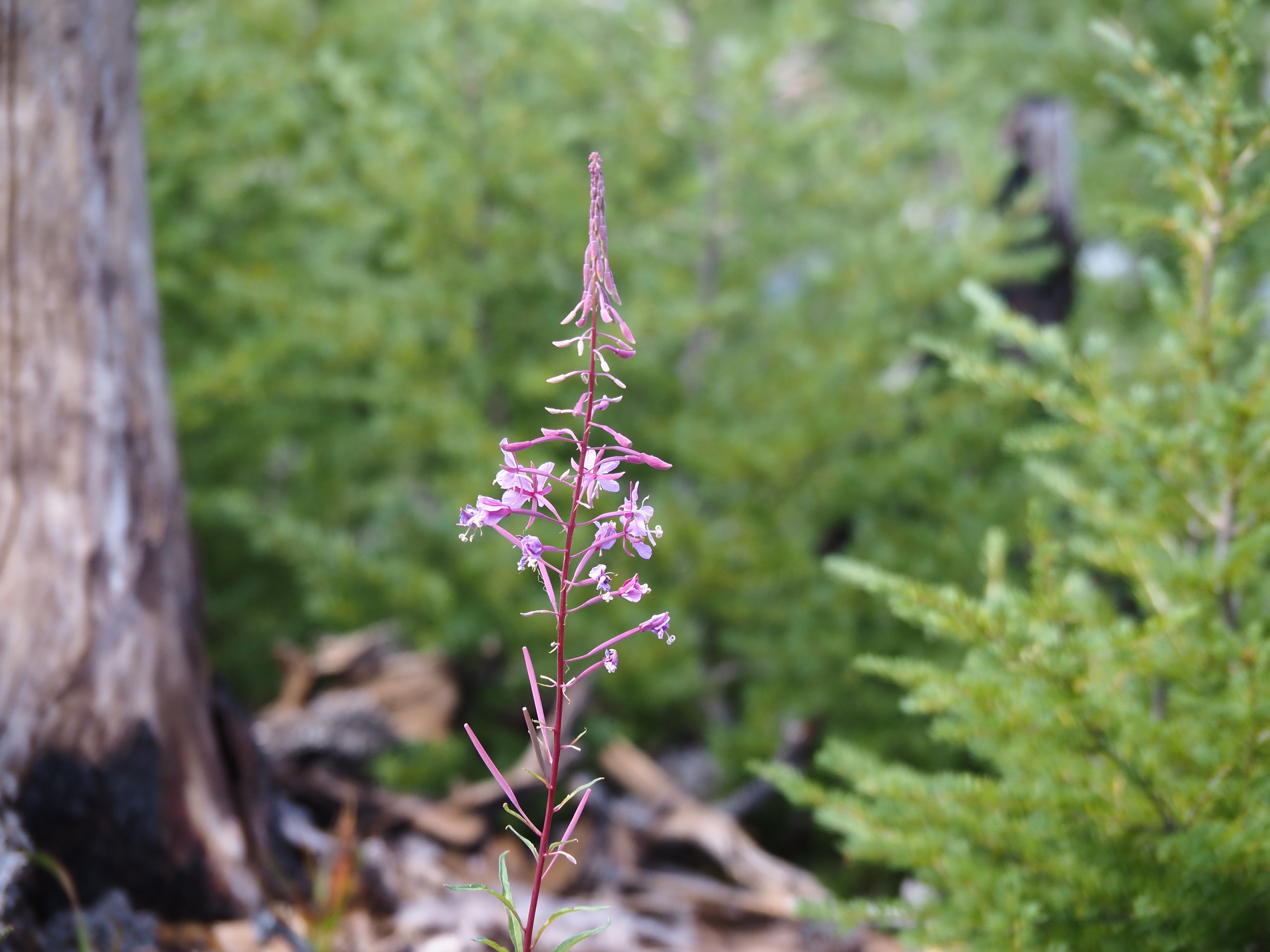
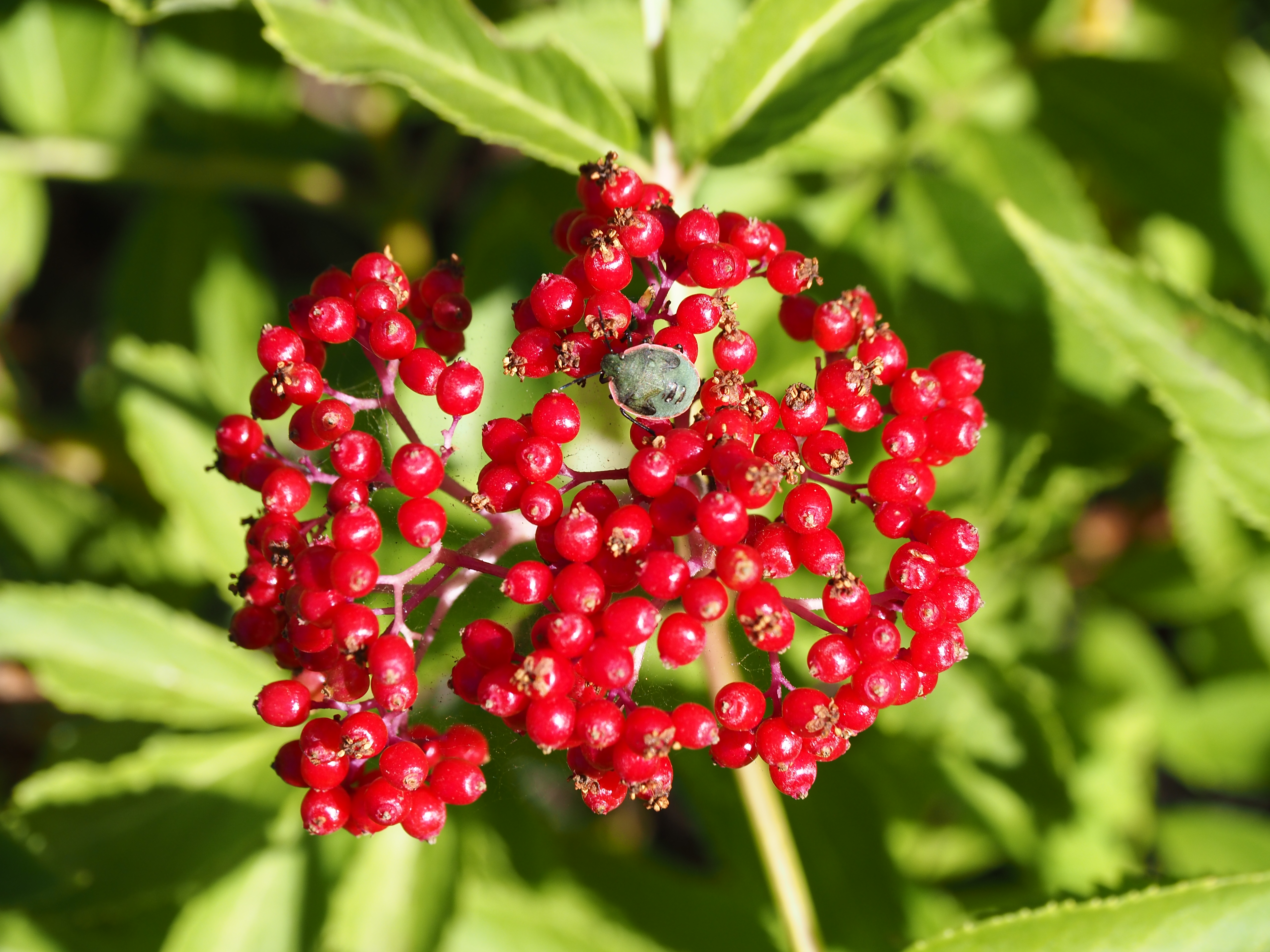
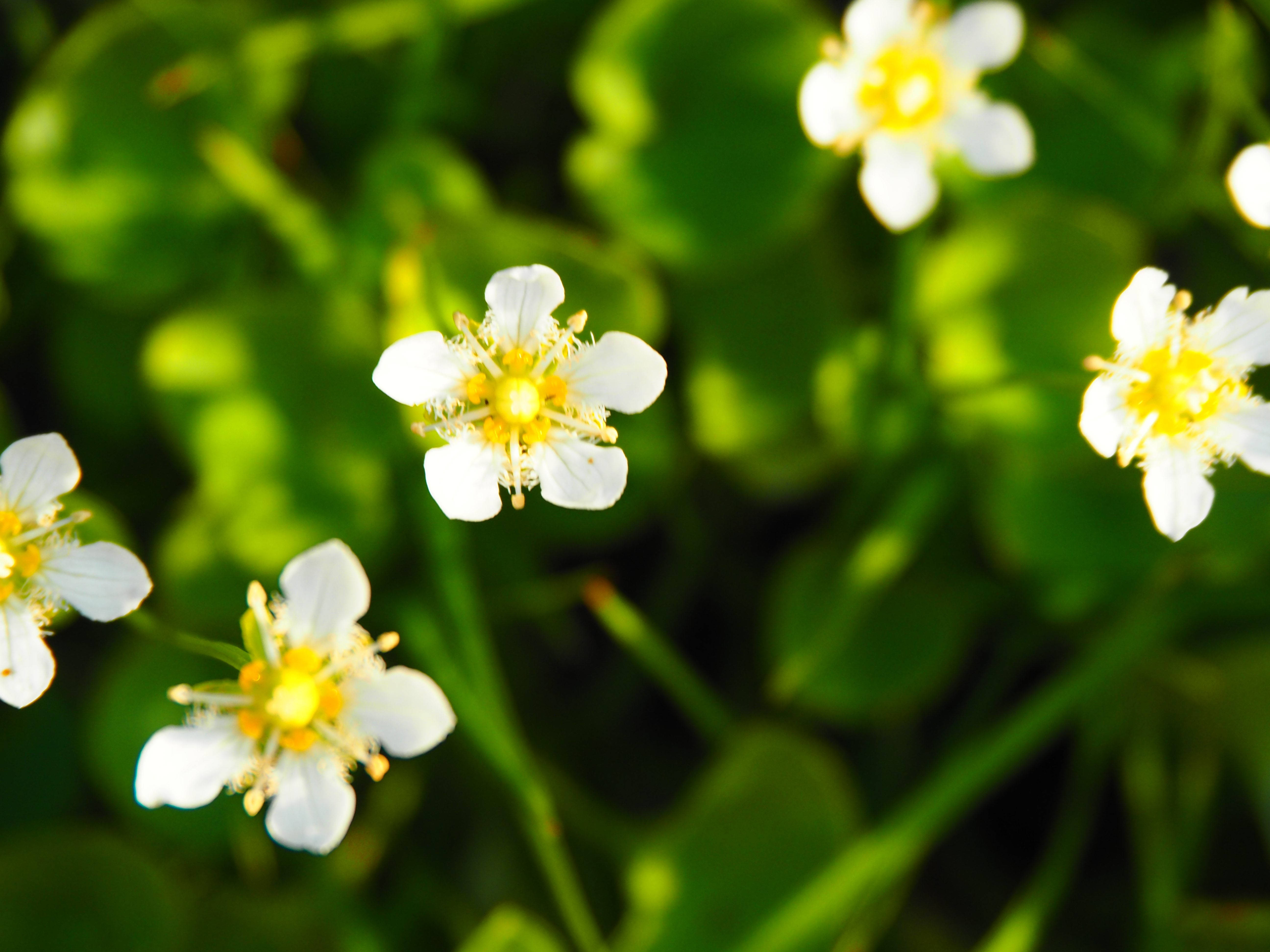
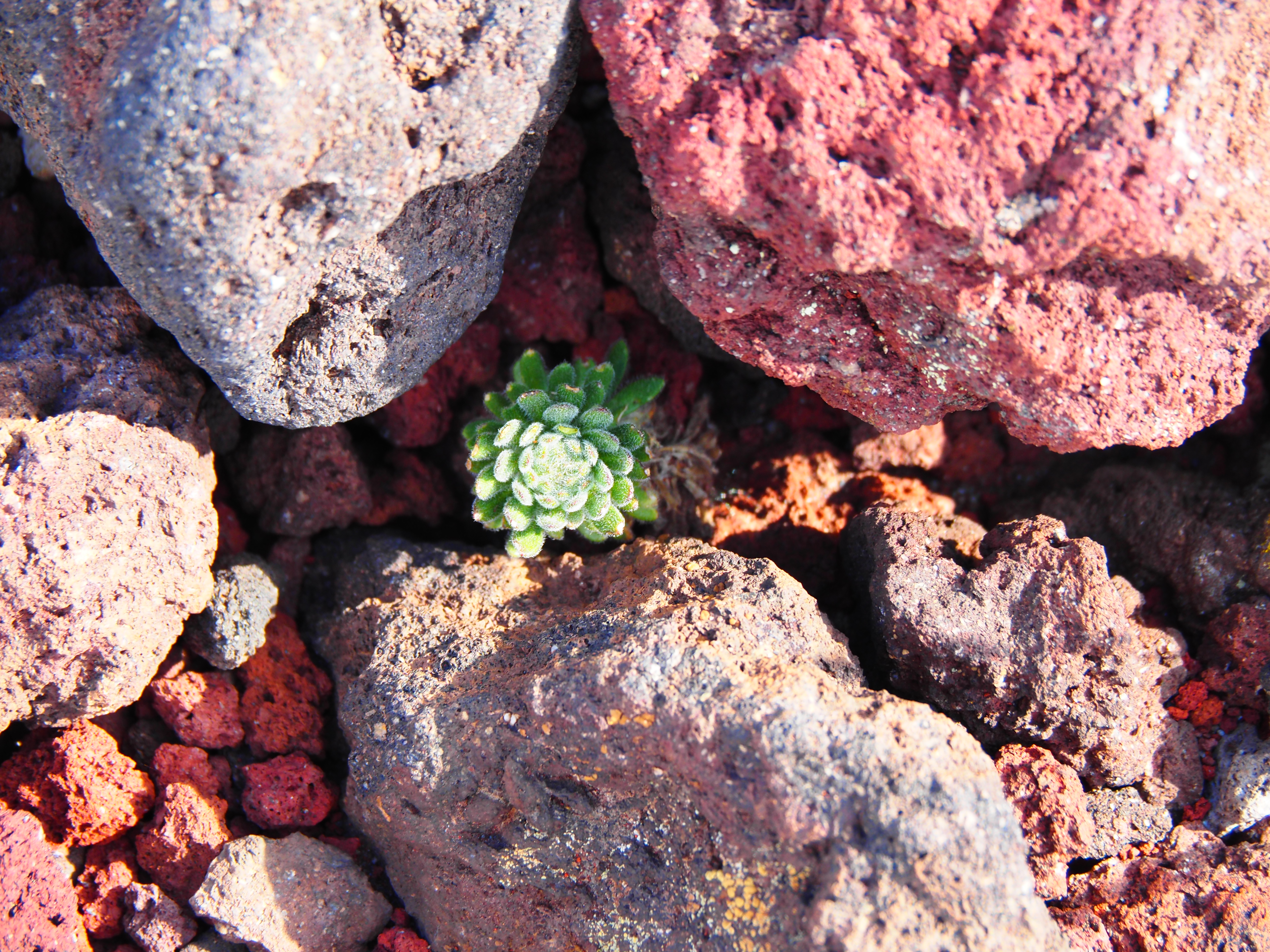
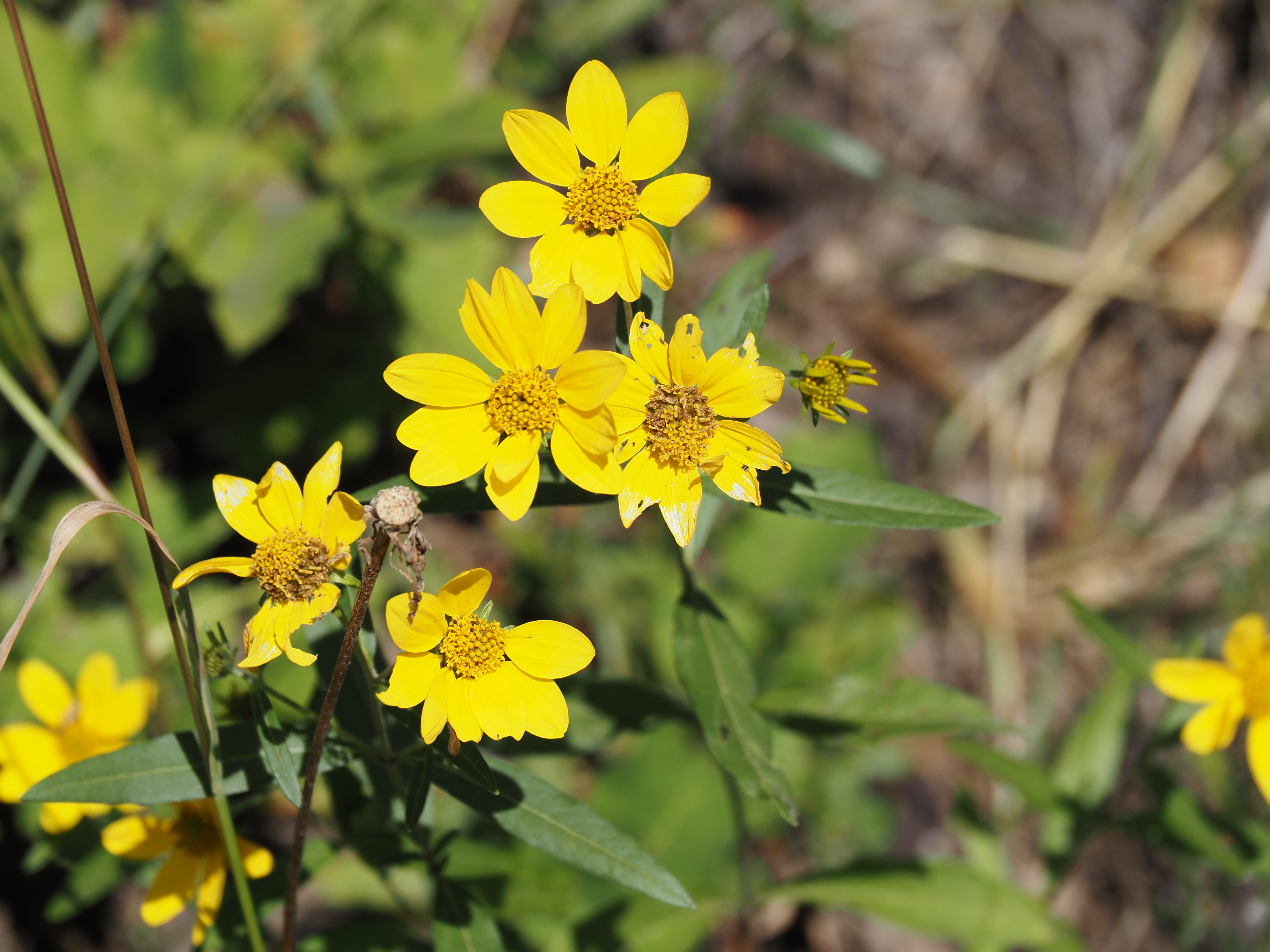
I was in Glacier National Park yesterday, and someone saw my license plate and asked where Connecticut was. I didn’t quite know how best to answer that one. But it got me thinking a little about the glories of the Nutmeg State. For one thing, I think, we find beauty and in the elegance and resilience of small things. That is perhaps why amid all the splendor of mountains and glaciers and lava fields and burned out forests, I find such wonder in the the wildflowers that grow and thrive in some pretty challenging landscapes. It’s one thing to stand in awe of the magnificence of Redwoods and Sequoia, but to feel reverence, pause for a moment at a patch of wildflowers growing out of a baked field of lava or the husk of a burned out Douglas Fir.

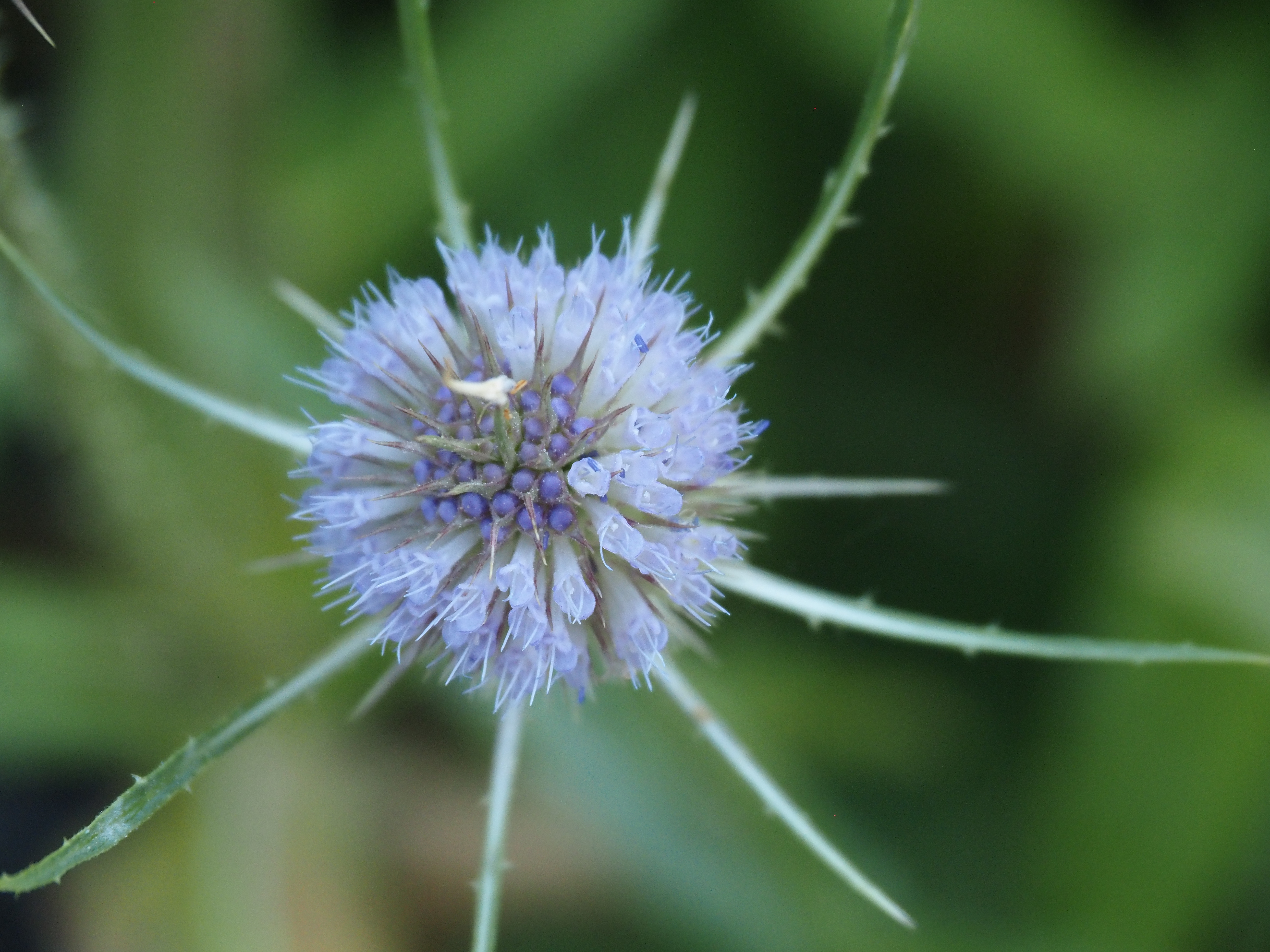
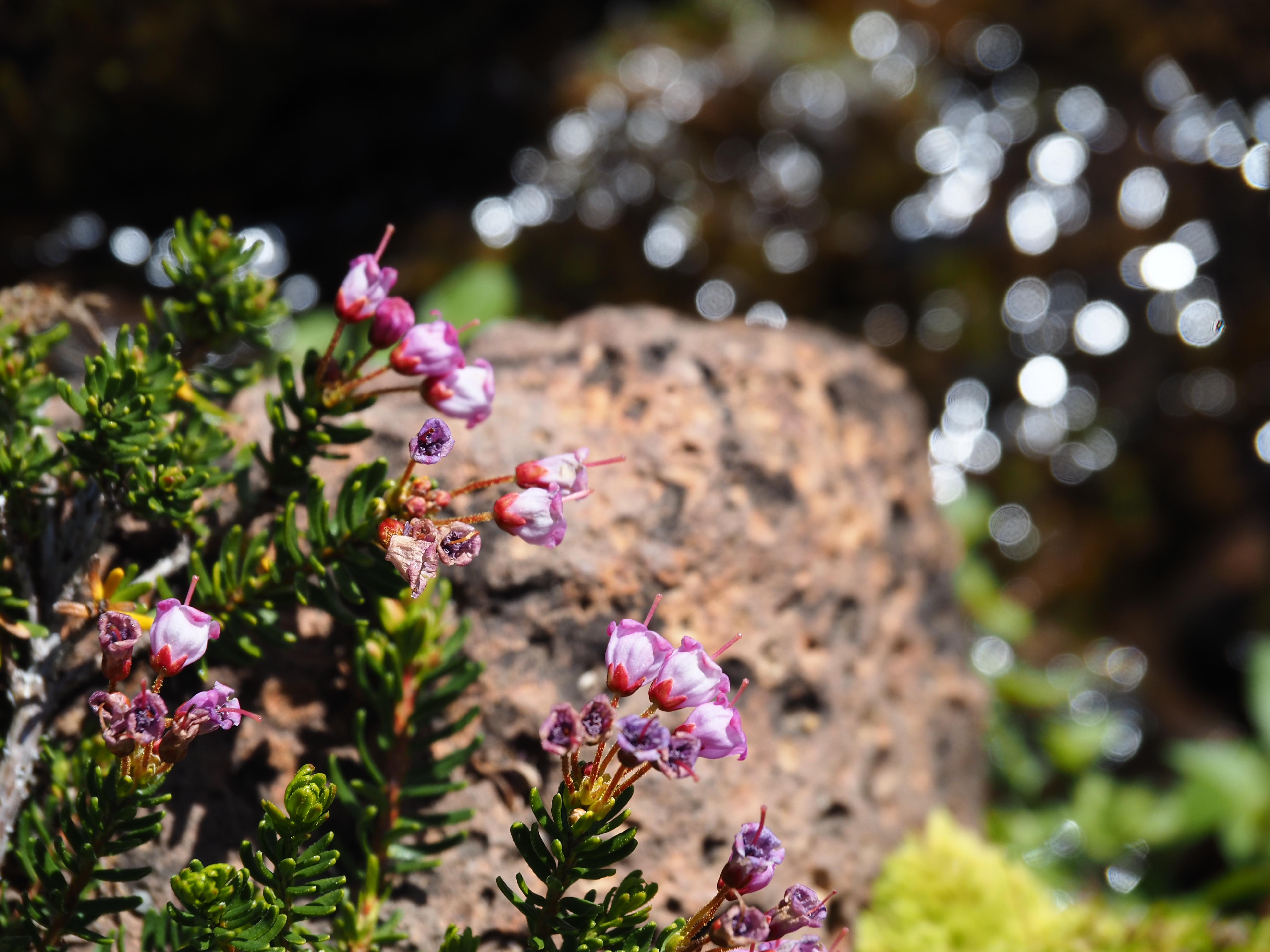
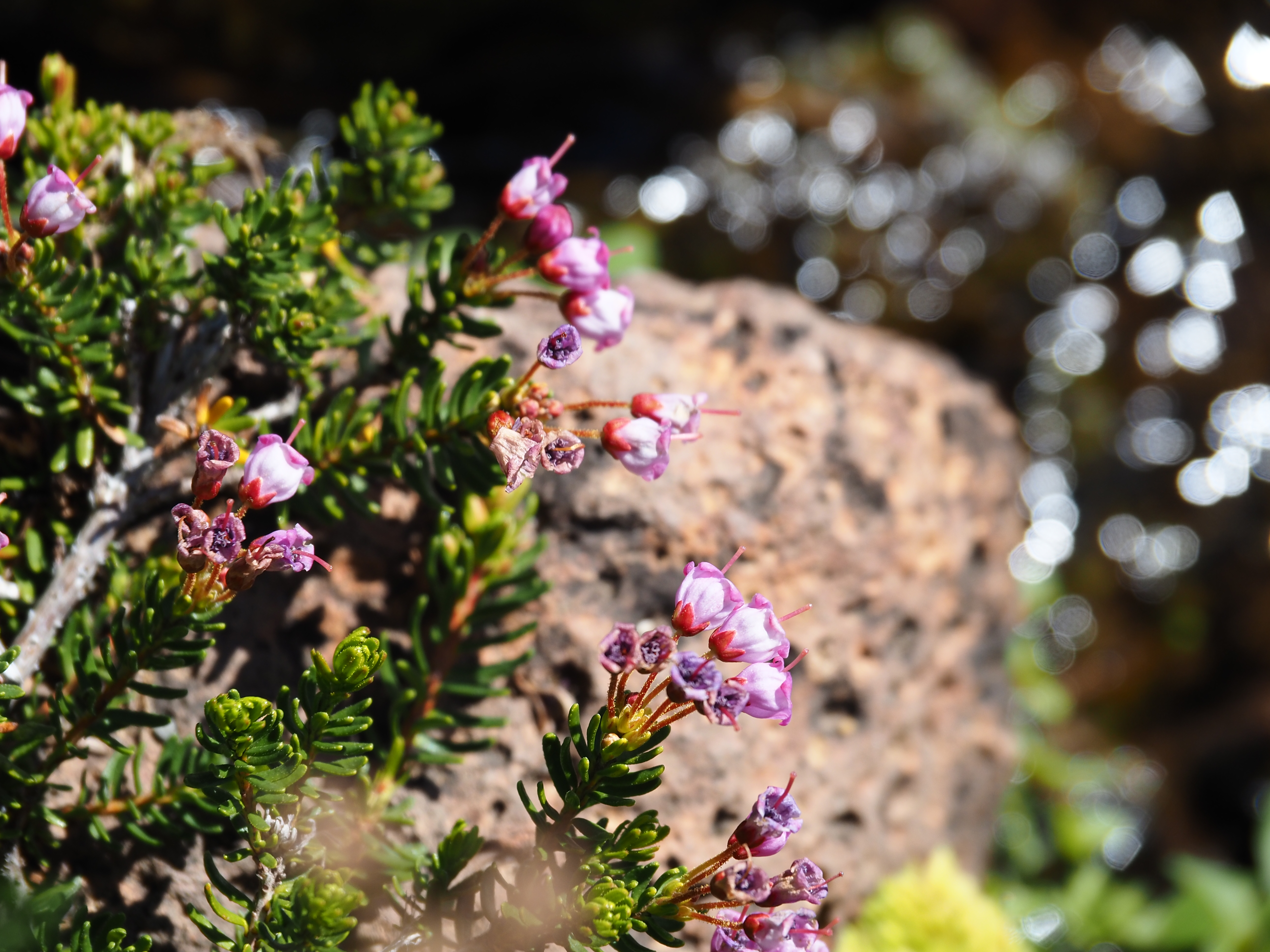
The pictures below come from various stops over the past four weeks: from Wyoming and Idaho, to the high desert of eastern Oregon and the volcanic soil of McKenzie Pass; and from the from the glacial valleys of northern Washington to the forests of Montana.

Sabbatical Notes 3

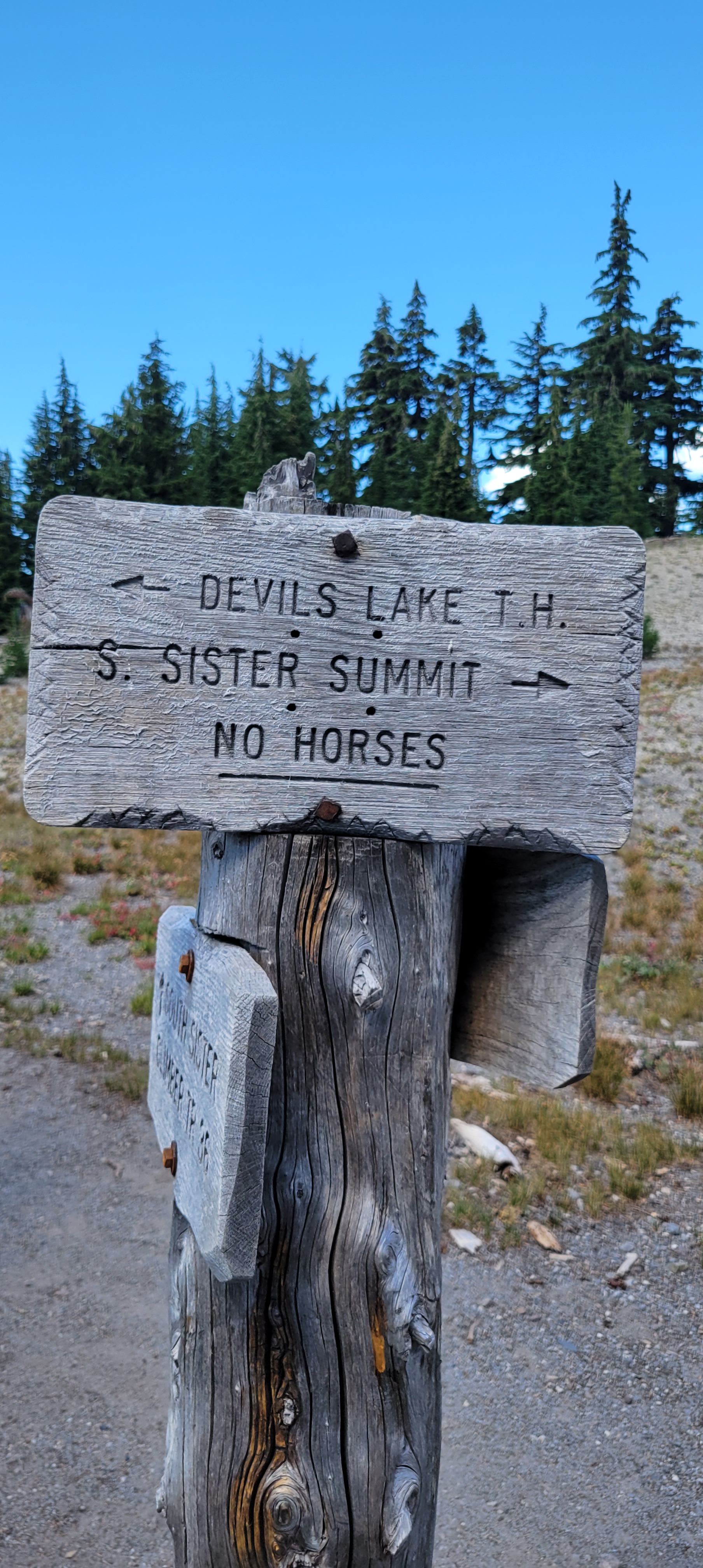
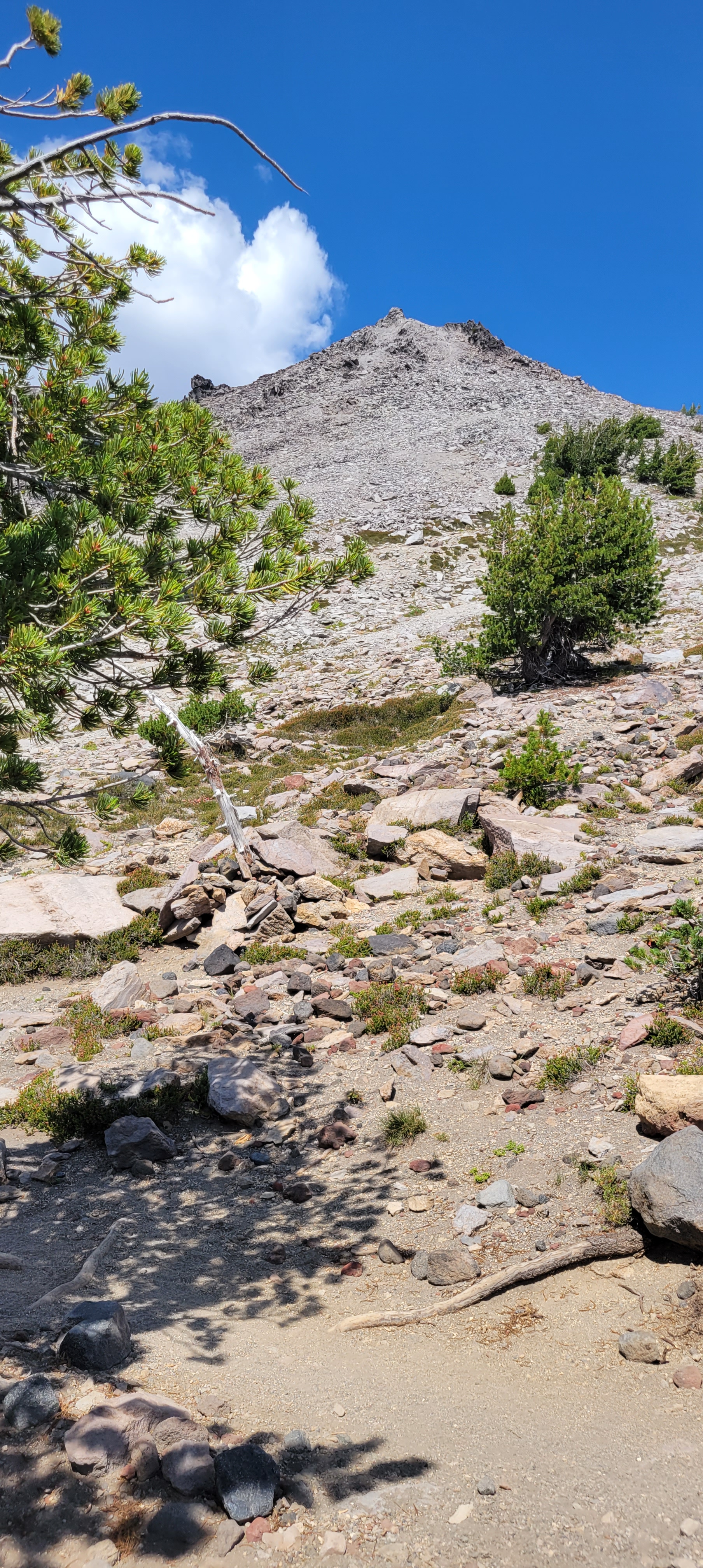
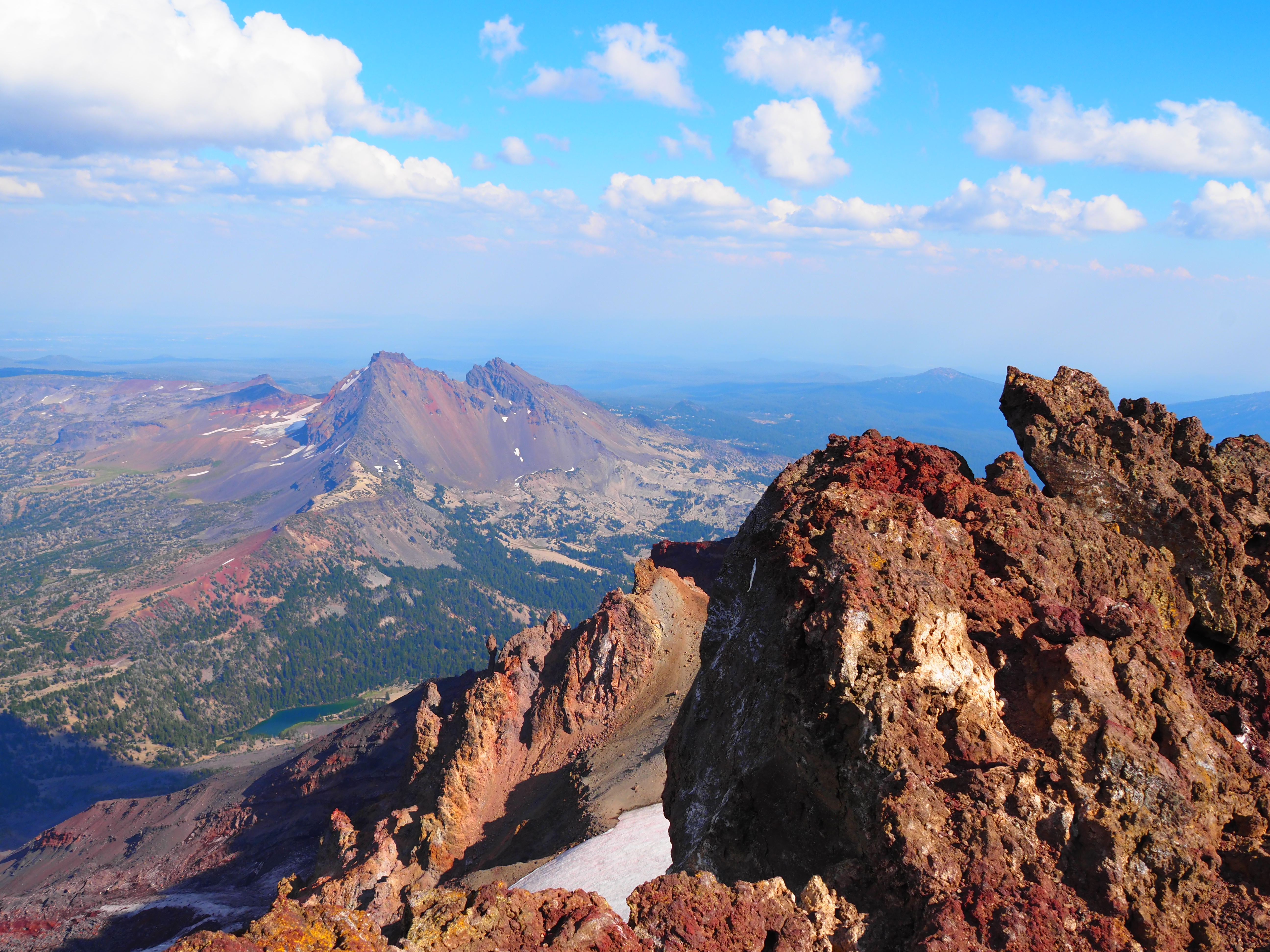
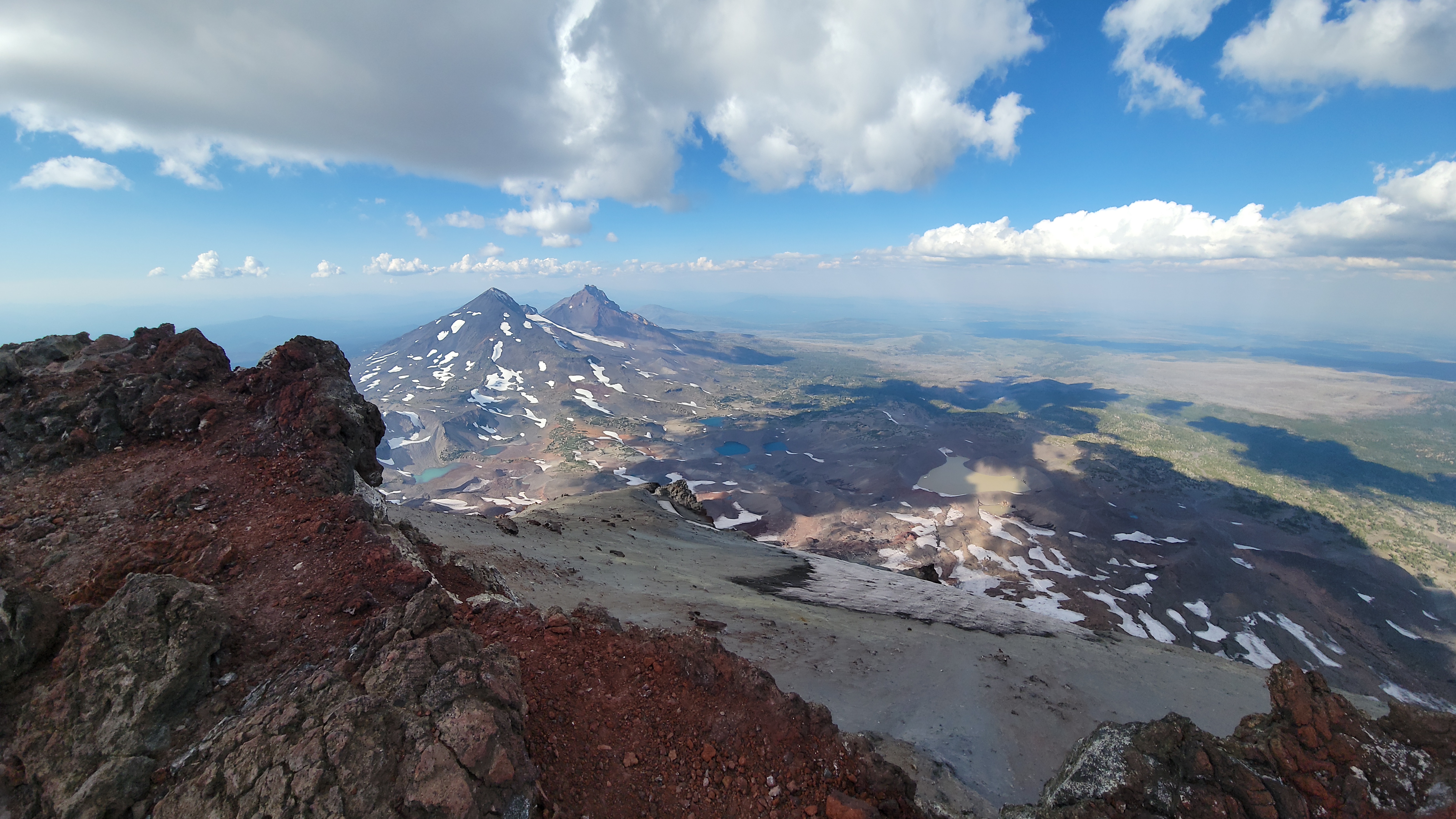
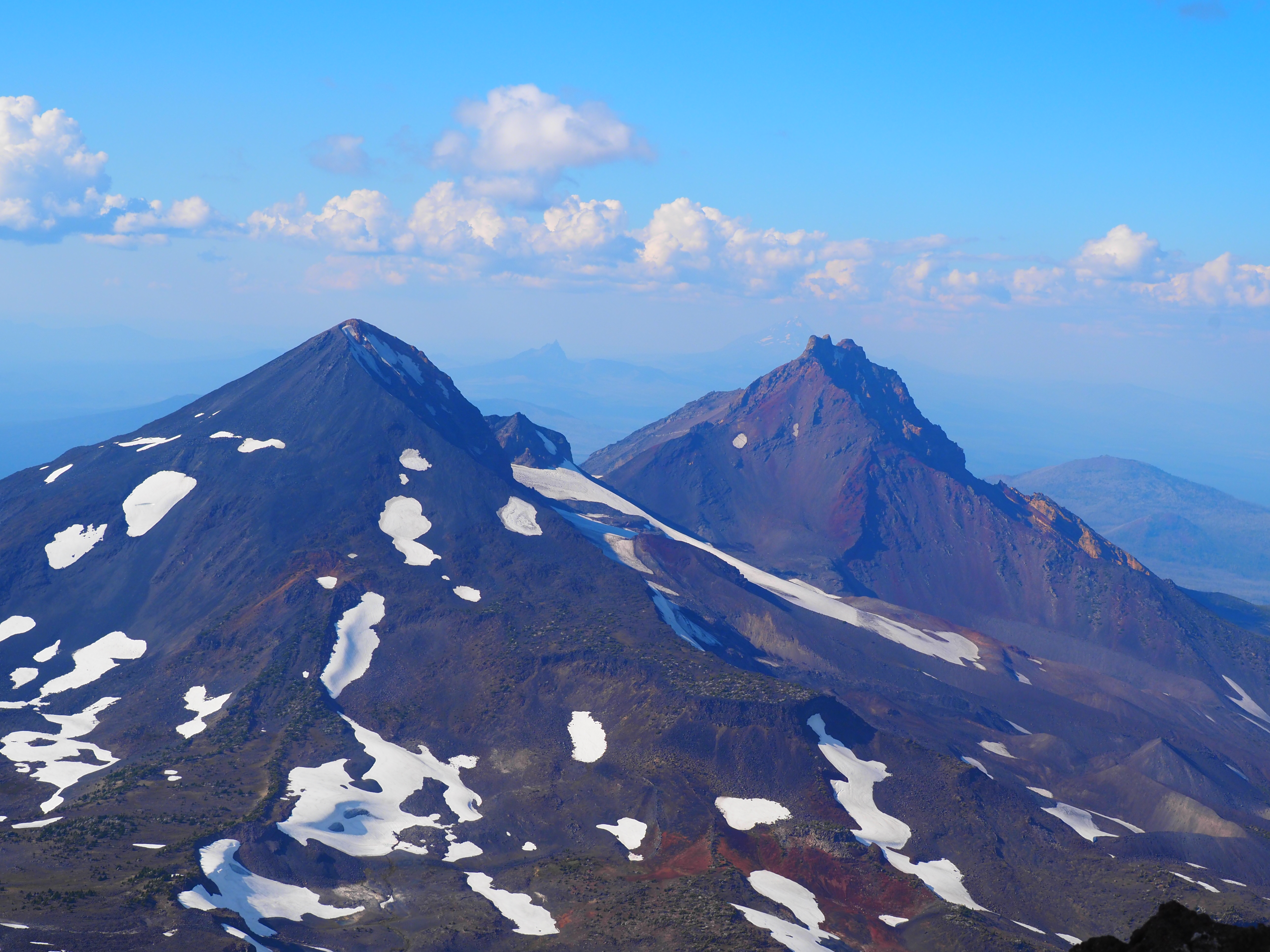
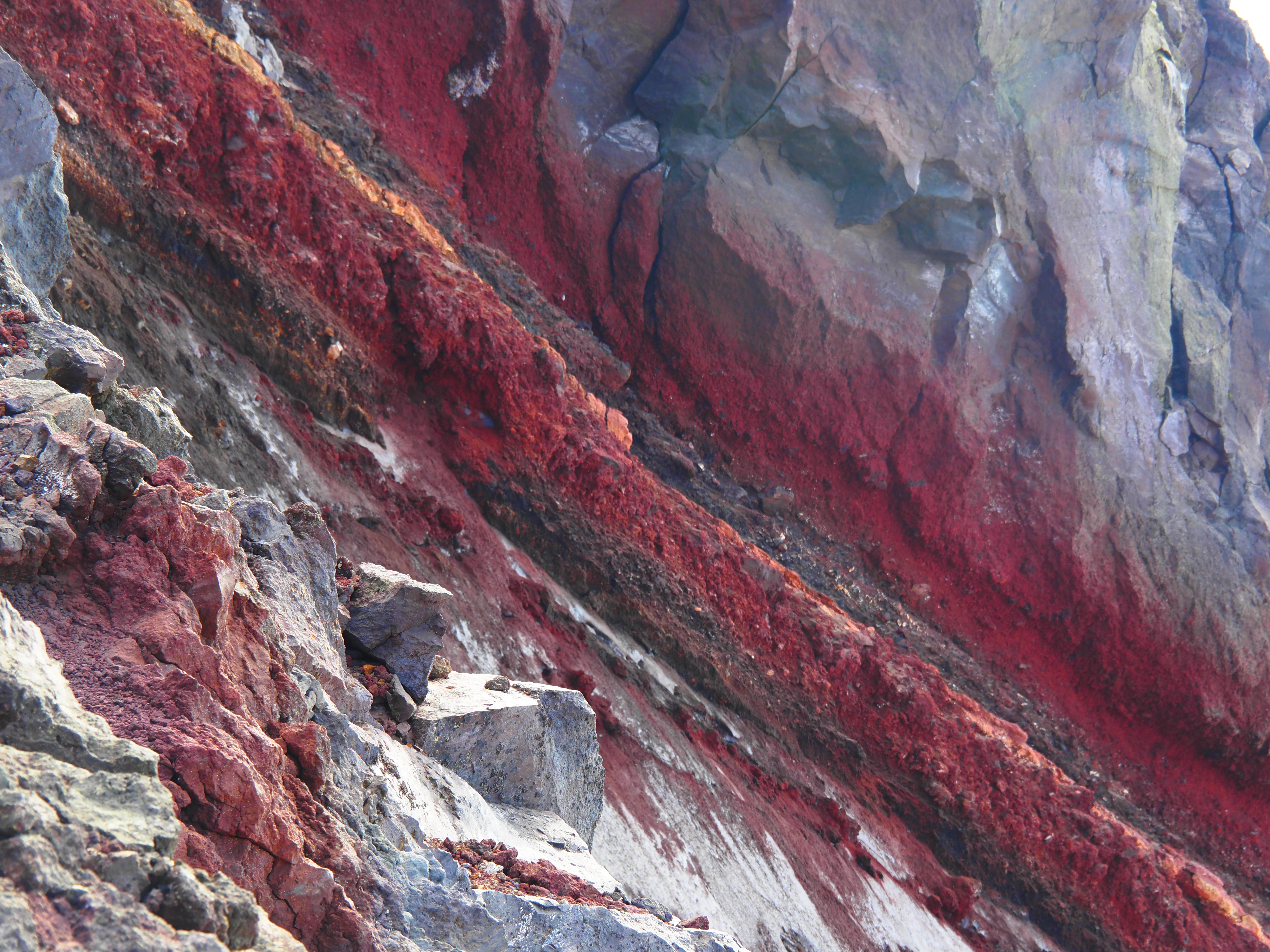
Jon Levenson, a professor of Hebrew Bible at Harvard School, said once that ‘geology is simply a visible form of theology.’ This came to me as I was making my way up the side of South Sister, a 10,358 foot peak in central Oregon. It was a tough climb Five hours straight up, through loose volcanic, rocky soil. And then four hours straight down. I did a lot of praying along the way.

All Trails is a cell phone app that offer guidance on thousands of hikes around the world. According to them, the South Sister climb takes an average of 11 hours. And they are very clear about the need to leave as early in the morning as possible; no later than 900am. I started at noon. And bring lots of water. And a flashlight. Yes on the water, but no on the flashlight, which left me wandering around in the dark at the bottom of the trail, desperately looking for the parking lot and frantically clicking our car’s key fob until I finally heard the faint beeping of the lock. But the stars were gorgeous.
The bible is full of mountain top experiences. Most famous perhaps is the revelation of God to Moses on Sinai (or perhaps it is more accurate to say the multiple revelations to Moses on Sinai). Out of this mysterious (and slightly terrifying) encounter comes the central act of formation of Israel as the people of God. The Sinai experience is certainly on the mind of the writer of Matthew’s gospel when he stitches together a compilation of Jesus’ teachings as Sermon on the Mount.

The theologian Belden Lane writes in his book, The Solace of Fierce Landscapes, that the pleasure in climbing a mountain does not always come in reaching the summit, but in ‘carrying on the task (of climbing) in the face of doubt’ about whether the summit will actually be reached or will ‘prove unattainable.’ The ‘human spirit,’ he concludes, ‘delights in the exercise of uncertainty.’ I think there’s something in that. There’s also something gracious in the company that is formed along the way. I was one of a number of people making their way up the mountain alone, and throughout the climb we would stop to rest and convince each other that we could do it, that we could reach the top.

The climb was awful, but as the pictures below hopefully show, the view from the top was worth the effort.